Variety of delivery options including next day & free delivery.
Pharmacy, clinic and prescribers based in Greater Manchester.
Start your treatment with a quick and free online consultation.
Variety of delivery options including next day & free delivery.
Pharmacy, clinic and prescribers based in Greater Manchester.
Start your treatment with a quick and free online consultation.
Fill in a quick online consultation for our licensed pharmacists to review.
Our pharmacists will review your treatment to ensure it’s suitable.
Your treatment will be delivered to your door quickly & discreetly.
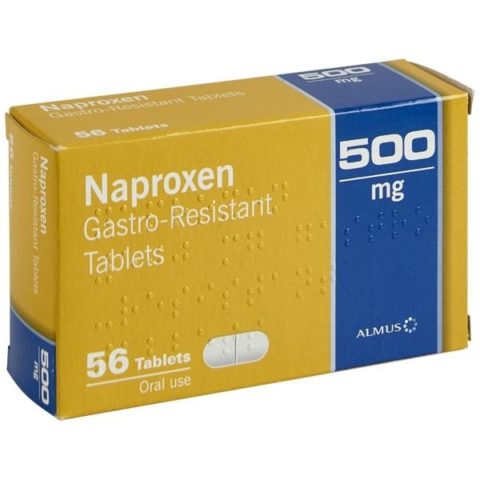
| Medication Name | Naproxen Gastro-Resistant Tablets |
| Medication Form | Gastro-resistant tablets |
| Used For | Pain and inflammation in the muscles, joints and tendons; period pain |
| Who Can Use | Adults aged 18 and over |
| Active Ingredient(s) | Naproxen |
| Usual Dose | Varies by condition; commonly 500 mg to start, then 250 mg every 6 to 8 hours as needed |
| Common Side Effects | Heartburn, indigestion, stomach ache, feeling sick, headache |
| Prescription Required | Yes |
| Patient Information Leaflet | Naproxen Gastro-Resistant Tablets PIL |
Naproxen is a non-steroidal anti-inflammatory drug, or NSAID. It lessens pain, swelling, redness and heat, so it’s used to relieve pain and reduce inflammation across a range of conditions in adults.
Naproxen gastro-resistant tablets are used for:
The gastro-resistant version does the same job as standard naproxen tablets. The difference is in the coating, which is designed to be gentler on the stomach.
Naproxen works by reducing the production of prostaglandins, the chemicals in the body that trigger pain, swelling and inflammation. By lowering these, it eases muscle and joint pain, as well as the stiffness associated with conditions like arthritis, back pain and period pain.
What sets these tablets apart is the gastro-resistant, or enteric, coating. Standard naproxen tablets start to dissolve in the stomach, which is where the risk of stomach irritation from NSAIDs is greatest. A gastro-resistant coating stops the tablet from breaking down there. Instead, it passes through the stomach intact and releases the naproxen further down, in the small intestine.
That’s why they must be taken intact. Crushing or chewing them breaks the coating and defeats the point.
Naproxen gastro-resistant tablets are for adults aged 18 and over. They aren’t recommended for anyone under 16.
Don’t take them if you:
If you’re not sure any of these apply to you, speak to your doctor or pharmacist before taking them.
Always take naproxen exactly as your doctor or pharmacist has told you. The dose depends on what you’re treating:
Gastro-resistant tablets should be swallowed whole with a little water, with or after food. Don’t crush or chew them. Try to drink plenty of fluids while taking naproxen, especially if you have kidney problems.
Don’t take more than the recommended dose, or for longer than you’ve been told, as this raises the small risk of heart and stomach problems that comes with NSAIDs.
Like all medicines, naproxen carries a risk of side effects, though not everyone gets them.
More common side effects include:
Stop taking naproxen and tell a doctor straight away if you notice any of these, as you may need urgent treatment:
For the full list of side effects, please read the Naproxen Gastro-Resistant Tablets Patient Information Leaflet.
If you notice any side effects, tell your doctor or pharmacist, even if they aren’t listed here. You can also report them via the Yellow Card Scheme. Reporting helps improve the understanding of this medicine’s safety.
Active ingredient: naproxen, either 250mg or 500mg per tablet.
Other ingredients: povidone, magnesium stearate, water, croscarmellose sodium, methacrylic acid-ethyl acrylate copolymer, purified talc, sodium hydroxide, triethyl citrate, iron oxide black, shellac and propylene glycol.
GOOD Based on 184 reviews
 Posted on Google
 Bradley Robinson30/04/2026
 Absolutely Amazing staff! Such a help thank you so muchPosted on Google
 Samiur Rahman30/04/2026Best pharmacy in the UK. The staff here are very helpful, empathetic, understanding and compassionate. Brilliant customer service and staff are actual people who use their discretion to help people.Posted on Google
 Vivien donnellon29/04/2026Extremely efficient and knowledgeable information given. All my questions were answered and also some advise regarding the issue. Thank you RehanaPosted on Google
 james watkins22/04/2026Brilliant device ordered yesterday received it today
The gastro-resistant coating reduces irritation from the tablet itself, but it doesn’t eliminate the stomach risk associated with how naproxen works in the body. Because of that, people at higher risk of stomach ulcers or bleeding are sometimes prescribed a medicine like omeprazole or lansoprazole to protect your stomach while taking it. Your prescriber will decide if that’s right for you based on your history.
Steer clear of other NSAIDs and painkillers such as aspirin, ibuprofen and diclofenac unless a doctor has said otherwise. Don’t crush or chew the tablets, as that breaks the coating. Alcohol can add to stomach irritation, so go easy on it and always tell your prescriber about blood thinners, steroids and other medicines that can interact.
Naproxen is meant to be taken at the lowest effective dose for the shortest time needed. For ongoing conditions like arthritis or ankylosing spondylitis, a healthcare professional may prescribe a regular daily dose, but you shouldn’t take it long term or at higher doses than prescribed, as that raises the risk of heart and stomach problems.
These tablets are available with a prescription, so to buy online, you start with a short consultation. Our pharmacists review your answers, and if the treatment is suitable, they arrange discreet delivery to your door.
For a fresh bout of pain, naproxen usually starts to give pain relief within a few hours. The coating means the tablet dissolves in the gut rather than the stomach, so it can be absorbed a little more slowly than standard naproxen. For long-standing joint conditions, it can take a couple of weeks of regular dosing to feel the full anti-inflammatory benefit.
Gastro-resistant, or enteric-coated, tablets have a coating that stops them from dissolving in the stomach. Instead, they pass through and release the naproxen further down, in the small intestine, which is designed to reduce direct irritation to the stomach lining. The naproxen and how it works are exactly the same.
Page content authored by Mr Mohammed, last reviewed by Dr Hussain Ahmad on 23rd July 2026.