Variety of delivery options including next day & free delivery.
Pharmacy, clinic and prescribers based in Greater Manchester.
Start your treatment with a quick and free online consultation.
Variety of delivery options including next day & free delivery.
Pharmacy, clinic and prescribers based in Greater Manchester.
Start your treatment with a quick and free online consultation.
Fill in a quick online consultation for our licensed pharmacists to review.
Our pharmacists will review your treatment to ensure it’s suitable.
Your treatment will be delivered to your door quickly & discreetly.
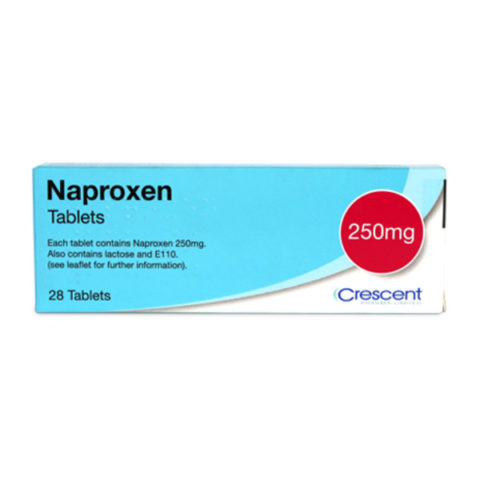
| Medication Name | Naproxen Tablets |
| Medication Form | Tablet (available in 250mg and 500mg) |
| Used For | Relief of pain, stiffness and inflammation in the muscles and joints |
| Who Can Use | Adults aged 18 years and over |
| Active Ingredient(s) | Naproxen |
| Usual Dose | 250mg to 500mg taken twice a day, roughly every 12 hours |
| Common Side Effects | Heartburn, indigestion, stomach ache, feeling sick, headache, dizziness |
| Prescription Required | Yes |
| Patient Information Leaflet | Naproxen Tablets Patient Information Leaflet |
Naproxen Tablets are used to relieve mild to moderate pain, stiffness and inflammation. They belong to a group of medicines called NSAIDs (non-steroidal anti-inflammatory drug family).
They can help with everyday aches and pains in the muscles and joints, including:
It’s also used to treat longer-term conditions such as arthritis and ankylosing spondylitis, a type of arthritis that affects the spine.
Because it lasts a long time in the body, naproxen is usually taken twice a day and can provide relief for up to 12 hours between doses, making it a better choice for pain that lasts rather than a one-off ache.
If you’re prone to stomach upset, a gastro-resistant version of naproxen is also available, with a coating designed to be gentler on the stomach.
Naproxen works by lowering the level of certain chemicals in the body called prostaglandins. These are the chemicals that trigger pain and inflammation when you’re injured or unwell.
By reducing the amount your body makes, naproxen helps relieve pain and reduce swelling, along with the stiffness that comes with them. That’s why it helps with both the discomfort you feel and the underlying inflammation causing it.
The lowest dose that controls your symptoms should always be used, for the shortest time that works, as this keeps the risk of side effects as low as possible.
Naproxen Tablets are for adults. At Click2Pharmacy, we can only supply this medicine to adults aged 18 and over.
Naproxen isn’t suitable for everyone. Don’t take it if you:
If any of these apply to you, or you’re not sure, speak to your doctor or pharmacist before taking naproxen.
Always take naproxen exactly as your doctor has told you, and check with your doctor or pharmacist if you’re not sure.
For ongoing muscle and joint conditions, the dose is 250mg to 500mg twice a day, about 12 hours apart.
For a sudden flare-up of muscle or joint pain, the usual approach is 500mg to start with, followed by 250mg every 6 to 8 hours, with no more than 1250mg in any 24 hours.
Naproxen 500mg tablets are simply the higher-strength option, so fewer tablets are needed to reach the same dose.
Older adults and anyone who feels weak or run-down should usually start at the lowest dose, as side effects are more likely. If you take naproxen for a long time, your doctor may want to check on you regularly.
Like all medicines, naproxen can cause side effects, though not everyone gets them.
The most common side effects of Naproxen tend to affect the stomach and gut:
Some serious side effects may need urgent attention. Stop taking naproxen and get medical help straight away if you notice:
Medicines like naproxen carry a small increased risk of heart attack or stroke, which is higher with larger doses taken over a long time. This is why it’s best to keep it to the lowest effective dose for the shortest time.
You can report side effects, including any possible side effects not listed here, through the Yellow Card Scheme.
Active ingredient: Naproxen.
Other ingredients: Lactose monohydrate, maize starch, sodium lauryl sulfate, crospovidone, magnesium stearate, quinoline yellow (E104) and sunset yellow (E110).
These tablets contain lactose, so if you’ve been told you can’t tolerate some sugars, check with your doctor before taking them. Sunset yellow (E110) can also cause allergic reactions in some people.
GOOD
Naproxen is one of the strongest anti-inflammatory painkillers you can get, and it works differently from opioid medicines like codeine. It’s long-acting, which is why it’s usually only needed twice a day, and it targets both pain and the underlying inflammation. Your doctor or pharmacist can help you work out if it’s the right level of pain relief for you.
Steer clear of other anti-inflammatory painkillers such as ibuprofen or aspirin while you’re on naproxen, as doubling up raises the risk of stomach problems. Tell your doctor about any other medicines you take, particularly blood thinners, water tablets, blood pressure medicines, steroids and some antidepressants.
Naproxen is better tolerated when taken with food. It’s also sensible to go easy on alcohol, since drinking alcohol while taking naproxen can add to the risk of stomach irritation.
Naproxen isn’t usually recommended in pregnancy. It must not be taken in the last three months, and during the first six months, it should only be used if your doctor decides it’s necessary. It also passes into breast milk, so breastfeeding is best avoided while taking it. If you’re pregnant, trying for a baby or breastfeeding, speak to your doctor or pharmacist before using naproxen.
Many people notice some pain relief within a few hours of their first dose. The full effect on inflammation and stiffness can build up over a few days of regular dosing, so it’s worth giving it a little time if you’re taking it for ongoing pain. If your symptoms don’t improve, check back with your doctor or pharmacist.
The 250mg and 500mg strengths we supply at Click2Pharmacy need a prescription, which our pharmacists can arrange after a quick online consultation. A lower-dose version of naproxen can be bought without a prescription for period pain, but the higher strengths used for other types of pain have to be prescribed.
If naproxen isn’t right for you, alternatives include other anti-inflammatory painkillers, such as ibuprofen or paracetamol, for milder pain. The best choice depends on what’s causing your pain and your medical history, so it’s worth completing a consultation through our pain relief clinic so a pharmacist can point you in the right direction.
Naproxen Tablets should be swallowed whole with a glass of water. The 250mg tablet has a score line down the middle, so it can be split into two halves if that makes it easier to take. If you find tablets hard to swallow, have a word with your pharmacist rather than crushing them, as they can suggest a more suitable option.
Co-codamol contains paracetamol and codeine, which work in a different way from naproxen, so the two are sometimes used together for stronger pain relief. It’s best to check with your pharmacist first, as co-codamol already contains paracetamol and you’ll want to avoid taking extra paracetamol on top.
Paracetamol works differently from naproxen, so paracetamol or co-codamol can be taken alongside it for pain that needs a bit more relief. Just avoid combining naproxen with other anti-inflammatory painkillers like ibuprofen. If you’re unsure how to space your doses, your pharmacist can help you plan it.
Naproxen can cause drowsiness in some people, along with dizziness or tiredness, and it can occasionally affect your sleep or concentration. If it makes you feel sleepy or light-headed, wait to see how it affects you before driving or using machinery.
For longer-term muscle and joint conditions, naproxen can be taken regularly, but always under your doctor’s guidance and at the lowest dose that keeps your symptoms under control. Taking it at high doses or for a long time raises the risk of stomach and heart problems, so it shouldn’t be used day after day without medical advice.
As an anti-inflammatory, naproxen can help ease dental pain and the swelling that often comes with it. If you’ve got toothache, you should see a dentist to deal with the underlying cause rather than relying on painkillers alone.
If you forget a dose, just skip it and wait until it’s time for your next dose. Don’t take a double dose to make up for the one you missed.
“Naproxen works well for pain that tends to hang around, like backache or period pain. Because each dose keeps working for up to 12 hours, most people only need to take it twice a day. I’d always recommend taking it with food and using the lowest dose that keeps you comfortable.”

Dr Hussain Ahmad
Page content authored by Mr Mohammed, last reviewed by Amjad Khan on 23rd July 2026.