Royal Mail tracked 24 or 48 hour delivery in plain, unmarked packaging.
Pharmacy, clinic and prescribers based in Greater Manchester.
Where a prescription is needed, the price you see includes your consultation and prescription.
Royal Mail tracked 24 or 48 hour delivery in plain, unmarked packaging.
Pharmacy, clinic and prescribers based in Greater Manchester.
Where a prescription is needed, the price you see includes your consultation and prescription.
Fill in a quick online consultation for our licensed pharmacists to review.
Our pharmacists will review your treatment to ensure it’s suitable.
Your treatment will be delivered to your door quickly & discreetly.
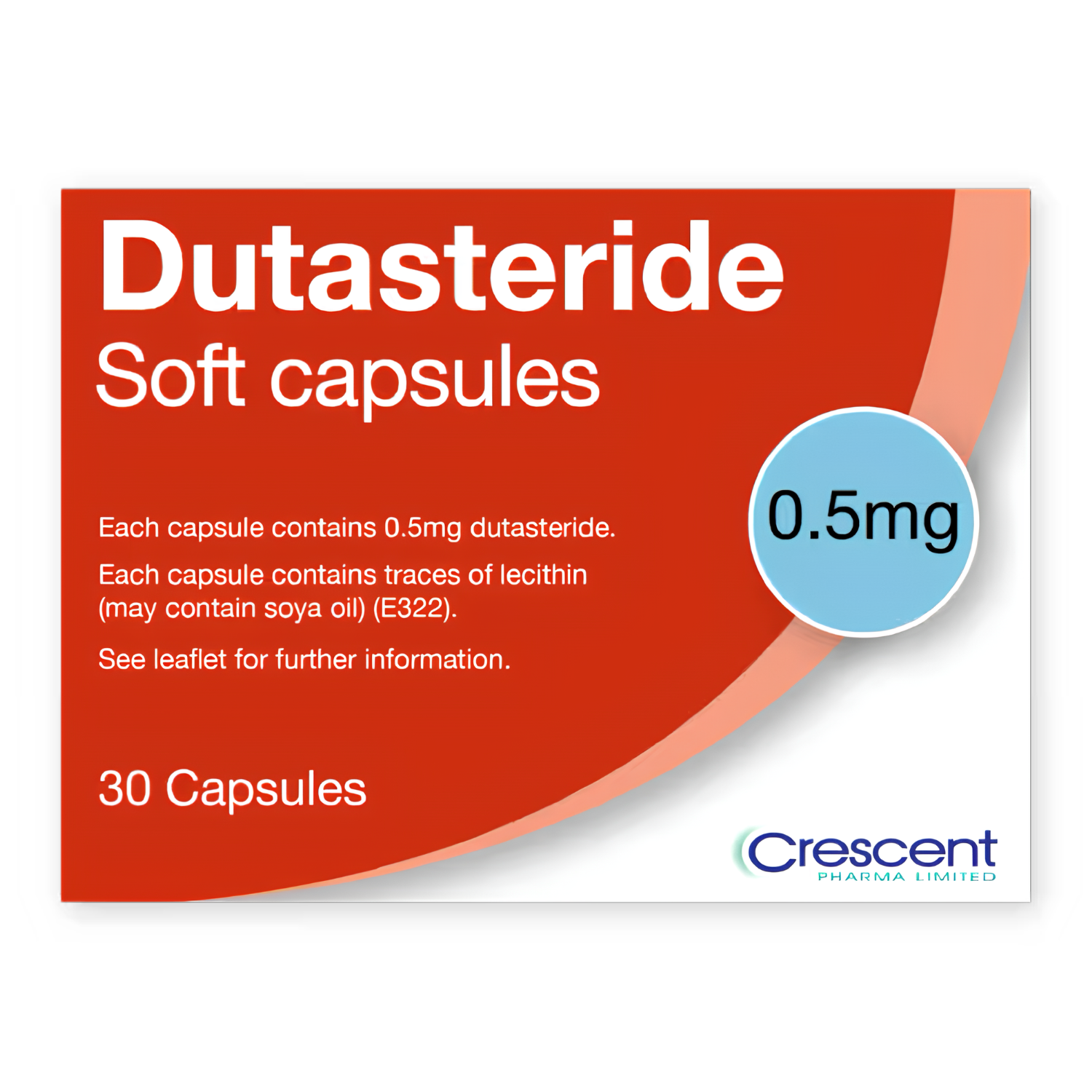
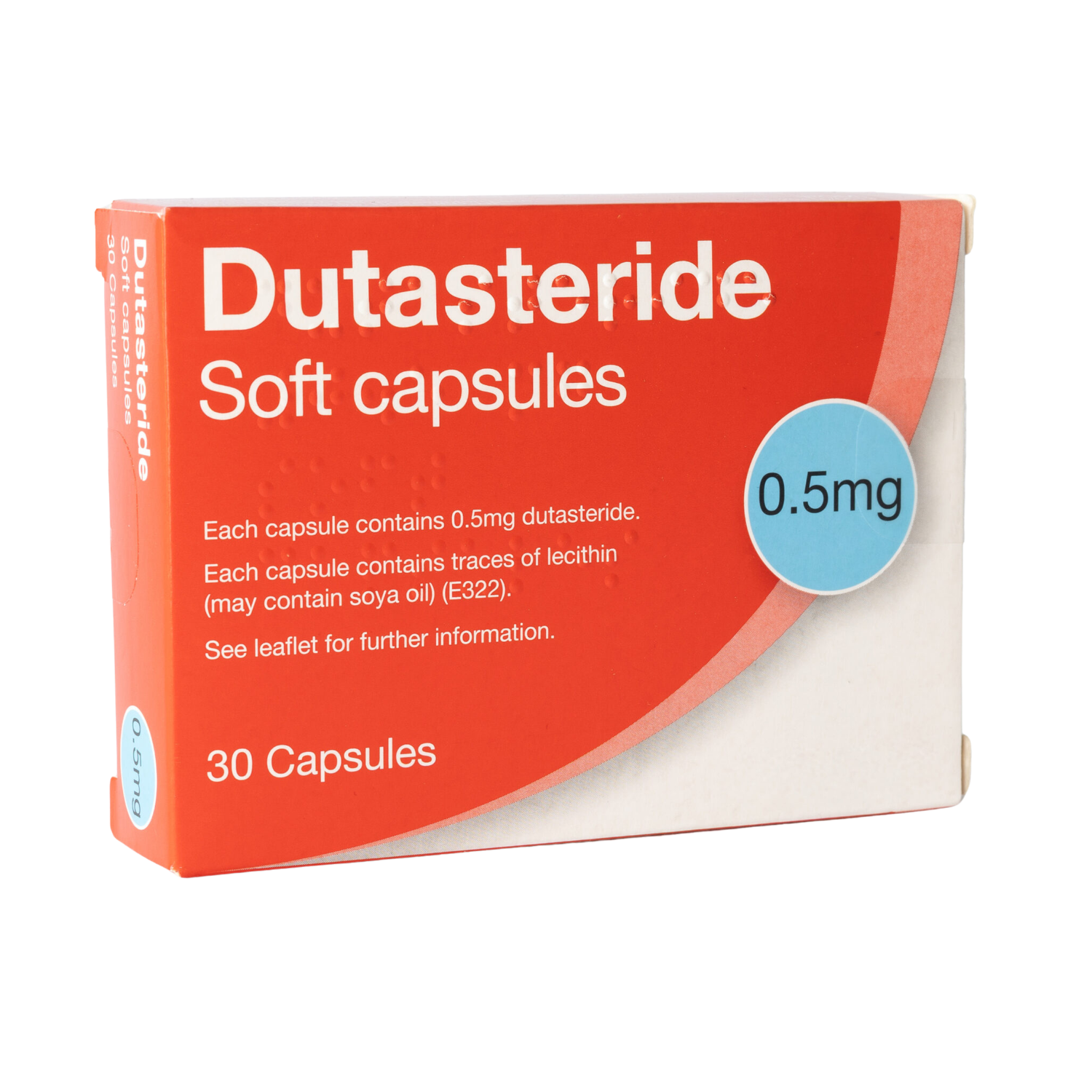
| Medication Name | Dutasteride Capsules 0.5mg |
| Brand Name | Brand may vary |
| Medication Form | Capsule |
| Used For | Male Pattern Hair Loss (Androgenetic Alopecia) |
| Active Ingredients | Dutasteride |
| Side Effects | Decreased libido, erectile dysfunction, breast tenderness |
| Size | 30 Capsules |
| Do you need a prescription for it? | Yes |
| Other names this medication is known by | Avodart (when used for prostate conditions) |
| Patient Information Leaflet | Dutasteride Patient Information Leaflet |
Dutasteride is a prescription medicine that comes as 0.5mg capsules taken once a day. It is licensed in the UK to treat an enlarged prostate (benign prostatic hyperplasia). It is also used to treat male pattern hair loss, but this use is off-label, meaning it is outside its UK licence. Our prescriber will only prescribe it for hair loss after an individual assessment.
Dutasteride blocks an enzyme called 5-alpha reductase, which converts testosterone into dihydrotestosterone (DHT). DHT is the hormone responsible for shrinking hair follicles in men with male pattern baldness, leading to thinner hair and eventual hair loss.
By reducing DHT levels in the scalp, dutasteride helps protect your hair follicles from damage. This slows down hair loss and gives existing hair follicles a chance to recover and grow thicker, healthier hair. Unlike some hair loss treatments that only block one type of the enzyme, dutasteride blocks both types, making it particularly effective.
It usually takes 3 to 6 months of daily use to see hair loss slow down. Further improvement can take up to a year, and results vary from person to person.
Dutasteride is used to treat male pattern hair loss (androgenetic alopecia), a common condition that causes hair thinning and baldness in men.
This type of hair loss typically follows a recognisable pattern:
Dutasteride for hair loss works by addressing the root cause of male pattern baldness – the hormone DHT. It’s particularly effective for men who want to slow down or stop further hair loss and potentially regrow some of their lost hair.
Dutasteride is also used to treat benign prostatic hyperplasia (BPH), which is an enlarged prostate gland. When used for BPH, it helps to shrink the prostate and relieve symptoms like difficulty urinating. However, when prescribed for hair loss, the focus is on its ability to reduce DHT levels in the scalp.
Dutasteride is suitable for adult men experiencing male pattern hair loss who want an effective treatment to slow or stop hair thinning. It’s particularly helpful if you’ve noticed your hair loss progressing despite trying other treatments.
However, dutasteride may not be suitable for everyone. You should consult your doctor or pharmacist before using dutasteride if you:
Dutasteride is not suitable for:
Before starting treatment with dutasteride, always inform your doctor or pharmacist about any medications you’re taking and any medical conditions you have.
Continue using dutasteride as prescribed, even after you start seeing results. Hair loss treatment requires ongoing use – if you stop taking dutasteride, you’ll likely lose any hair you’ve regained within 6 to 12 months. It’s important to be patient, as it can take several months before you notice improvements in hair growth or a slowing of hair loss.
Like all medications, dutasteride can cause side effects, although not everyone experiences them. Most side effects are mild and may improve as your body adjusts to the treatment.
If you experience any serious side effects, stop taking dutasteride and seek immediate medical attention by calling NHS 111 or visiting A&E.
Most mild side effects will settle down as your body adjusts to the treatment. If side effects persist or concern you, contact your doctor or pharmacist for advice.
You can report side effects to the MHRA Yellow Card Scheme to help monitor the medication’s safety.
Important safety information – MHRA update, May 2026
On 11 May 2026, the MHRA strengthened safety warnings for finasteride. Finasteride can cause low mood, depression, suicidal thoughts and sexual problems, including reduced sex drive, difficulty getting an erection and ejaculation problems. Sexual side effects may continue after treatment has stopped and may contribute to mood changes, although they can also occur without changes in mood. Before starting treatment, tell your prescriber if you have ever experienced depression or suicidal thoughts. Stop taking finasteride 1mg immediately if you develop depression or suicidal thoughts and contact your doctor as soon as possible. If you experience sexual side effects, contact your prescriber to discuss whether treatment should continue. If you are at immediate risk of harming yourself, call 999 or go to A&E. Read and keep the patient alert card and information leaflet supplied with your medicine.
Active ingredient: Dutasteride 0.5mg
Inactive ingredients: glycerol monocaprylocaprate (Type I) and butylated hydroxy toluene (E321), gelatin, glycerol, titanium dioxide (E171) and iron oxide yellow (E172)
Please note that inactive ingredients can vary depending on the manufacturer. If you have any known allergies or hypersensitivities, including peanut (arachis) oil, lactose, gelatin, soy, or certain dyes and preservatives, inform us during your consultation and carefully review the ingredient list prior to use.


Dutasteride does shrink the prostate. This is actually its original intended use – it was developed to treat benign prostatic hyperplasia (BPH), or enlarged prostate. By reducing DHT levels, dutasteride helps shrink prostate tissue over time, which can relieve urinary symptoms in men with BPH. When used for hair loss, this effect still happens, but isn’t the primary goal of treatment.
Finasteride and dutasteride have similar safety profiles, working in comparable ways. Both can cause similar side effects, particularly relating to sexual function. Dutasteride blocks both types of the 5-alpha reductase enzyme, while finasteride only blocks one type, which means dutasteride is more potent. Some men may find one medication suits them better than the other.
Dutasteride is not known to lower blood pressure directly. However, if you have concerns about how dutasteride might interact with blood pressure medications or affect your cardiovascular health, speak to your doctor or pharmacist before starting treatment.
Dutasteride and tamsulosin are not the same. They’re completely different medications that work in different ways. Tamsulosin is an alpha-blocker used to relax muscles in the prostate and bladder to improve urine flow, while dutasteride is a 5-alpha reductase inhibitor that reduces DHT levels. Sometimes they’re prescribed together for prostate problems, but for hair loss, only dutasteride is used.
The results from dutasteride are not permanent. If you stop taking the medication, DHT levels will return to normal, and you’ll likely lose any hair you’ve regained within 6 to 12 months. Hair loss treatment with dutasteride requires ongoing use to maintain results. Think of it as an ongoing management strategy rather than a permanent cure.
Dutasteride isn’t known to cause cancer. In a large study it lowered the overall number of prostate cancers diagnosed, but slightly more high-grade prostate cancers were found in men taking it (about 1 in 100 compared with 1 in 200 on placebo). It’s not known whether dutasteride caused this. Tell your doctor you’re taking it before any PSA test, and tell us during your consultation if you have a history or family history of prostate or breast cancer.
Dutasteride can help thicken existing hair by protecting hair follicles from DHT damage, allowing them to produce thicker, healthier hair strands. Many men notice that their hair becomes fuller and denser over time.
However, results vary from person to person – some men experience significant thickening, while others mainly see a slowing of hair loss. It typically takes 3 to 6 months to notice changes, with full results visible after about a year.
Weight gain is not a commonly reported side effect of dutasteride. If you experience unexpected weight changes while taking dutasteride, speak to your doctor or pharmacist, as this could be related to other factors.
Constipation is not a common side effect of dutasteride. If you experience persistent constipation or digestive issues while taking this medication, consult your doctor or pharmacist to rule out other causes.
Some men notice more hair shedding in the first few months of treatment. This can happen when older hairs fall out as new growth starts, and it usually settles within a few months. Don’t stop taking dutasteride because of shedding alone, but contact your prescriber if it’s heavy, lasts longer than a few months, or worries you.
Erectile dysfunction is a possible side effect of dutasteride, though not everyone experiences it. Clinical studies show that a small percentage of men taking dutasteride report difficulties with erections. For most men, these side effects are mild and may improve over time as the body adjusts to the medication. If you experience persistent or bothersome sexual side effects, speak to your doctor about your options.
Dutasteride does not typically cause drowsiness or sleepiness. If you feel unusually tired while taking dutasteride, this is not a common side effect, and you should speak to your doctor to investigate other potential causes.
Dutasteride doesn’t work for everyone but is effective for many men with male pattern hair loss. Response rates vary – some men see significant regrowth, while others mainly experience a slowing or stopping of further hair loss.
Dutasteride tends to work best for men who still have active hair follicles in the affected areas. It’s less effective if hair loss is very advanced or follicles have been inactive for many years. Results also depend on consistent, long-term use of the medication.
You can take dutasteride at any time of day – morning or night – whichever is most convenient for you. The most important thing is to take it at the same time each day to maintain consistent levels in your body. Choose a time that fits easily into your daily routine to help you remember to take it.
Women should not take dutasteride for hair loss. Dutasteride can cause serious birth defects in male babies if taken during pregnancy. Women who are pregnant, may become pregnant, or are breastfeeding must never take or even handle dutasteride capsules, as the medication can be absorbed through the skin. Hair loss in women has different causes and requires different treatments – speak to your doctor about appropriate options.
Dutasteride and minoxidil work completely differently, so “better” depends on your needs.
Dutasteride is a capsule that works from the inside by blocking DHT, while minoxidil is a topical treatment applied directly to the scalp that stimulates hair growth.
A lot of men use both together for enhanced results, as they complement each other. Dutasteride tends to be more effective for preventing further hair loss, while minoxidil can be particularly good at stimulating new growth. Your doctor or pharmacist can help you decide which approach is best for you.
If you stop taking dutasteride, DHT levels in your scalp will gradually return to their previous levels. This means hair loss will resume, and you’ll likely lose any hair you regained during treatment within 6 to 12 months of stopping. The hair follicles will once again be exposed to DHT damage. This is why dutasteride is considered a long-term treatment – you need to continue taking it to maintain the benefits.
Page content authored by Sakib Mohammed (GPhC: 2060565), last reviewed by Amjad Khan (GPhC: 2065469) on 5th November 2026.