Royal Mail tracked 24 or 48 hour delivery in plain, unmarked packaging.
Pharmacy, clinic and prescribers based in Greater Manchester.
Where a prescription is needed, the price you see includes your consultation and prescription.
Royal Mail tracked 24 or 48 hour delivery in plain, unmarked packaging.
Pharmacy, clinic and prescribers based in Greater Manchester.
Where a prescription is needed, the price you see includes your consultation and prescription.
Fill in a quick online consultation for our licensed pharmacists to review.
Our pharmacists will review your treatment to ensure it’s suitable.
Your treatment will be delivered to your door quickly & discreetly.
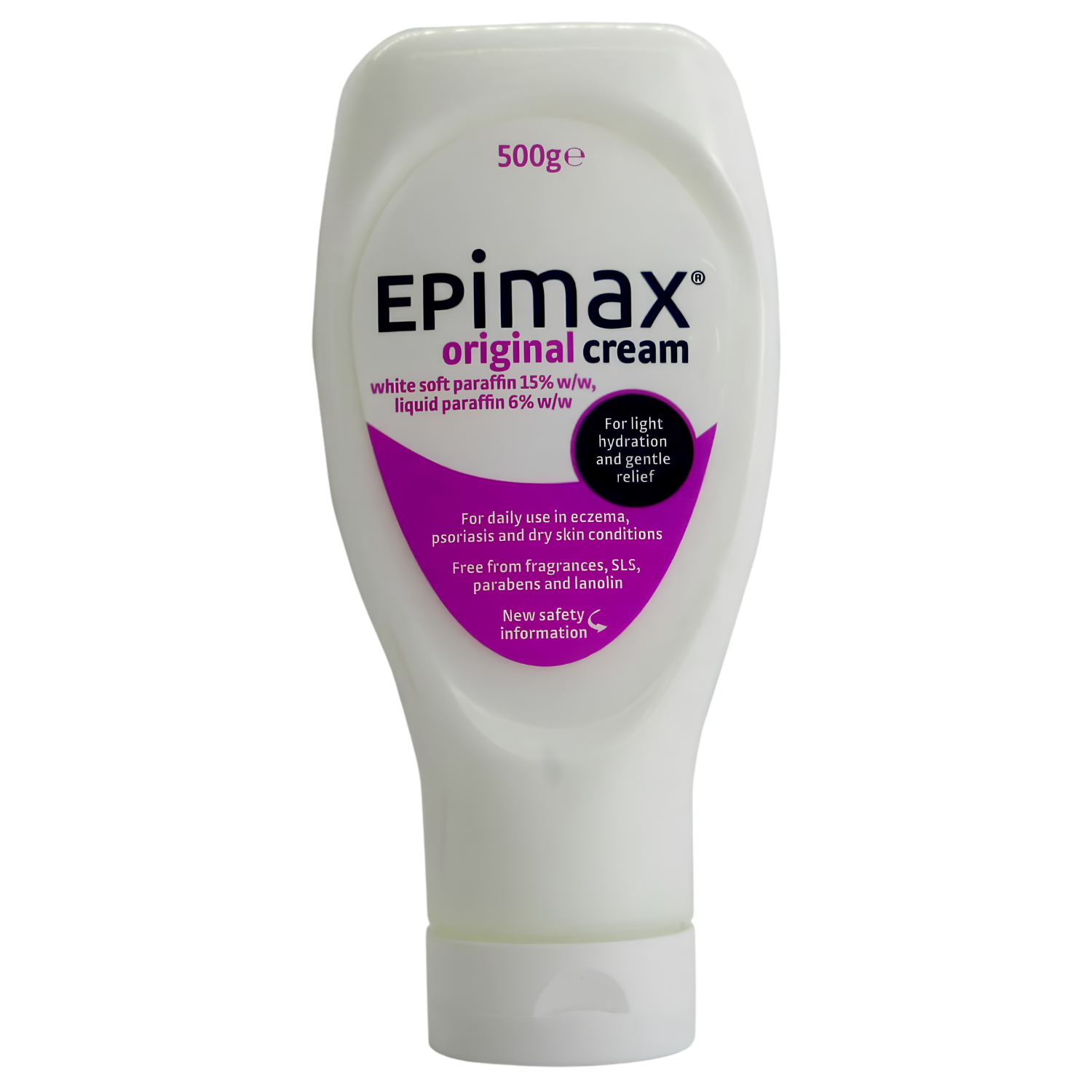
| Name | Epimax Cream |
|---|---|
| Form | Cream |
| Used for | Treating eczema or dermatitis |
| Active Ingredients | Emollient (liquid paraffin 15% w/w, white soft paraffin 15% w/w) |
| Strength and Size | 500g |
Epimax Cream is a topical emollient that is used to treat dry, itchy, or scaly skin conditions such as eczema and dermatitis. It helps to soften and moisturise the skin, reducing irritation and itchiness.
Epimax Cream is primarily used for the treatment of eczema and dermatitis. It can also be used to manage other dry skin conditions, such as psoriasis and ichthyosis.
Epimax Cream works by forming a protective barrier over the skin, preventing moisture loss and keeping the skin hydrated. This helps to reduce inflammation and itching associated with eczema and dermatitis, allowing the skin to heal.
Epimax Cream is suitable for adults and children who are suffering from eczema or dermatitis. It is safe for use during pregnancy and breastfeeding. However, it may not be suitable for individuals who are allergic to any of the ingredients in the cream.
Continue using Epimax Cream for as long as your doctor or pharmacist recommends, even if your symptoms improve. This will help to prevent the condition from recurring.
Active Ingredients: Emollient (liquid paraffin 15% w/w, white soft paraffin 15% w/w)
Other ingredients: Cetostearyl alcohol, phenoxyethanol, purified water, sodium dihydrogen phosphate, and sodium hydroxide


Page content authored by Sakib Mohammed (GPhC: 2060565), last reviewed by Dr Hussain Ahmad (GMC: 7176414) on 1st September 2026.