

What are period delay tablets?
Period delay tablets, also known as period prevention tablets, are a prescription period delay medication that lets you postpone your period for a short time. They contain a progestogen, a synthetic version of the hormone progesterone, and the two options we offer are norethisterone and medroxyprogesterone. By keeping your progesterone levels raised, the tablets stop the womb lining from shedding until you stop taking them, which is what holds your period back.
They’re taken as a short course around a specific event rather than something you use every month. Because they aren’t a contraceptive, they won’t protect you against pregnancy, so you’ll need to keep using your usual contraception if you don’t want to conceive.
How do period delay tablets work?
Your menstrual cycle is controlled by rising and falling hormone levels. Towards the end of your cycle, progesterone drops, and that fall is what signals the lining of the womb to shed and your period to begin. Period delay tablets top up your progesterone levels so they stay high, which keeps the womb lining in place and delays your period.
The tablets only work as long as you keep taking them. Once you stop, your progesterone levels fall as they normally would, and your period usually arrives within two to three days. This is why timing matters, and why you need to start the course before your period is due rather than once it’s already begun.
How to Delay Your Period
To delay your period, you’ll usually start taking your tablets 3 days before your period is due to start. You then take them throughout the time you want to hold your period back, up to the maximum your prescriber advises, and stop when you’re ready for your period to return. With norethisterone, that means one tablet three times a day for up to 17 days.
It’s worth ordering in good time so your treatment arrives before you need to start it. If your reason for delaying involves long-haul travel or flights, mention this in your consultation, as sitting still for long periods can raise the risk of blood clots, and our prescriber will factor this into your assessment.
How effective are period delay tablets?
Norethisterone is a reliable way to hold your period back when it’s taken correctly. In a randomised controlled trial, only 8% of women taking norethisterone had any breakthrough bleeding, compared with 43% of those using the combined pill for the same purpose. Effectiveness does vary from person to person, so it can be less predictable if your periods are irregular, which is something our pharmacists will check during your consultation.
Period Delay Treatment
We offer two prescription period delay treatments, both progestogens that work in a similar way. Which one suits you depends on your medical history and whether you’re using any hormonal contraception, and our pharmacists will help confirm the right choice during your consultation.
Norethisterone
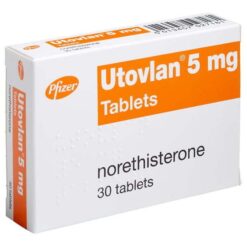
Norethisterone is the most widely used pill to delay periods in the UK. It’s a prescription-only progestogen that mimics progesterone, so it’s suited to people who aren’t taking the contraceptive pill. You start it three days before your period is due and take one tablet three times a day for up to 17 days, then your period usually returns within three days of your last dose. Utovlan is a branded version of norethisterone that works in exactly the same way.
Medroxyprogesterone
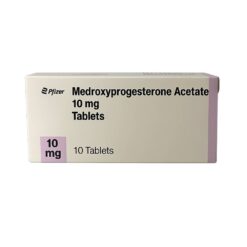
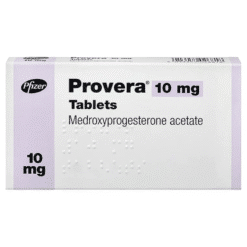
Medroxyprogesterone acetate is another progestogen option, available as Medroxyprogesterone tablets or under the brand name Provera. It’s used both to delay periods and to help regulate the menstrual cycle, and it holds your period back while you take it in the same way norethisterone does. The dose and timing differ from norethisterone, so your prescriber will confirm exactly how to take it based on your consultation.
What are the side effects of period delay tablets?
Most people who take norethisterone tablets have no problems, but as with any medication, side effects are possible. The most common ones are headaches, nausea, breast tenderness, bloating and mild skin or mood changes, and some people notice light spotting. These effects are usually mild and settle once you stop taking the tablets.
Progestogens can slightly raise the risk of blood clots, which matters most if you’re taking a long-haul flight, so you must mention any travel plans in your consultation. If you have a severe headache, chest pain, breathlessness or swelling and pain in your leg, seek medical advice straight away. Always read the patient information leaflet before you start, and go through the side effects before we prescribe your treatment.