
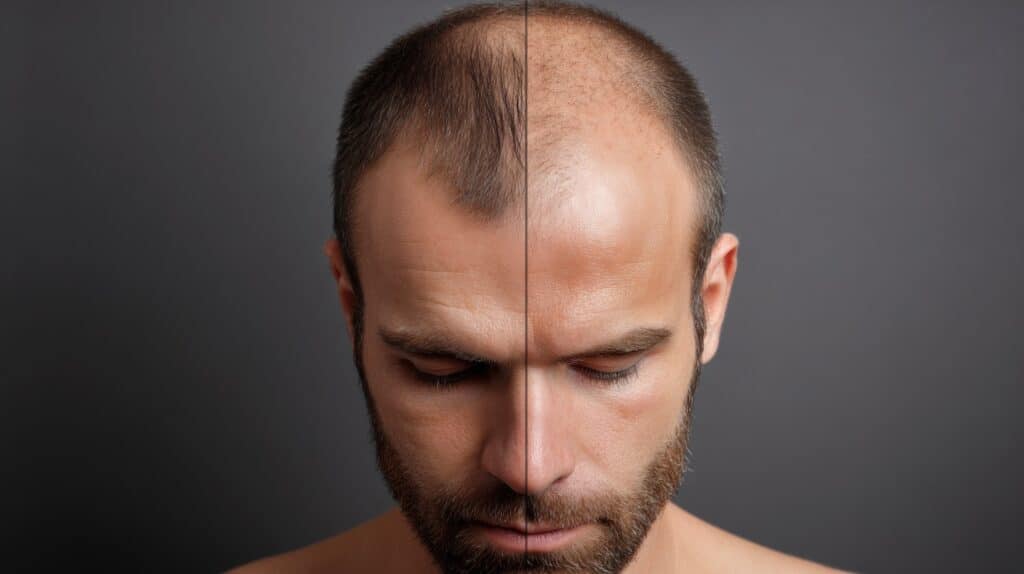
Noticing your hairline change can knock your confidence, and it’s common to go online looking for something that might help.
Finasteride is usually the first treatment most men come across, while dutasteride appears once you start comparing stronger options. But when it comes to dutasteride vs finasteride, which one is right for you?
| Feature | Finasteride 1mg | Dutasteride 0.5mg |
| Brand name | Propecia | Avodart |
| How it works | Blocks type II 5-alpha reductase | Blocks type I and type II 5-alpha reductase |
| Impact on DHT levels | Lowers DHT by around 40-65% | Lowers DHT by up to 90% |
| Strength | Standard first-line treatment | Stronger option |
| Dose | 1mg tablet once daily | 0.5mg capsule once daily |
| Who it suits | Men with early to moderate hair loss | Men with more advanced thinning or limited response to finasteride |
| Available at Click2Pharmacy | Yes | Yes |
Both finasteride and dutasteride work by lowering levels of DHT (dihydrotestosterone), the hormone responsible for shrinking hair follicles in male pattern baldness.
Reducing DHT helps protect the follicles, slow down thinning, and encourage thicker regrowth over time. The difference between the two medicines comes down to how strongly they block the enzymes that create DHT.
Finasteride works by blocking the type II 5-alpha reductase enzyme. This reduces DHT to a level that helps most men slow or stop their hair loss, especially in the early and middle stages.
It’s a well-known, long-standing treatment with plenty of clinical research behind it, which is why many men use it as their first option before considering stronger alternatives.
Dutasteride blocks two types of the enzyme 5-alpha reductase: type I and type II. By targeting both, it brings DHT levels down further than finasteride. This is why many men turn to dutasteride when their hair loss is progressing quickly or when finasteride hasn’t given them the improvement they hoped for.
Dutasteride is licensed in the UK for treating prostate enlargement, but it’s also commonly prescribed for hair loss. When a medicine is used this way, it’s known as off-label use, which means it’s approved for one condition but can still be prescribed for another when a clinician decides it’s appropriate. It remains safe to take for hair loss even if you don’t have prostate symptoms.
Both finasteride and dutasteride have been widely studied for androgenetic alopecia (also known as male pattern baldness). They both are effective at slowing hair thinning, increasing hair count, and supporting steady hair growth.
| Hair Loss Pattern | Description | Best Option | Why |
| M-Type | Receding hairline, especially around the temples | Dutasteride | Dustasteride works well for M-pattern thinning. |
| C-Type | Thinning across the central front | Dutasteride | Produces bigger gains in frontal density compared with finasteride. |
| V-Type | Thinning at the crown | Either | Finasteride works well at the crown, but dutasteride increases total hair count more overall. |
| Diffuse thinning | Even thinning across the top | Either | Both help reduce shedding. |
| Advanced/ U-Type | Thinning across the whole top | Dutasteride | Lower DHT levels are beneficial in helping to recover from more advanced hair loss. |
Taking finasteride 1 mg on a daily basis helps reduce hair loss and encourages hair regrowth, especially at the crown. Clinical research shows an average 9.4% increase in hair count at 12 months and a 24.3% increase at 24 months compared with taking a placebo. For many men in the early to middle stages of male pattern hair loss, finasteride is often enough to slow shedding and support ongoing improvement.
Dutasteride 0.5 mg is a stronger option if you have more advanced or widespread hair loss. Clinical trials and long-term real-world studies consistently show that dutasteride is around 20-30% more effective than finasteride for improving hair count, thickness, and overall appearance.
When hair thinning starts to affect your confidence, it’s natural to want the quickest improvement. Both finasteride and dutasteride help reduce hair loss, but regrowth takes time, and neither medicine produces instant results.
Dutasteride works faster at lowering DHT. Taking 0.5 mg daily can reduce DHT levels by up to 90% within two weeks. Finasteride is absorbed quickly, but even at the 5 mg dose used for prostate conditions, scalp DHT only drops by 43% at 28 days and 65% at 42 days. The licensed 1 mg finasteride dose for hair loss produces a gentler reduction.
Stronger and faster DHT suppression doesn’t mean faster visible regrowth, though. Hair grows slowly, and the follicles need time to recover. Most men first notice a reduction in shedding before anything else. It usually takes 3-6 months for new hair to reach a length you can see, and the full result from either medicine can take 12 months or more.
Some men respond sooner. One study found that almost 92% of men taking finasteride showed improvement within four months, but the degree of improvement varied.
If your priority is the fastest DHT reduction, dutasteride is the stronger option. If you’re looking for steady improvement with a long safety history, finasteride is often enough. In both cases, consistency matters more than speed, as the hair cycle naturally takes time to recover.
Both finasteride and dutasteride are usually well tolerated, but if side-effect concerns are your main focus, finasteride is usually the gentler choice.
Finasteride 1 mg lowers DHT to a level that helps with hair loss while keeping systemic effects mild for most men. The medicine also leaves the system quickly, so any unwanted effects usually settle soon after stopping.
Dutasteride 0.5 mg lowers DHT more strongly, and because of this deeper reduction, some side effects may take longer to pass if they occur. Most men still tolerate it well, but it isn’t the first choice for those who prefer the lowest possible risk.
Like any hair loss medication, there are some possible side effects:
| Side Effect Group | Finasteride | Dutasteride |
| Sexual side effects | 1-8% | 1-7% |
| Mood changes | Rare | Rare |
| Skin/scalp effects | Low | Low |
| Serious adverse effects | Very rare | Very rare |
Finasteride is licensed in the UK at two strengths: 1mg for hair loss and 5mg for an enlarged prostate. Many of the side effects are more frequent or more intense at 5mg than at 1mg.
These are the side effects men worry about the most, but they are uncommon with either medicine, and clinical studies consistently show no meaningful difference in risk between finasteride and dutasteride.
Possible effects include:
If a sexual side effect occurs, it often settles with time, but stopping treatment also usually reverses the effect. It takes up to 5 weeks for dutasteride to leave your system (known as the half-life), whereas it only takes 6-8 hours for finasteride, so it can take longer for the side effects of dutasteride to pass after stopping taking it.
Both finasteride and dutasteride list mood changes as a possible side effect, but the link is still being studied.
Some men report:
These reports are rare in clinical studies. Some studies suggest that depression is 0.79% and suicidal ideation or behaviour is 7.2% more likely in those who take finasteride than those who don’t. For men with no history of mental health conditions, there is no increased risk of suicidal behaviour when taking finasteride in comparison to taking dutasteride. However, for men who already have mood disorders, finasteride may carry a higher risk than dutasteride.
Skin and scalp side effects with finasteride are uncommon. Fewer than 0.1% of users report rashes or irritation, and allergic skin reactions are extremely rare. Finasteride doesn’t usually change scalp oiliness and isn’t linked to long-term skin changes.
Dutasteride shows a similarly low rate of dermatological side effects. In studies, under 1% of men reported skin-related issues, making these reactions unusual with either treatment.
If you’re ready to start treatment, you can order finasteride 1 mg or dutasteride 0.5 mg through our online hair loss clinic. The consultation is quick, and one of our UK-licensed pharmacists will check which option is suitable for you.
Once approved, your treatment is delivered discreetly and usually arrives within a couple of days. Whether you’re dealing with early thinning or need something stronger, we’re here to help you get started and support you as you go.
Finasteride and Dutasteride are very similar medications, and combining them increases the chances of potential side effects. They both inhibit the enzyme 5-alpha reductase, so taking both is unlikely to have any impact on hair loss.
If finasteride isn’t working for you, speak to your doctor or pharmacist for advice. It may be that you need to continue with your treatment, as it can take time to see an improvement, or they may recommend switching to dutasteride instead.
Many men move to dutasteride if they’ve used finasteride for several months and haven’t seen the improvement they expected.
You should keep taking finasteride for at least 6-12 months to give it a chance to work fully before you consider a switch. Your pharmacist can guide you based on your pattern of loss and how your hair is responding.
Both medicines need long-term use to maintain results. Once stopped, DHT levels rise again and thinning usually returns within a few months. Most men stay on treatment indefinitely, in the same way they would continue other long-term medicines.
Topical minoxidil, like Regaine solutions, can be used safely alongside either finasteride or dutasteride. Many men see better results using a combination approach because the medicines work in different ways.
Alcohol doesn’t interact with either medicine, but drinking heavily can affect general hair health. Moderate alcohol consumption is fine.
Finasteride and dutasteride are for men only and must not be used by women, especially those who are pregnant or may become pregnant, as they are harmful to unborn babies.