
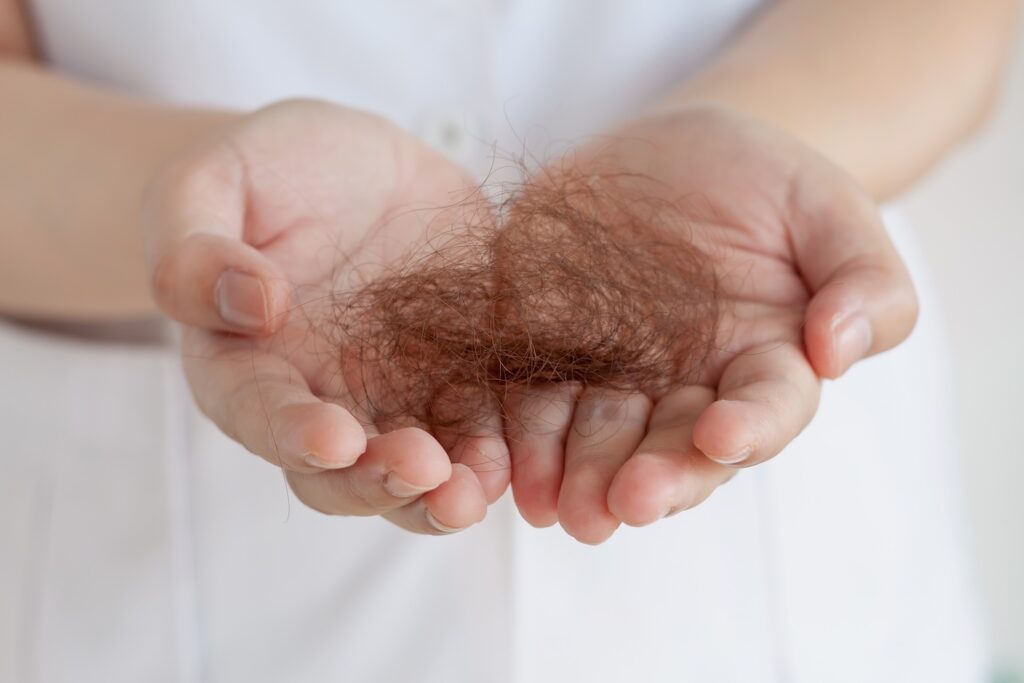
If you’ve noticed more hair falling out since starting Mounjaro, you’re not imagining it. Hair loss is listed as a common side effect, affecting up to 1 in 10 people, and for most, it’s temporary shedding linked to losing weight quickly rather than lasting damage to your hair.
Finding more hair in the shower or tangled in your brush can knock your confidence, especially when the scales are finally moving in the right direction. The reassuring part is that this kind of shedding usually settles on its own, and there are practical steps you can take to support your hair as it grows back.
In SURMOUNT-1, the main trial of tirzepatide for weight loss, 4.9% to 5.7% of people on the 5mg, 10mg and 15mg doses reported hair loss, compared with around 1% of people on placebo.
That’s a clear difference, but it doesn’t mean tirzepatide is acting directly on your hair follicles. Most experts believe it’s the weight loss that sets off the shedding, rather than the medicine itself.
Research is still catching up with how many people now use these medicines. One large 2025 study suggests the picture with tirzepatide may be a little more complicated than weight loss alone, while a handful of case reports have even described hair improvement on tirzepatide.
A study of people diagnosed with telogen effluvium after weight loss found they’d lost an average of around 15% of their body weight, at a rate of roughly 3.5kg a month. Many people on Mounjaro lose that much or more over the course of treatment, especially once they move up to the higher doses.
People on higher doses do seem to report hair loss more often, but the dose itself isn’t the main factor. Higher doses tend to lead to more significant weight loss, and it’s how much weight you lose and how quickly you lose it that’s most closely linked to shedding.
Women do seem to experience more hair loss and shedding while taking weight loss injections than men do. A 2026 systematic review of GLP-1 medicines and hair loss found that women were disproportionately affected.
Hormonally, fat tissue produces some oestrogen, so losing a significant amount of fat can shift your oestrogen levels, and oestrogen helps keep hair in its growing phase. This is one possible factor, not a proven cause, and it doesn’t mean your hormones are out of balance.
Hair length makes a difference as well. If you have longer hair, the same amount of shedding looks like a lot more, whether it’s collecting in the plughole or coming away on your brush. Someone with short hair could be losing just as much without noticing.
Shedding on Mounjaro usually comes down to a mix of factors, with rapid weight loss at the centre.
Most hair loss on Mounjaro is a form of temporary hair shedding called telogen effluvium. Your body reads fast weight loss as a stress, and in response, it pushes more hairs than usual out of their growing phase and into their resting phase at the same time. Those hairs then fall out together a couple of months later, which is why the shedding can seem to come out of nowhere.
Normally, around 10% to 15% of the hairs on your head are resting at any one time. With telogen effluvium, this can rise to around 30%, which is why the shedding can look so dramatic when it starts.
Mounjaro works partly by reducing your appetite, so it’s common to eat far less than you used to, sometimes without realising. Hair is made mostly of a protein called keratin, and when your body isn’t getting enough protein, it puts your organs and muscles ahead of hair growth. Protein is also the nutrient people on weight loss injections most often fall short of, especially when they’re only managing a few bites at each meal.
Eating less overall makes it harder to get enough of the vitamins and minerals that support hair health.
A review in Dermatology and Therapy highlights these vitamins as the most often linked to hair loss:
Low appetite, nausea and cutting out foods that don’t sit well can all increase the likelihood of losing these vitamins on Mounjaro.
Losing weight also affects several hormones that help control hair growth. Alongside the oestrogen changes that can come with fat loss, raised cortisol levels during physical stress and changes in thyroid function can also disrupt the hair growth cycle. Thyroid problems can cause diffuse thinning that looks a lot like shedding from weight loss, so it’s worth ruling out with a blood test if your hair isn’t settling.
Starting a new medicine, adjusting to side effects and changing long-standing habits can all be stressful, and stress is a well-known trigger for telogen effluvium. Poor sleep can also contribute to hair loss by adding to that strain, and some people find their sleep changes after starting Mounjaro treatment.
Sometimes shedding uncovers something that was already there. If you have early pattern hair loss (androgenetic alopecia), which is common in both men and women, a period of telogen effluvium can make it much more noticeable. You might spot a wider parting, a thinner crown or a receding hairline you hadn’t picked up on before. When telogen effluvium happens on top of pattern hair loss, your hair may not fully bounce back without treatment, so it’s worth speaking to a pharmacist or GP if your hair loss persists or isn’t recovering as expected.
Hair loss on Mounjaro usually starts two to four months after your weight loss begins, rather than straight after your first injection.
| Time since weight loss picked up | What you might notice |
| Months 0 to 2 | No visible change while the hairs shift into the resting phase |
| Months 2 to 4 | More hair on your brush, pillow or in the shower |
| Months 4 to 6 | Shedding peaks and hair may look thinner overall |
| Months 6 to 9 | Shedding slows and short new hairs appear along your hairline and parting |
| Months 9 to 12+ | Density gradually returns |
These timings are a rough guide and vary from person to person. The trigger is the weight loss itself, which, for many people, accelerates after a few dose increases, so it’s normal for shedding to begin several months into treatment.
Shedding from weight loss tends to affect your whole scalp evenly, so rather than a few bald patches, you’re more likely to notice your hair feeling thinner overall. It often shows most at the temples, crown or along your parting, and your ponytail might feel smaller than it used to.
If you look closely at the hairs you’re losing, many will have a small white bulb at the root. That’s a sign they’ve come from the resting phase and shed naturally, rather than snapping off. Sometimes a hairdresser or barber spots the change first, especially if they haven’t seen you for a couple of months.
This type of hair loss usually follows a fairly predictable pattern. Speak to a pharmacist or GP if you notice:
Shedding usually lasts three to six months before it starts to ease off. New hairs start growing from the same follicles, but it takes time for them to make a visible difference.
Hair grows roughly 1cm a month, so it can take 12 months or more for your hair to look back to its normal length and thickness. Short new hairs around your hairline and parting are a good sign that recovery is underway, even if your hair doesn’t feel fuller yet.
For most people, no. Telogen effluvium affects the timing of your hair cycle rather than the follicles themselves, so they can still grow new hair once the shedding stops. The exception is when weight loss has made the existing pattern hair loss more obvious. That type of thinning tends to progress over time and may need treatment to slow it down or help your hair regrow.
For most people, yes. Once your weight loss slows and your body adjusts, the hair growth cycle usually returns to normal on its own while you’re still on treatment. Stopping Mounjaro won’t speed up hair regrowth because the hairs that are shedding have already entered the resting phase weeks or months earlier.
You can’t always prevent shedding, but a few changes can make it less likely and help you get back to healthy hair sooner.
The NHS recommends losing 0.5kg to 1kg a week as a safe, sustainable rate and losing weight much faster than that puts more stress on your body, which raises your risk of hair loss. If your weight is dropping quickly, ask your prescriber whether staying on your current dose for longer, rather than stepping up, could help.
It’s also best to avoid very low-calorie diets or long fasts on top of Mounjaro, as they can push your calorie and protein intake too low.
Getting enough protein is tricky when a few mouthfuls leave you full. These tips can help:
Around 0.8g to 1g of protein per kg of body weight a day is a sensible starting point, so someone weighing 90kg would aim for roughly 70g to 90g.
Some people find that injecting Mounjaro in the evening lets early nausea pass overnight, making it easier to eat well the next day. Gut side effects like diarrhoea with Mounjaro can also put you off food, so smaller, blander meals spread throughout the day can help you keep your protein intake up.
A blood test is far more useful than guessing which nutrients you might be low in. You can order test kits at home, or your GP can check your ferritin, vitamin D, B12, folate and thyroid function, which can help spot an underlying cause that’s easy to treat, like low iron or a thyroid problem. In the UK, the NHS advises everyone to consider taking a daily 10-microgram vitamin D supplement during autumn and winter, when the sun isn’t strong enough for your skin to make it.
The right vitamins for Mounjaro and hair loss can help, especially when you’re eating less than usual and your diet isn’t covering everything. They work best when they’re topping up something you’re low in, so it’s worth getting your levels checked first.
Supplements that can support your hair include:
If your levels are already normal, taking extra is unlikely to do much more for your hair.
Fluid levels can drop quickly on Mounjaro, especially if you’re dealing with diarrhoea or vomiting, and dehydration adds to the strain on your body. Sip water steadily through the day and use rehydration sachets if you’ve been unwell.
While your hair is shedding heavily, cut back on heat styling, wear looser hairstyles that don’t pull at the roots and hold off on bleaching, perms or other chemical treatments. None of these causes telogen effluvium, but they can lead to breakage that makes thinning look worse.
Small, regular habits tend to help more than big changes. Try to stick to a regular bedtime, build short breaks into your day and make time for movement you enjoy, like a daily walk. If you’re worried about hair loss and it’s getting on top of you, talking it through with a GP or pharmacist can help put it into perspective.
Most shedding from weight loss settles without any treatment. If yours is lasting longer than expected, or you think pattern hair loss might be involved, the right hair loss treatment depends on what’s behind the thinning, so it’s worth speaking to a pharmacist before you start anything.
Topical minoxidil is available without a prescription and is suitable for both men and women. You apply it to your scalp as a liquid or foam, and it helps follicles remain in their growth phase longer. A lot of people notice more shedding in the first few weeks, which can be off-putting, but it’s a sign that older hairs are making way for new growth. It usually takes around four months of daily use to see results.
Caffeine shampoos, scalp serums and other hair growth products can make your hair feel thicker and look fuller by removing follicle blockages and cleansing the scalp.
If you’d like advice on the best option for you, our online hair loss clinic offers pharmacist-led support and treatments.
Don’t stop taking Mounjaro without speaking to your prescriber first. This kind of hair loss is usually temporary, and there are often ways to manage it while you carry on with treatment.
Your prescriber might suggest holding off on your next dose increase or arranging blood tests to check for anything that could be adding to the shedding. They’ll also help you weigh up the health benefits of losing weight, like lower blood pressure and a reduced risk of type 2 diabetes, against a side effect that tends to pass by itself.
If you do pause treatment or miss several doses, you may need to restart on a lower dose to reduce the chance of side effects like nausea. Your prescriber can tell you the safest way to get your weight loss journey back on track.
Mounjaro isn’t the only medicine linked to shedding. Hair loss has been reported with other weight loss medicines similar to Mounjaro, but it seems to be more common with those that produce the greatest weight loss.
A 2025 study in the Journal of the American Academy of Dermatology looked at different health records and found there was a higher risk of telogen effluvium when taking tirzepatide than with other weight loss medications. This was an observational study, so it shows an association rather than proving that tirzepatide itself is the cause. People on tirzepatide tend to lose more weight, which could explain the difference.
| Medicine | Hair loss in main trials | Average weight loss in main trials |
| Mounjaro (tirzepatide) | 4.9% to 5.7% (SURMOUNT-1) | Up to around 22.5% |
| Wegovy (semaglutide 2.4mg) | Around 3% (STEP 1) | Around 15% |
| Liraglutide | Not commonly reported | Around 8% |
These figures come from separate trials with different participants, so they aren’t a direct comparison, but the medicines that lead to more weight loss also tend to have higher rates of hair loss.
If you’re thinking about switching from Mounjaro to Wegovy because of hair loss, a different medicine won’t necessarily stop the shedding if you’re still losing weight quickly.
If you’re noticing hair loss while taking Mounjaro, our pharmacy team can support you at every stage of your weight loss treatment. We can review your dose, help you manage side effects and talk you through hair loss treatments that might suit you.
You can start or continue your Mounjaro treatment with a free online consultation, or visit our online weight loss clinic to explore your options.