
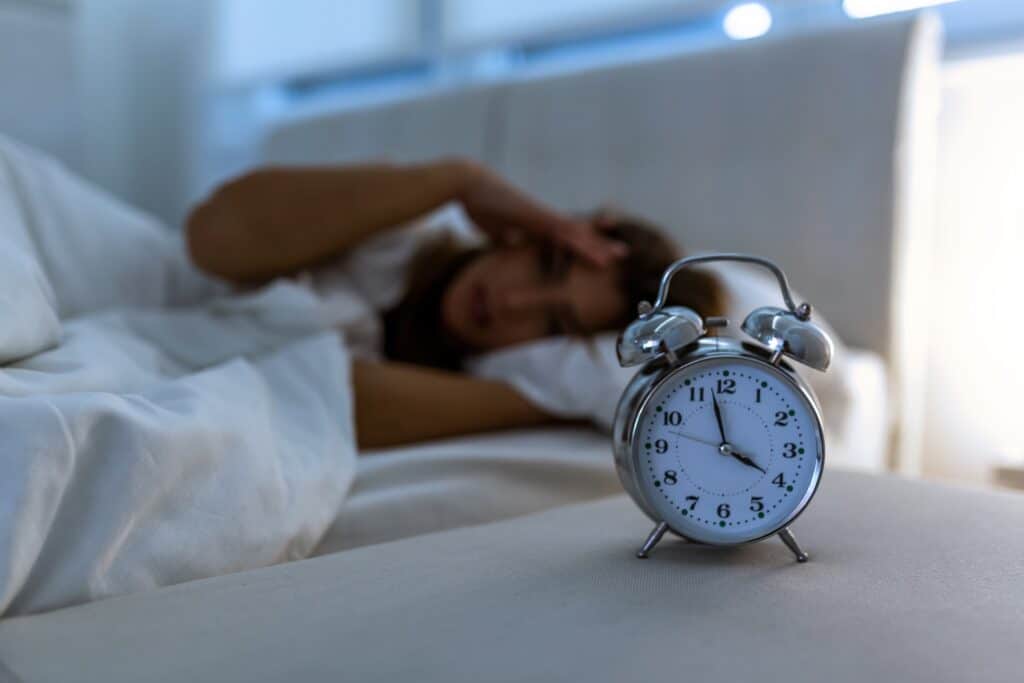
Starting Mounjaro can feel like a lot of firsts – the first weight loss injection, the first side effect, the first time the scales shift in a way they haven’t in years. But for some people, there’s another unexpected first: lying awake at night, staring at the ceiling, wondering what’s going on.
A number of people report sleep disturbances on Mounjaro, which makes it more confusing that insomnia isn’t listed as an official side effect. So if you’re not sleeping well, is Mounjaro to blame?
Insomnia isn’t listed as a common adverse reactions in Mounjaro’s prescribing information, and it wasn’t identified as a statistically significant side effect in clinical trials. The MHRA – the UK medicines regulator – doesn’t include sleep disturbance in its documented side effect profile for tirzepatide.
Insomnia, however, is common in the general population. The NHS estimates around one in three people in the UK will experience it at some point in their lives, so some overlap with Mounjaro use is expected regardless of causation.
A scientific review of social media posts found that around 1% of users felt as if they were experiencing insomnia while taking weight loss medicines, including Mounjaro and Wegovy – a relatively small proportion, though not insignificant given how widely these medications are now used.
The fact that insomnia is missing from the official side effects list doesn’t mean sleep problems aren’t happening for some people. It just means there’s no established link between Mounjaro and sleep disruption.
Mounjaro may affect your sleep not by acting on sleep directly, but through several documented effects that can impact sleep as a knock-on consequence. For some people, those effects are enough to make nights noticeably worse.
Research published in the journal Brains has noted that some people have reported insomnia and other sleep disturbances after taking GLP-1 medications, though there isn’t an established, direct cause.
If you’re experiencing sleep issues on Mounjaro, one or more of the following is likely at play.
The most commonly reported side effects of this weight loss medication are gastrointestinal: nausea, diarrhoea, vomiting, and stomach pain affect a significant proportion of users, particularly in the early weeks of treatment and around dose increases.
Any of these, if experienced in the evening or during the night, can make it hard to get to sleep or stay asleep. It’s hard to sleep through nausea, and nighttime trips to the bathroom don’t help either.
Significant weight loss on Mounjaro, doesn’t just change how you look. It alters the balance of hormones involved in appetite and sleep regulation, including leptin, ghrelin, and cortisol. Shifts in these hormones can affect how easily you fall asleep and how well you stay asleep.
There’s also evidence that reduced caloric intake can lead to lower overnight glucose levels in some people, which may trigger restlessness or early waking as the body responds to the dip.
Mounjaro acts on GLP-1 receptors, and those receptors aren’t only found in the gut. They’re also present in the hypothalamus, the part of the brain that regulates sleep and wakefulness.
Because tirzepatide acts on these receptors, it may indirectly influence sleep patterns in some individuals, though responses vary widely, and this area of research is still developing.
Sleep disturbances are more frequently reported around the time of dose increases or during the early adjustment period, when side effects are generally more pronounced.
For many people, any sleep disruption settles as the body acclimatises to the new dose, so if you’ve recently gone up to a higher pen, it’s worth giving it a few weeks before drawing conclusions.
Sleep disruption on Mounjaro tends to be linked to specific phases of treatment: the early adjustment period, or the weeks following a dose increase. Once the body settles into a new dose and GI side effects ease, so sleep typically improves alongside them.
If disruption in your sleep happens around a dose change and is gradually improving, that’s a reasonable sign you’re in an adjustment phase rather than dealing with something more persistent. Lack of sleep during this window is unpleasant, but it’s usually temporary.
Persistent sleep problems are a different matter. If disruption continues beyond four to six weeks without improvement, or if poor sleep is significantly affecting how you function day to day, that warrants a review rather than more waiting. Sleep disruption that goes unaddressed can add to other side effects and make it harder to stay on track with treatment.
While some people report difficulty sleeping, others find the opposite: that they feel noticeably more fatigued, particularly in the early stages of treatment.
Tiredness is a recognised side effect of Mounjaro. Taking in fewer calories means less energy available overall, and the body also has to work harder during periods of active weight loss, which can leave some people feeling more drained than usual. For these users, the concern isn’t insomnia at all. It’s feeling like they need more sleep, not less.
So if Mounjaro is disrupting your sleep, it’s worth being specific about how. Difficulty falling or staying asleep points to one set of possible causes; persistent fatigue and low energy point to another. Both are worth mentioning to your prescriber.
A significant number of Mounjaro users describe something else entirely: unusually vivid, intense, or bizarre dreams that begin a few weeks into treatment.
These aren’t your standard forgotten-by-morning dreams. People describe them as emotionally charged, strikingly clear, and sometimes unsettling. They often start appearing once the medication has had a few weeks to build up, and they can come as a surprise if you weren’t expecting them.
This isn’t clinically confirmed; vivid dreams aren’t listed in Mounjaro’s official side-effect documentation, and there’s no established reason that fully explains why they might happen.
While the links between Mounjaro and poor sleep are largely indirect, there’s one area where the medication may actually improve the quality of your sleep: obstructive sleep apnoea (OSA).
OSA is strongly associated with excess weight. Studies suggest that around 25% of people who are overweight have the condition, and research shows that a 10% reduction in body weight is associated with a 26% reduction in breathing disruptions per hour, making weight loss one of the most effective non-surgical interventions for OSA.
Tirzepatide’s effects on OSA were investigated in the SURMOUNT-OSA phase 3 trials, a randomised, placebo-controlled study running over 52 weeks in adults with moderate-to-severe OSA and obesity. Results showed a mean reduction of up to 62.8% on the apnoea-hypopnoea index, or roughly 30 fewer breathing disruptions per hour, compared to placebo. Participants also showed a mean body weight reduction of 18.1% from baseline, compared with 1.3% with placebo.
The connection between Mounjaro and sleep apnoea improvement centres primarily on weight loss rather than any direct action on the airways. That said, Mounjaro is not currently licensed for the treatment of OSA, and anyone using CPAP therapy shouldn’t discontinue it without speaking to a specialist first, regardless of how much weight they’ve lost.
If your sleep has been affected since starting Mounjaro, good sleep hygiene can make a meaningful difference. These steps won’t fix every cause, but they can improve your sleep quality and make it easier to get a good night’s sleep while your body adjusts.
Keep to a consistent sleep routine. Your body’s internal clock responds to regularity. Choose a time to go to bed and wake up at the same time each day, including weekends, to help regulate your sleep cycle over time and signals to your body when it’s time to rest.
Avoid caffeine in the afternoon and evening. Caffeine has a half-life of around five to six hours, meaning an afternoon coffee can still be affecting your ability to fall asleep at midnight.
Time your injection away from bedtime. If GI side effects are disrupting your nights, try taking your weekly injection earlier in the day so that any nausea or discomfort is more likely to peak during waking hours.
Don’t eat a heavy meal close to sleep. This applies to anyone, but it’s particularly relevant on Mounjaro, where digestion is already slowing down. Eating late can increase the likelihood of overnight discomfort and make it harder for your body to prepare for sleep.
Limit alcohol. It may feel like it helps you wind down, but alcohol disrupts sleep architecture, reducing the restorative deep sleep and REM sleep your body needs for better sleep overall.
Address any underlying stress or low mood. Both are independent contributors to insomnia. If anxiety or low mood has accompanied your weight loss journey, that’s worth exploring in its own right, separate from Mounjaro.
Some sleep disruption in the early weeks of Mounjaro is common and usually settles on its own. But there’s a point at which it stops being something to wait out.
If sleep problems have persisted for 4 to 6 weeks, or if poor sleep is affecting your ability to function during the day, it’s worth speaking to your doctor. A prescriber can assess whether your current dose is contributing, whether a timing adjustment might help, or whether something else is going on that needs attention.
If you’re on a Mounjaro programme through Click2Pharmacy and you have concerns about how the medication is affecting your sleep, our prescribing team is on hand to help.