
What is urinary retention?
Urinary retention, also called bladder retention, is a condition in which the bladder cannot empty properly. This might mean you’re completely unable to pass urine, or that you can urinate but your bladder never fully empties. It affects both men and women, though it’s more common in men, particularly as they get older.
There are two main types:
Acute urinary retention comes on suddenly and is a medical emergency. You’ll be completely unable to pass urine despite feeling a strong urge to go, and it’s often accompanied by severe pain or discomfort in the lower abdomen. If this happens, you need urgent medical attention.
Chronic urinary retention develops gradually over time. You may still be able to urinate, but your bladder doesn’t fully empty. This type is often painless, which means many people don’t realise they have it until complications develop.
What causes urinary retention?
Several factors can cause urinary retention, and whether it comes on suddenly or builds over time often points to the cause.
In men, benign prostatic hyperplasia, commonly known as an enlarged prostate, is one of the most common causes. The prostate gland surrounds the urethra, and when it grows larger, it can partially or fully restrict the flow of urine. This is why urinary retention becomes more common in men over 50.
Other causes include:
- Urinary tract stones or tumours that physically block the urethra
- Nerve damage from conditions like diabetes, multiple sclerosis, or a stroke affects how the bladder signals it needs to empty
- Weakened bladder muscles that can’t contract strongly enough to push urine out
- Constipation, which can put pressure on the bladder
- Certain medications, including antihistamines, decongestants, tricyclic antidepressants, and some pain relief medications
- Urethral stricture – the urethra narrows due to scar tissue or inflammation
- Recent surgery or anaesthetic that has temporarily affected bladder function
In women, pelvic organ prolapse, where the bladder, uterus, or bowel shifts out of position, can obstruct the urethra and lead to retention.
How do you get a diagnosis of urinary retention?
If you’re experiencing symptoms, your GP is the first port of call. They will ask about your symptoms, how long you’ve had them, and any medications you’re currently taking that could be contributing to the problem.
From there, they may carry out or arrange one or more of the following:
- A physical examination, which in men typically includes a rectal examination to assess the size and condition of the prostate
- A urine flow test, which measures how fast and how much urine you pass
- A bladder scan after urinating to check how much urine remains in the bladder, known as a post-void residual test
- A urine test to check for infection or blood in the urine
- Blood tests to assess kidney function and, in men, a PSA test to check prostate health
In some cases, further investigation, such as a cystoscopy, where a small camera is passed into the urethra and bladder, may be needed to identify structural causes like strictures or bladder stones.
Urinary Retention Symptoms
Symptoms differ depending on whether the condition is acute or chronic.
Acute urinary retention symptoms include:
- Complete inability to urinate
- Sudden, severe pain or pressure in the lower abdomen
- A visibly swollen or distended lower abdomen
- Feeling an urgent and overwhelming need to urinate without being able to
Chronic urinary retention symptoms can be subtler and may include:
- Difficulty starting to urinate
- A weak or slow urine stream
- Needing to strain or push to urinate
- Feeling like your bladder hasn’t fully emptied after going
- Frequent urination or getting up multiple times in the night
- Mild, ongoing discomfort in the lower abdomen
If you suddenly find yourself completely unable to urinate, experience severe pain or pressure in your lower abdomen, or notice a swollen belly, seek emergency medical care immediately. Acute urinary retention is a medical emergency that requires hospital treatment.
What are the complications of urinary retention?
Left untreated, urinary retention can lead to a number of complications:
- Urinary tract infections are common because urine sitting in the bladder for too long creates conditions where bacteria can multiply.
- The bladder can become stretched and weakened, reducing its ability to contract properly.
- An overfull bladder can also cause urinary incontinence, particularly overflow incontinence, where urine leaks out because the bladder has no capacity left.
- In more serious cases, urine can back up into the kidneys, causing kidney damage or acute kidney injury.
This is why it’s important not to ignore symptoms and to seek treatment promptly.
Treatment for Urinary Retention
The right treatment for urinary retention depends on the cause and the severity of your symptoms.
For acute urinary retention, immediate medical attention is always needed, typically involving the insertion of a catheter to drain the bladder. Once the immediate situation is under control, medication is usually prescribed to treat the underlying cause and prevent it from happening again.
For chronic urinary retention and ongoing management, prescription alpha-blockers are often the first line of treatment.
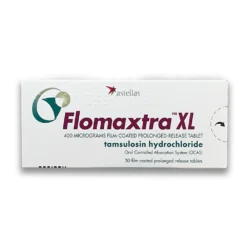
Flomaxtra XL (Tamsulosin)
Flomaxtra XL is a modified-release alpha-blocker containing tamsulosin hydrochloride 400mcg. It works by relaxing the smooth muscle in the prostate gland and bladder neck, reducing the resistance to urine flow and making it easier to empty the bladder. It is taken once daily, and most people begin to notice improvement in their symptoms within a few days of starting treatment.
Flomaxtra XL is suitable for men with urinary retention or lower urinary tract symptoms caused by prostate enlargement. Our pharmacists will assess your suitability during an online consultation before issuing a prescription.
Other Alpha-Blockers
Other alpha-blockers like alfuzosin and doxazosin work through the same mechanism as tamsulosin, relaxing the muscles around the prostate and bladder neck to improve urine flow.
5-Alpha Reductase Inhibitors
Medications like finasteride and dutasteride take a different approach. Rather than relaxing the muscles, they reduce the size of the prostate over time by blocking the hormone responsible for prostate growth. They take longer to show results, but are effective for long-term management. They are sometimes prescribed alongside an alpha-blocker for better overall symptom control.
Antibiotics
If urinary retention is linked to a UTI or prostatitis, antibiotics may be prescribed alongside to clear the infection and reduce inflammation contributing to the blockage.
Management of Urinary Retention
Double Voiding
Urinate, wait a few moments, and then try again. It encourages the bladder to empty more completely and can be particularly useful for people with chronic retention.
Timed Voiding
Rather than waiting until you feel a strong urge to go, timed voiding means going to the toilet at regular intervals throughout the day, typically every two to three hours. This reduces the amount of urine that builds up in the bladder at any one time.
Pelvic Floor Exercises
Strengthening the pelvic floor muscles can support bladder function and improve control over urination. A physiotherapist can advise on the best exercises, particularly if muscle weakness is contributing to your symptoms.
Fluid Intake
Reducing fluids can actually concentrate the urine and irritate the bladder even more, so aim to drink enough water throughout the day. Limit caffeine and alcohol or remove it from your diet altogether, as they can increase bladder irritation.
Medication
Some common medications can make urinary retention worse, including certain antihistamines, decongestants, and antidepressants. If you think a medication might be contributing to your symptoms, speak to your GP before you decide to stop taking them.