



What is Snoring?
Snoring is the sound produced when air flows past relaxed tissues in your throat, causing them to vibrate during sleep. While occasional snoring is normal, regular loud snoring can indicate a more serious condition called sleep apnea and can significantly impact sleep quality for both you and the person you sleep next to.
Snoring affects people of all ages but becomes more common as you get older. It happens when the muscles in your throat relax during sleep, narrowing your airway and causing the surrounding tissues to vibrate as you breathe.
What Causes Snoring?
There are several reasons why people snore. Some people have physical features that make them more prone to snoring – things like a thick soft palate, enlarged tonsils, or a long uvula (the tissue that hangs down at the back of your throat) can all narrow your airway.
Being overweight can make snoring worse, as extra tissue around your neck puts pressure on your throat. Drinking alcohol before bed overly relaxes your throat muscles, while nasal congestion from colds and flu, allergies, or a deviated septum forces you to breathe through your mouth instead of your nose.
Your sleeping position matters too – sleeping on your back means gravity will pull throat tissues downward and narrow your airway. As we age, our throat muscles naturally lose their tone, so snoring often becomes more of a problem over time.
Snoring Symptoms
The primary symptom of snoring is the loud or soft vibrating sound during sleep. However, snoring can also be associated with other symptoms that may indicate a more serious condition:
- Pauses in breathing during sleep (sleep apnea)
- Restless sleep or frequent waking
- Morning headaches
- Excessive daytime sleepiness
- Difficulty concentrating
- Sore throat upon waking
- Gasping or choking during sleep
If you experience these symptoms alongside snoring, it’s important to speak with a doctor or pharmacist as you may have sleep apnea, which requires medical attention.
Remedies & Treatments for Snoring
Lifestyle Changes
Simple lifestyle modifications can significantly reduce snoring and nasal obstruction. Maintaining a healthy weight through diet and exercise can reduce fatty tissue around the throat. Sleeping on your side rather than your back prevents gravity from collapsing throat tissues.
Avoiding alcohol and sedatives before bedtime helps keep throat muscles from becoming overly relaxed. Staying well-hydrated prevents secretions in your nose and throat from becoming sticky, and treating nasal congestion with decongestants can improve airflow.
Sleep Hygiene
Good sleep habits can make a significant difference to your snoring. Elevating the head of your bed by about 4 inches can help keep your airways open by using gravity to your advantage.
Try sleeping on your side rather than your back. If you always end up on your back in the middle of the night, try sewing a tennis ball in the back of your pyjama top. This old trick makes it uncomfortable to roll onto your back, encouraging you to stay on your side throughout the night.
Anti-Snoring Products
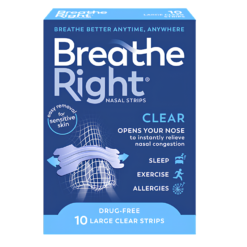
Nasal strips that you wear accross the bridge of your nose can gently lift and open nasal passages, improving airflow and reducing snoring caused by nasal congestion. They’re easy to use, drug-free, and can provide immediate relief for many people. Simply apply before bedtime and remove in the morning.
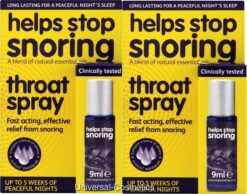
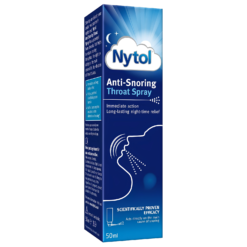
An anti-snoring throat spray lubricate and tighten the soft tissues in your throat that vibrate during snoring. The formula helps reduce the vibrations that cause snoring sounds. Spray directly into the back of your throat before bedtime for best results.
Other anti-snoring devices include nasal dilators inserted into the nostrils and anti-snoring mouthpieces that work by slightly advancing your lower jaw or holding your tongue in position to keep your airway open. These devices require some adjustment, but can be effective in treating snoring.
Prescription Treatments
For persistent snoring that doesn’t respond to lifestyle changes, you might need a prescription treatment. Nasal corticosteroid sprays can reduce inflammation and congestion in the nasal passages, improving airflow and reducing snoring.
When to Seek Further Help
If your snoring is also accompanied by breathing pauses, excessive daytime sleepiness, or doesn’t improve with treatment, you should consult your GP. They may refer you for a sleep study to rule out obstructive sleep apnea (OSA) or other sleep disorders that require specialised treatment.





