








What is a dry cough?
A dry cough is a type of cough that doesn’t produce any mucus or phlegm. It’s often described as a hacking, tickling, or irritating cough that can feel like there’s something stuck in your throat that you can’t clear.
Unlike a wet or productive cough that helps clear mucus from your airways, a dry cough serves no useful purpose and can become a persistent, annoying problem. It often feels worse when you’re lying down or trying to sleep, and the constant coughing can leave your throat feeling raw and sore.
Most dry coughs are temporary and will clear up on their own within a few weeks, but some can become chronic and last for months if the underlying cause isn’t treated properly.
What causes dry coughs?
There are many reasons why you might develop a dry cough:
Viral infections like colds and flu are the most common cause. Even after other symptoms have cleared up, the cough can linger for weeks as your airways recover from the inflammation.
Asthma can cause a persistent dry cough, especially at night or after exercise. The airways become inflamed and sensitive, triggering coughing.
Environmental irritants like dust, smoke, pollution, strong perfumes, or cleaning products can trigger a dry cough, especially in people with sensitive airways.
Allergies to pollen, pet dander, mould, or dust mites often cause a persistent dry cough and other allergy symptoms.
Acid reflux can cause stomach acid to travel into your throat, irritating the airways and triggering a chronic dry cough, particularly at night.
Certain medications, especially ACE inhibitors used to treat high blood pressure, can cause a persistent dry cough as a side effect.
Air conditioning and heating can dry the air and irritate your throat, leading to coughing, especially during seasonal changes.
Post-nasal drip from sinus problems can cause mucus to drip down the back of your throat, creating that tickling sensation that makes you want to cough.
Dry Cough Symptoms
A dry cough has several characteristic symptoms that can help you identify it:
- Persistent coughing without producing any mucus or phlegm is the main sign. The cough often comes in sudden bursts or fits that are difficult to control.
- Throat irritation is common, with many people describing a constant tickling, scratching, or burning sensation in their throat that triggers the urge to cough.
- Dry coughs are worse at night, and lying down can exacerbate them, as gravity and changed airflow patterns can increase throat irritation.
- A hoarse voice may develop from the constant coughing, leaving your voice sounding rough or strained.
- Chest tightness, especially if you’ve been coughing frequently, occurs when the muscles around your ribs become tired and sore.
- Sleep disruption is a major problem, as nighttime coughing fits can repeatedly wake you up, leaving you tired during the day.
- Sore throat often develops from repeated coughing, making swallowing uncomfortable and adding to the overall irritation.
If your dry cough lasts more than three weeks (chronic cough), is accompanied by blood, causes severe chest pain, or comes with a high fever, you should see your GP for further evaluation.
Over-the-Counter Treatments for a Dry Cough
Cough Suppressants
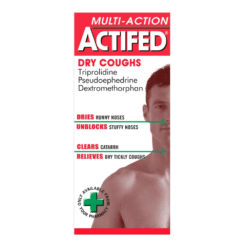
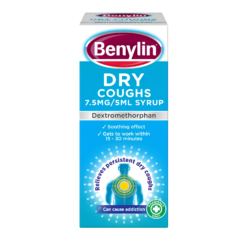
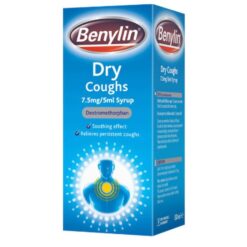
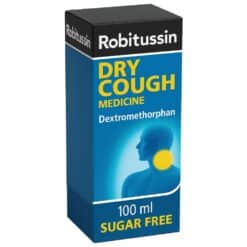
Dextromethorphan is the main ingredient in non-drowsy cough medicines like Benylin Dry Cough Non-Drowsy, which work by reducing your brain’s urge to cough. These are helpful during the day when you need to stay alert.
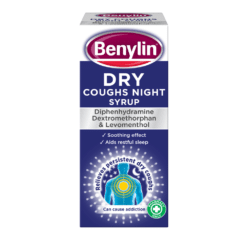
For nighttime relief, diphenhydramine hydrochloride in products like Benylin Dry Cough can help suppress your cough while also making you feel drowsy, helping you get better sleep.
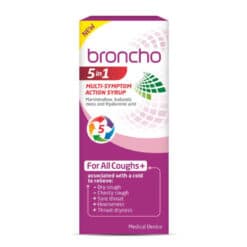
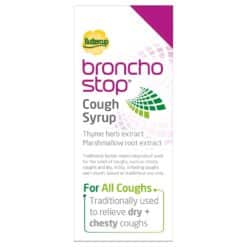
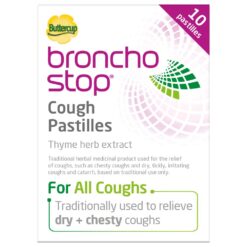
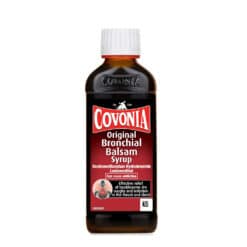
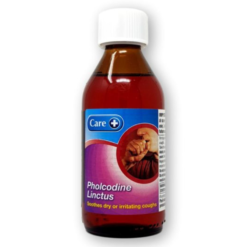
Other effective cough suppressants include Pholcodine Linctus, a syrup that coats your throat and reduces the coughing reflex, and Broncho Stop, which provides long-lasting relief from persistent dry coughs.
Multi-Symptom Treatments
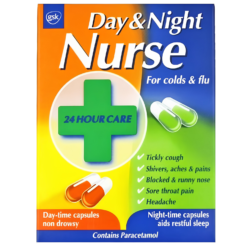
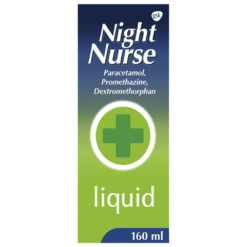
Day & Night Nurse comes in tablet and liquid form, providing round-the-clock relief from coughs and other cold and flu symptoms. The day formula keeps you alert, while the night formula helps you sleep.
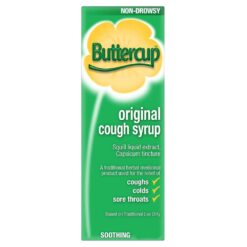
Buttercup Syrup is a traditional remedy that combines cough suppression with soothing ingredients to calm irritated throats.
Throat Soothers, Lozenges & Cough Drops
Fisherman’s Friend lozenges contain strong menthol that provides immediate throat relief and helps reduce the urge to cough. The intense flavour might be strong, but many people find them very effective.
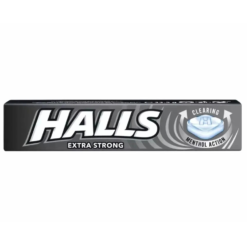
Halls Soothers offer a gentler approach with various flavours, providing cooling menthol relief that numbs throat irritation and reduces coughing fits.
Home Remedies for a Dry Cough
Honey-based preparations can coat and soothe an irritated throat, while menthol or eucalyptus products provide cooling relief. Steam inhalation can help moisten dry airways and reduce throat irritation.
When to Use Each Treatment to Treat a Dry Cough
For occasional dry coughs from minor irritants, throat soothers or simple honey-based remedies can provide enough relief. Persistent dry coughs that disrupt sleep or daily activities typically benefit from stronger cough suppressants. If your cough is related to cold symptoms, multi-symptom treatments can tackle several problems at once.