Spending time in the sun is one of the best parts of summer, but it can also bring some unwelcome skin reactions. Two of the most common are heat rash and sun poisoning. They can look similar, and both tend to appear during a holiday or a heatwave, but they have different causes and require different treatments.
| Heat Rash | Sun Poisoning (PLE) | |
| Cause | Blocked pores trap sweat under the skin | Overexposure to UV light |
| Who gets it | Anyone, especially in humid weather | People with fair skin or sun sensitivity |
| When it appears | During or after sweating heavily | Hours after sun exposure |
| Common symptoms | Small red bumps, prickling or stinging, itching | Itchy skin rash, blisters, swelling |
| Location | Skin folds, areas covered by clothing | Exposed areas: arms, chest, neck |
| Treatment | Cool the skin, calamine lotion, hydrocortisone cream, antihistamines | Stay out of the sun, take antihistamines, use steroid cream |
| Needs a doctor? | Not usually needed, but over-the-counter treatments can help | Sometimes, if severe |
Heat rash (also called prickly heat or miliaria) is a type of rash that happens when blocked pores trap sweat under the skin. Instead of evaporating normally, it gets trapped, causing irritation and a characteristic bumpy rash.
It is most common in hot, humid weather and tends to affect areas where sweat collects or where clothing rubs. Heat rash is common in babies and young children, but it can affect anyone during a heatwave or in a hot climate.
Despite the name, heat rash is not caused by the sun directly. It is caused by sweating, which is why it often appears in skin folds and under clothing rather than on exposed skin.
Heat rash usually appears as small, raised bumps or blisters on the skin. They are often red, though on darker skin tones they can be harder to spot and may look more skin-coloured or brown.
The rash tends to appear in clusters and is commonly found on the neck, shoulders, chest, groin, and under the arms. In babies, it often shows up on the face, neck, and nappy area.
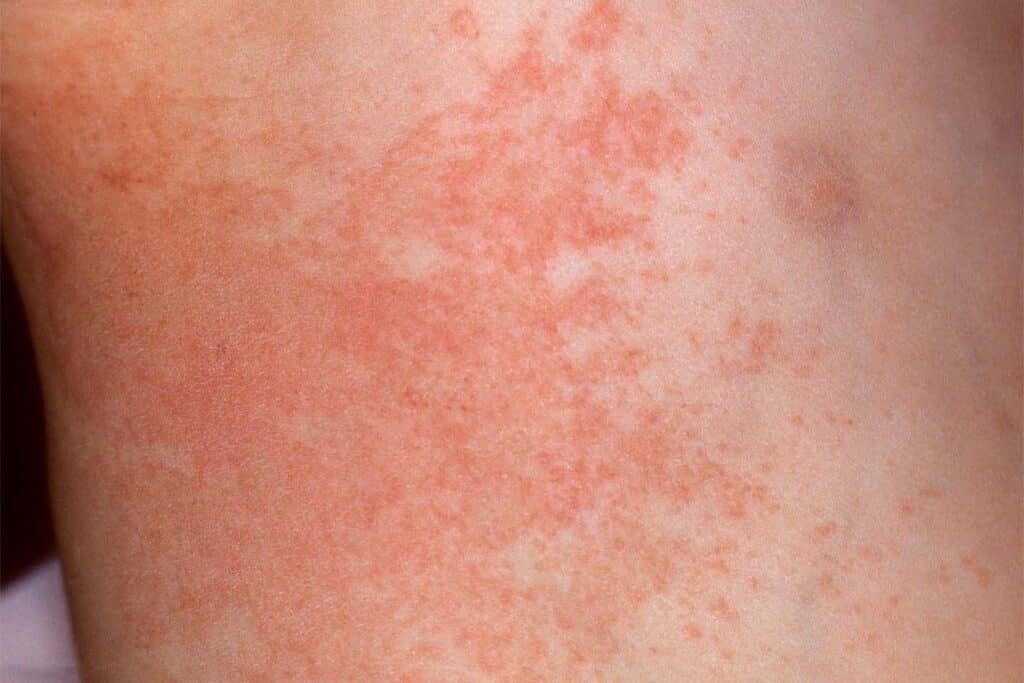
Source: NHS
The most common symptoms of heat rash are:
In most cases, heat rash is uncomfortable rather than serious. The rash usually goes away on its own within a few days once the skin cools down and stays dry.
If you notice signs of heat exhaustion as well as your rash, like dizziness, heavy sweating, or feeling faint, move to a cool place immediately and drink water. Heat stroke is more serious and requires emergency medical attention.
In rare cases, heat rash can become infected if the skin is broken from scratching. Signs of infection include increased redness, swelling, pain, or pus. If this happens, it is worth speaking to a pharmacist or GP.
Heat rash usually clears up on its own, but there are things you can do to ease the discomfort:
Try to avoid scratching, as this can break the skin and increase the risk of infection.
You don’t usually need to see a doctor for heat rash, but speak to a pharmacist if the rash is not improving after a few days, is spreading, or if you notice any signs of infection.
Despite the dramatic name, sun poisoning is not actually poisoning. The medical term is Polymorphic Light Eruption (PLE), an allergic reaction to ultraviolet (UV) light.
Sunburn and sun poisoning are often confused, but sunburn is skin damage from UV exposure, while PLE is an immune reaction that can cause a rash even without burning.
When UV rays hit the skin, they can trigger an immune response in some people that leads to a sun rash. It’s one of the most common sun-related skin conditions in the UK, affecting an estimated 10-20% of the population.
PLE tends to happen more in the spring and early summer, when the skin hasn’t adapted to stronger sunlight yet after the winter months. People with fair skin or sun sensitivity are more likely to be affected, though it can happen to people with any skin type.
Unlike heat rash, sun poisoning has nothing to do with sweating or temperature. You can develop it on a cool, bright day just as easily as on a hot one. The trigger is overexposure to UV, not heat.
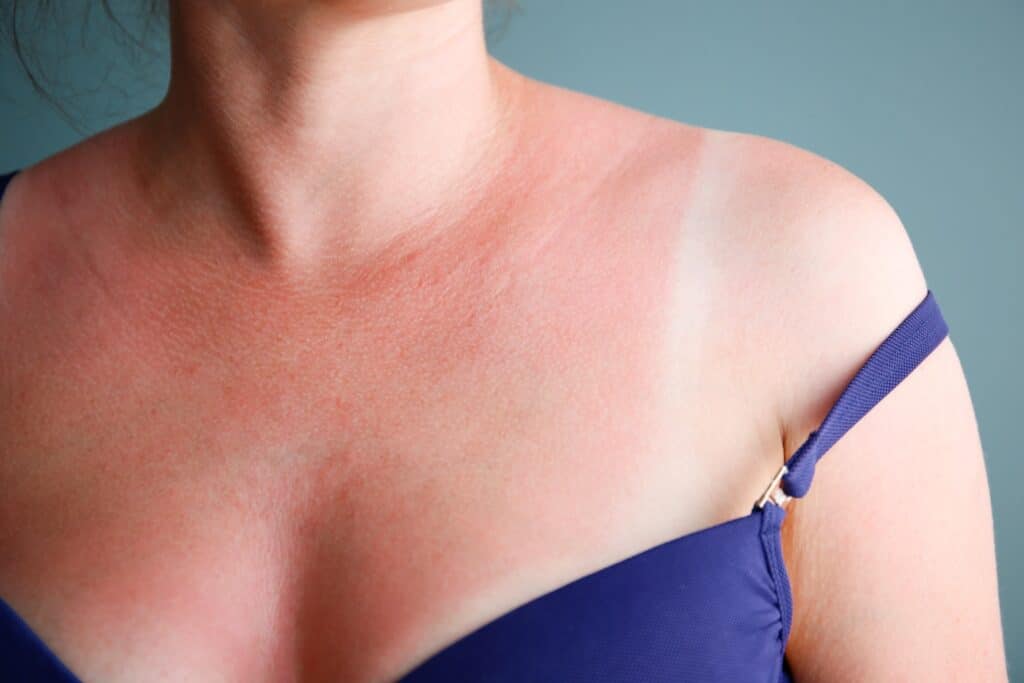
The appearance of a PLE rash can vary quite a bit from person to person, which is reflected in the word “polymorphic” in its name. It can look different depending on your skin type and how severely you have been affected.
Common appearances include:
The rash almost always appears on areas of skin that have been exposed to the sun, such as the forearms, backs of the hands, chest, and neck. Areas that are usually covered by clothing tend to be unaffected.
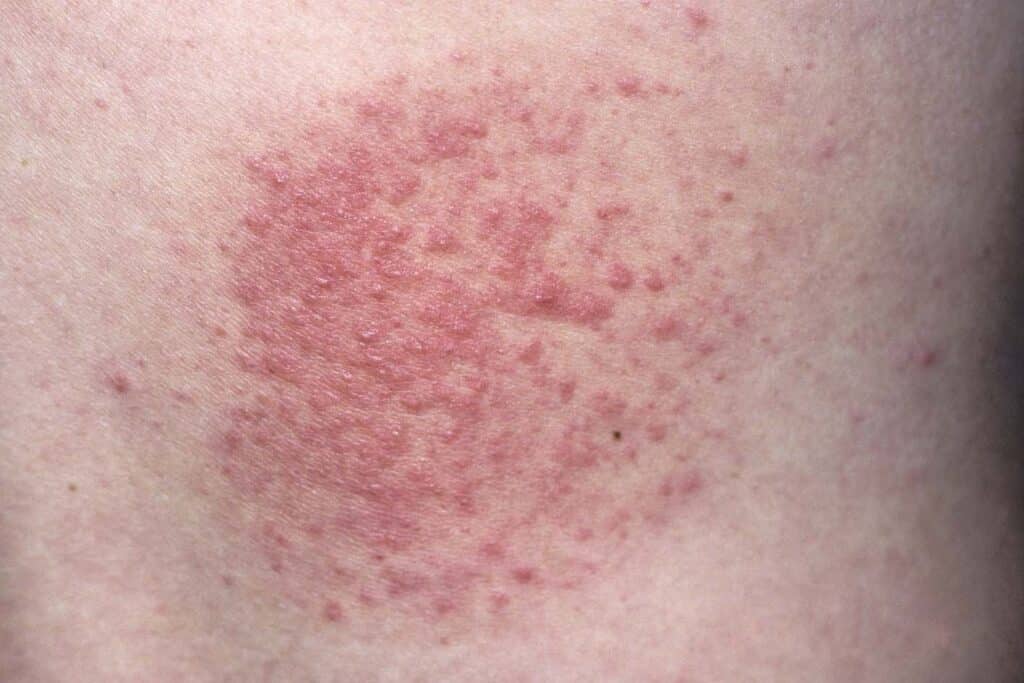
Source: NHS
Symptoms of PLE typically develop within a few hours of sun exposure, though they can sometimes take a day or two to appear. They usually last for several days before fading on their own.
The most common symptoms are:
In more severe cases, some people also experience dehydration, headaches, nausea, or a general feeling of being unwell. If you develop a high fever, severe blistering, or feel very ill after sun exposure, seek medical attention promptly.
Symptoms tend to improve once you avoid the sun and give your skin time to recover. A lot of people find that their skin becomes less reactive as the summer progresses, as repeated sun exposure can desensitise the immune response over time.
The most important first step is to get out of the sun and keep the affected skin covered. Beyond that, treatment focuses on relieving symptoms while the skin recovers.
Don’t apply perfumed products, exfoliants, or anything that could further irritate the skin while it is reacting.
If you get PLE regularly, it is worth speaking to your GP or a pharmacist. In some cases, a short course of prescription steroid cream may be recommended, or your doctor may suggest phototherapy, where the skin is gradually exposed to controlled amounts of UV light to reduce its sensitivity over time.
A few simple habits can go a long way in reducing your chances of developing either condition.
To prevent heat rash:
To protect your skin from sun poisoning:
If you are prone to PLE, a high-factor sunscreen formulated for sensitive or reactive skin can make a real difference.
If you’re dealing with an uncomfortable heat rash or a recurring reaction to the sun, getting the right treatment quickly makes a difference. At Click2Pharmacy, you can order treatments for heat rash, including antihistamines, topical emollients and sun care products online, with fast, discreet delivery straight to your door.