Variety of delivery options including next day & free delivery.
Pharmacy, clinic and prescribers based in Greater Manchester.
Start your treatment with a quick and free online consultation.
Variety of delivery options including next day & free delivery.
Pharmacy, clinic and prescribers based in Greater Manchester.
Start your treatment with a quick and free online consultation.
Fill in a quick online consultation for our licensed pharmacists to review.
Our pharmacists will review your treatment to ensure it’s suitable.
Your treatment will be delivered to your door quickly & discreetly.
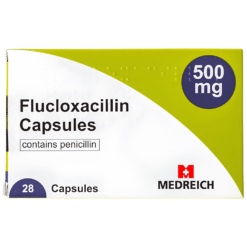
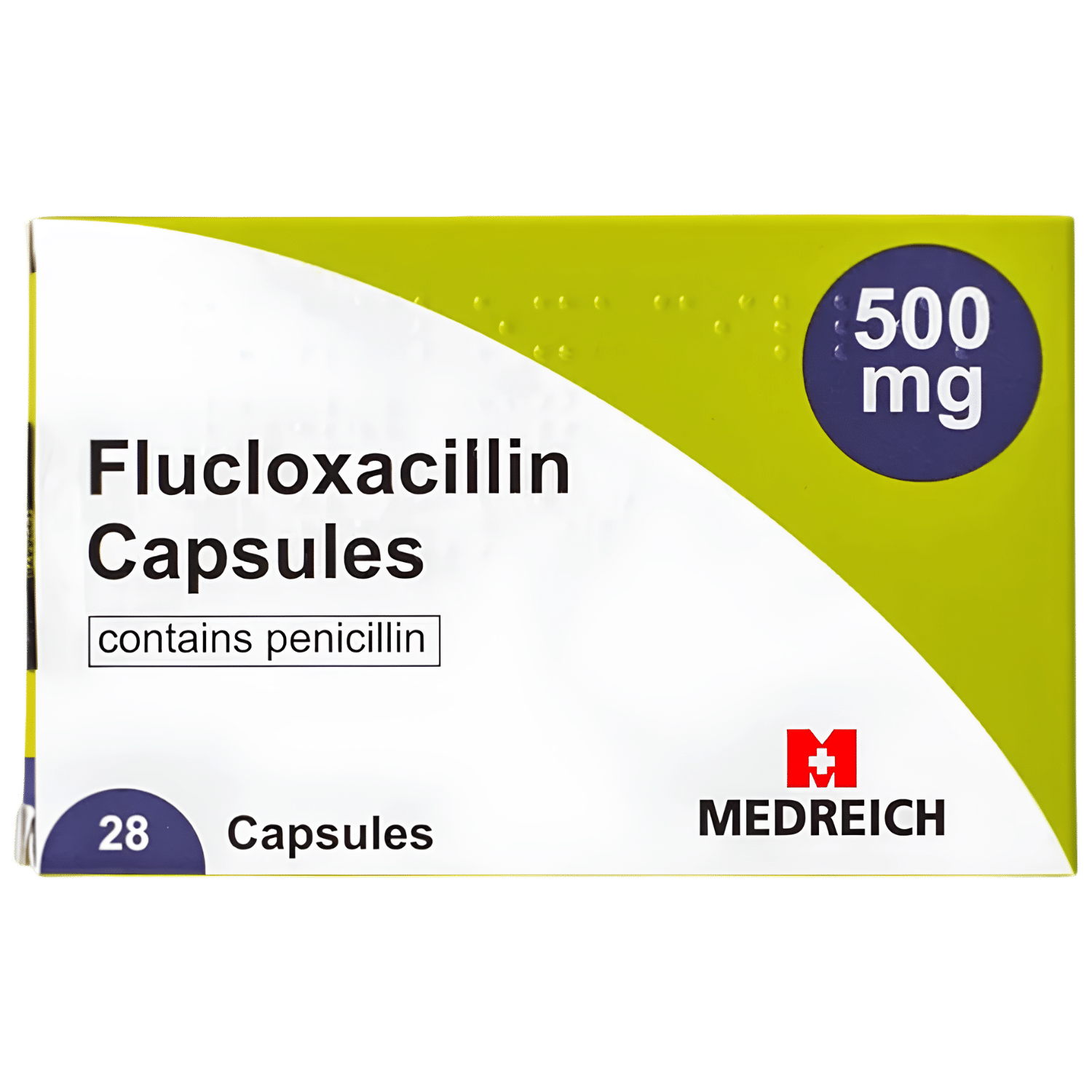
| Medication Name | Flucloxacillin Capsules |
| Medication Form | Oral capsules |
| Used for | A range of bacterial infections, including chest, throat, ear, skin and soft tissue infections |
| Who can use | Adults aged 18 years and over |
| Active Ingredient(s) | Flucloxacillin (as flucloxacillin sodium) |
| Usual Dose | One capsule four times a day, or as prescribed. Take on an empty stomach |
| Common Side Effects | Minor stomach upset, diarrhoea |
| Prescription Required | Yes, prescription-only medicine (POM) |
| Patient Information Leaflet | Flucloxacillin 500mg Capsules PIL |
Flucloxacillin is a penicillin antibiotic used to treat a range of bacterial infections. It’s commonly prescribed for skin and soft tissue infections, but it also treats infections in other parts of the body.
Flucloxacillin capsules can be used to treat:
It can also be used to prevent infections during major surgery, such as heart or orthopaedic operations.
Flucloxacillin belongs to the penicillin family of antibiotics. It’s used to treat bacterial infections by killing the bacteria that cause them, helping clear the infection and allowing your body to recover. Because it only works against bacteria, it won’t help with viral illnesses like colds or the flu.
Flucloxacillin capsules are suitable for adults aged 18 and over, once a pharmacist has reviewed your consultation.
Don’t take flucloxacillin if you:
Speak to your doctor or pharmacist before taking flucloxacillin if you:
If you’re pregnant, breastfeeding or planning a pregnancy, ask your doctor before taking flucloxacillin.
Always take flucloxacillin at the dosage your doctor or pharmacist has told you. It’s absorbed best on an empty stomach, so take it at least an hour before food or two hours after food.
Like all medicines, flucloxacillin has some potential side effects, though not everyone gets them.
These may affect up to 1 in 10 people:
These may affect up to 1 in 10,000 people:
The frequency of these isn’t known:
Stop taking flucloxacillin and contact your doctor straight away if you notice any of these:
If you get any side effects, talk to your doctor, pharmacist or nurse. You can also report them directly through the MHRA Yellow Card Scheme.
Active ingredient: flucloxacillin (as flucloxacillin sodium)
Other ingredients: magnesium stearate, gelatin, titanium dioxide (E171), indigo carmine (E132), water, shellac (E904), dehydrated alcohol, isopropyl alcohol, butyl alcohol, propylene glycol and polysorbate 80
GOOD
Flucloxacillin is a penicillin antibiotic. It’s used to treat skin and soft tissue infections, targeting the specific bacteria that cause them rather than working against all bacteria. It’s an effective antibiotic against the bacteria it targets. The right antibiotic for you depends on the type of infection, which is why it’s only prescribed after an assessment.
Flucloxacillin is absorbed best on an empty stomach, so avoid food for at least an hour before and two hours after each dose. Tell your prescriber about any other medicines you take, as flucloxacillin may interact with some, including methotrexate, warfarin, probenecid and the oral typhoid vaccine. Taking it alongside paracetamol may rarely cause a serious blood problem in people at higher risk, so mention regular paracetamol use.
Staying upright helps the capsule pass down into your stomach rather than resting in your food pipe. If a capsule lingers there, it can cause irritation or pain. Take each dose with a full glass of water, about 250ml, and stay sitting or standing for a little while afterwards.
If you’re pregnant, breastfeeding or planning a pregnancy, speak to your doctor before taking flucloxacillin. They can weigh up the benefits and any risks for your situation. Don’t start or continue it during pregnancy or while breastfeeding without that advice.
Many people start to feel better within a few days of starting flucloxacillin, though this varies with the type and severity of the infection. Keep taking it for the full course, even once you feel well. If you don’t feel better after finishing the course, speak to your doctor.
An allergic reaction to flucloxacillin is uncommon, but like other penicillin antibiotics, it can happen in some people. Signs include an itchy rash, swelling of the face, lips, throat or tongue, or difficulty breathing. If you notice any of these, stop taking it and get medical help straight away. Don’t take flucloxacillin if you’ve had an allergic reaction to penicillins before.
There’s no known interaction between flucloxacillin and alcohol, and drinking in moderation doesn’t stop the antibiotic from working. Even so, your body copes better with an infection when you’re rested and well hydrated, so it’s sensible not to overdo it. If you’re feeling unwell or tired, it’s best to avoid alcohol until you’re better.
It’s important to finish the whole course, even if you feel better before it’s done. Stopping early can let some bacteria survive, which may bring the infection back or make it harder to treat. Only stop early if your doctor tells you to.
Flucloxacillin only works against bacterial infections, not viral ones like colds and flu. Taking antibiotics for a virus won’t help and adds to the wider problem of antibiotic resistance. If you’re not sure what’s causing your symptoms, a pharmacist or doctor can advise.
You can usually take paracetamol or ibuprofen for pain or a high temperature alongside flucloxacillin. One thing to note is that flucloxacillin taken with paracetamol can rarely cause a serious blood problem in people at higher risk, such as those with kidney problems or who are undernourished, so mention regular paracetamol use to your prescriber. If you’re unsure, check with your pharmacist before combining medicines.
Flucloxacillin is a type of penicillin antibiotic, so it isn’t suitable if you’re allergic to penicillin. If you’ve ever reacted to penicillin or to antibiotics like cephalosporins, tell your prescriber before taking it. They can suggest a different antibiotic if needed.
Keep flucloxacillin below 25°C and in its original packaging to protect it from moisture. Store it out of the sight and reach of children. Don’t use it after the expiry date printed on the pack, and return any leftover capsules to a pharmacy rather than throwing them away.
Only take flucloxacillin with another antibiotic if a doctor has prescribed both together. Some antibiotics can interact, and antibiotics can also make the oral typhoid vaccine less effective. Always tell your prescriber about any other antibiotics or medicines you’re taking so they can check it’s safe and avoid any drug interactions.
If you forget a dose, take it as soon as you remember. If it’s nearly time for your next dose, wait about 4 hours before taking it, then carry on as normal. Don’t take a double dose to make up for a missed dose.
If you take too much flucloxacillin, you may experience symptoms like feeling or being sick and diarrhoea. If you or someone else takes more than prescribed, contact your doctor or nearest hospital straight away. Take the packaging with you so staff can see what’s been taken.
Page content authored by Amjad Khan, last reviewed by Dr Hussain Ahmad on 11th September 2026.