Variety of delivery options including next day & free delivery.
Pharmacy, clinic and prescribers based in Greater Manchester.
Start your treatment with a quick and free online consultation.
Variety of delivery options including next day & free delivery.
Pharmacy, clinic and prescribers based in Greater Manchester.
Start your treatment with a quick and free online consultation.
Fill in a quick online consultation for our licensed pharmacists to review.
Our pharmacists will review your treatment to ensure it’s suitable.
Your treatment will be delivered to your door quickly & discreetly.
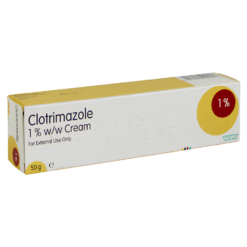
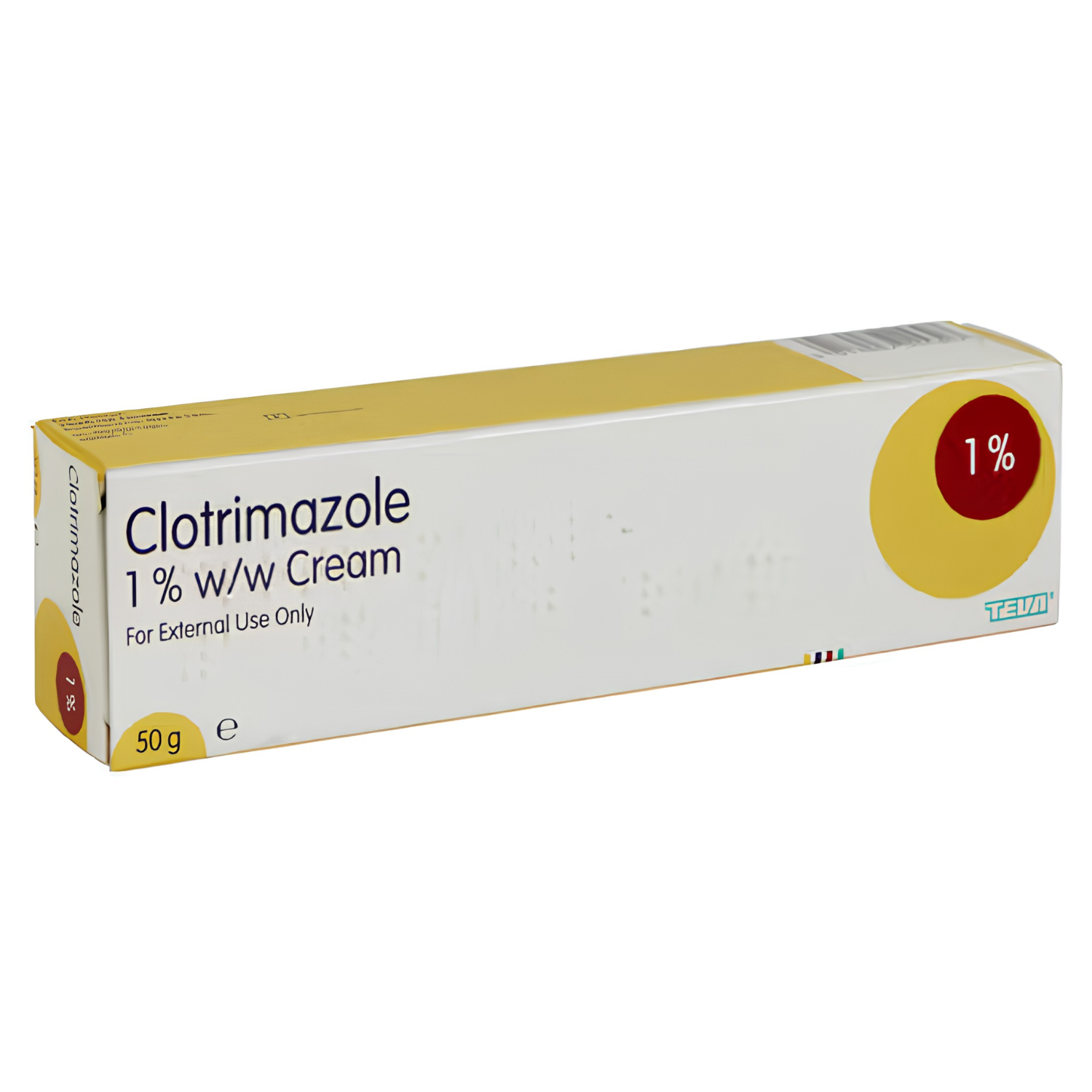
| Medication Name | Clotrimazole Cream |
| Active Ingredient | Clotrimazole |
| Medication Form | Topical cream |
| Used to Treat | Fungal skin infections, including thrush, athlete’s foot, ringworm, and jock itch |
| Available Strengths | 1% |
| Other names this medication is known by | Canesten, antifungal cream |
| Common Side Effects | Mild skin irritation, redness, stinging or burning sensation |
| Do you need a prescription for it? | Some strengths available over the counter; prescription available online |
| How should it be applied? | 2-3 times daily to affected areas |
| Patient Information Leaflet | Clotrimazole Cream Patient Information Leaflet |
Clotrimazole cream is a topical antifungal treatment that contains 1% clotrimazole as its active ingredient. It’s used to treat a wide range of fungal skin infections that can affect different parts of the body.
Clotrimazole 1% cream is available in various forms, including a cream, spray, or solution. It’s one of the most commonly prescribed antifungal treatments in the UK due to its effectiveness and ease of use.
Clotrimazole works by disrupting the cell membranes of fungi, which are essential for their survival. The active ingredient interferes with the production of ergosterol, a vital component of fungal cell walls. Without ergosterol, the cell walls become weak and develop holes, causing the fungal cells to leak and eventually die.
As the fungal infection clears, you’ll notice your symptoms gradually improving. The itching, redness, and irritation will start to fade, and your skin will begin to heal. You must continue using the cream for the full course of treatment, even if your symptoms improve quickly, to make sure the infection is completely cleared and doesn’t come back.
Clotrimazole is used to treat various fungal infections. These infections can happen on different parts of the body and cause uncomfortable symptoms like itching, redness, and flaking skin.
Common conditions treated with clotrimazole cream include:
Clotrimazole antifungal cream is effective because it targets the root cause of these infections rather than just masking the symptoms.
Clotrimazole cream is suitable for most adults and children who need treatment for fungal skin infections. It’s generally safe and well-tolerated when used as directed.
However, clotrimazole cream may not be suitable for everyone. You should consult your doctor or pharmacist before using clotrimazole cream if you:
Before starting treatment with clotrimazole cream, always inform your doctor or pharmacist about any medications you’re taking and any medical conditions you have. If you’re unsure whether clotrimazole cream is right for you, speak to a healthcare professional for advice.
Continue using clotrimazole cream for the full course of treatment recommended by your doctor or as stated on the packaging, even if all signs of your infection and your symptoms clear up before the treatment is finished. Most fungal infections need to be treated for at least 2 to 4 weeks, though some conditions may require longer treatment. Stopping too early may cause the infection to return.
Like all medications, clotrimazole cream can cause side effects, although not everyone experiences them. Most side effects are mild and affect the area where you’ve applied the cream.
If you experience any side effects, particularly if they’re severe or persistent, contact your doctor or pharmacist. Most mild side effects will settle down as your skin adjusts to the treatment and the infection clears. If you experience a severe allergic reaction, discontinue use of clotrimazole cream immediately and seek medical attention.
You can report side effects to the MHRA (Medicines and Healthcare products Regulatory Agency) to help monitor the safety of the medication.
Active Ingredients: Clotrimazole
Other ingredients: Benzyl alcohol, polysorbate 60, sorbitan stearate, cetyl palmitate, cetostearyl alcohol, octyldodecanol and purified water.
GOOD Based on 184 reviews
 Posted on Google
 Bradley Robinson30/04/2026
 Absolutely Amazing staff! Such a help thank you so muchPosted on Google
 Samiur Rahman30/04/2026Best pharmacy in the UK. The staff here are very helpful, empathetic, understanding and compassionate. Brilliant customer service and staff are actual people who use their discretion to help people.Posted on Google
 Vivien donnellon29/04/2026Extremely efficient and knowledgeable information given. All my questions were answered and also some advise regarding the issue. Thank you RehanaPosted on Google
 james watkins22/04/2026Brilliant device ordered yesterday received it today
No, clotrimazole cream shouldn’t be applied to open wounds or broken skin. The cream is designed for intact skin affected by fungal infections. If you have a wound that you suspect may be infected, consult your doctor or pharmacist about suitable treatment options.
It’s common to feel a mild stinging or burning sensation when you first apply clotrimazole cream, but this usually settles down quickly. This will be more noticeable if your skin is already irritated from the infection. However, if the stinging is severe, prolonged, or accompanied by increased redness or swelling, stop using the cream and consult your doctor or pharmacist, as this could indicate sensitivity or an allergic reaction.
Clotrimazole cream is generally considered safe to use during pregnancy when applied topically to the skin, as very little of the medication is absorbed into the bloodstream. However, it’s always best to speak to your doctor, midwife, or pharmacist before using any medication during pregnancy to make sure it’s appropriate for your specific situation.
As the Clotrimazole cream works to clear the infection, the itching will gradually reduce and eventually stop. However, it may take a few days of regular use before you notice a significant improvement. If you have itching that isn’t caused by a fungal infection, clotrimazole cream won’t be effective, and you should speak to your pharmacist about more suitable treatments.
Standard clotrimazole 1% cream does not contain steroids – it only contains the antifungal ingredient clotrimazole.
However, there is a combination product called clotrimazole and hydrocortisone cream, which contains both clotrimazole (an antifungal) and hydrocortisone (a mild steroid). This combination cream is used when there’s both a fungal infection and significant inflammation. Always check the packaging or speak to your pharmacist if you’re unsure which product you have.
No, clotrimazole cream isn’t designed to remove dark spots or treat pigmentation issues. It’s specifically formulated to treat fungal infections. If you’re concerned about dark spots on your skin, speak to your doctor or a dermatologist about appropriate treatments for hyperpigmentation.
Clotrimazole cream is not the most effective treatment for nail fungus (onychomycosis). Fungal nail infections typically require stronger antifungal treatments, often in the form of medicated nail lacquers, like Amorolfine, or oral medications, because the infection is deep within the nail bed where topical creams struggle to penetrate. If you suspect you have a fungal nail infection, see your doctor or pharmacist for advice on the most appropriate treatment.
Once opened, clotrimazole cream typically lasts for several months, but you should always check the expiry date on the packaging. Generally, you should use the cream within 6-12 months of opening, though this can vary by manufacturer.
If the cream changes colour, texture, or develops an unusual smell, don’t use it. Store it properly in a cool, dry place with the cap tightly closed to maintain its effectiveness.
Clotrimazole cream doesn’t bleach skin or fabrics. It’s a white cream that may leave temporary white marks on clothing if applied too liberally, but these wash out easily and don’t cause permanent bleaching. If you notice any changes in your skin colour after using the cream, this is more likely related to the healing process of the infection rather than the cream itself.
Clotrimazole cream isn’t suitable for treating eczema. Eczema is an inflammatory skin condition, not a fungal infection, and requires different treatments, such as emollients and steroid creams. Using clotrimazole cream on eczema won’t be effective and could irritate your skin further.
Page content authored by Mr Mohammed, last reviewed by Amjad Khan on 17th August 2026.