Variety of delivery options including next day & free delivery.
Pharmacy, clinic and prescribers based in Greater Manchester.
Start your treatment with a quick and free online consultation.
Variety of delivery options including next day & free delivery.
Pharmacy, clinic and prescribers based in Greater Manchester.
Start your treatment with a quick and free online consultation.
Fill in a quick online consultation for our licensed pharmacists to review.
Our pharmacists will review your treatment to ensure it’s suitable.
Your treatment will be delivered to your door quickly & discreetly.
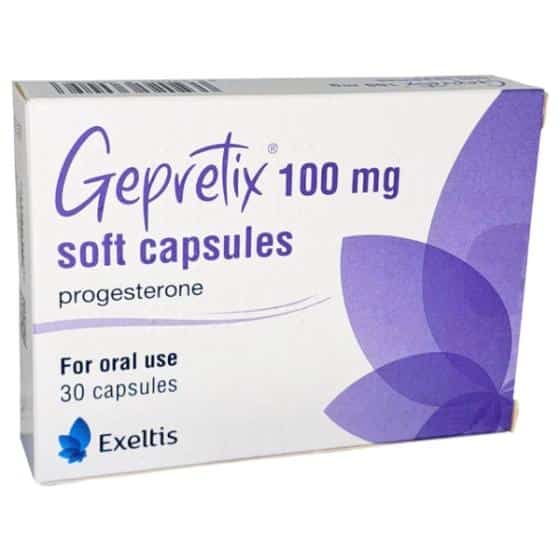
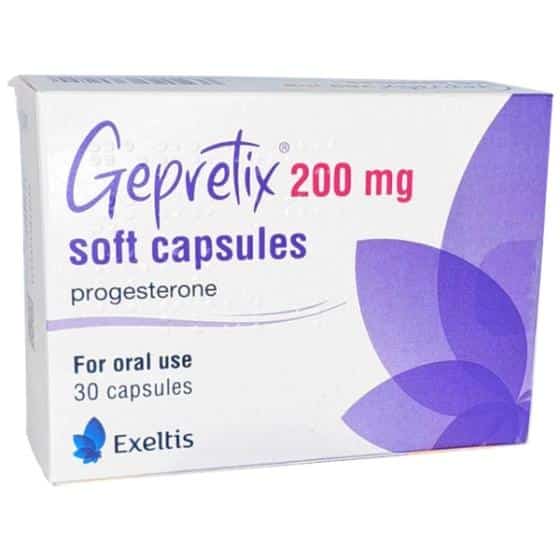
| Medication Name | Gepretix soft capsules |
| Medication Form | Soft capsule |
| Used for | Menopausal symptoms, as part of combined HRT with oestrogen |
| Who can use | Postmenopausal women who have a womb |
| Active Ingredient(s) | Progesterone |
| Available Dosage | 100mg or 200mg |
| Common Side Effects | Headache, dizziness, drowsiness, nausea, stomach pain, tiredness |
| Prescription Required | Yes |
| Patient Information Leaflet | Gepretix 100mg Patient Information Leaflet |
Gepretix is used as part of hormone replacement therapy (HRT) to help relieve the symptoms of the menopause. It is taken alongside an oestrogen HRT and is only suitable for women who still have a womb.
When oestrogen is taken on its own as HRT, it can cause the lining of the womb to thicken over time, which increases the risk of endometrial cancer. Gepretix provides the progestogen element of combined HRT, which counteracts this effect and keeps the womb lining healthy.
Combined HRT may help with common menopausal symptoms, including:
Gepretix isn’t a contraceptive. If you’re under 50 or have had a period in the last 12 months, you may still need to use additional contraception. Speak to your doctor or pharmacist for advice.
As you approach the menopause, your body produces less oestrogen and progesterone. This drop in hormones is what causes menopausal symptoms.
HRT works by replacing these hormones. Oestrogen addresses the symptoms directly, while Gepretix provides the progesterone your body needs to protect the womb lining. By taking Gepretix alongside your oestrogen, you shed the womb lining regularly, which triggers a monthly withdrawal bleed similar to a light period.
Gepretix is suitable for postmenopausal women with an intact uterus who are already using or starting oestrogen HRT.
Don’t take Gepretix if you:
Speak to your doctor before taking Gepretix if you have or have ever had:
Always take Gepretix exactly as your doctor has told you. Your doctor will aim to prescribe the lowest effective dose for the shortest time necessary.
The recommended dose is 200 mg daily at bedtime on day 15 to day 26 of your 28-day cycle. Alternatively, your doctor may prescribe 100 mg capsules to be taken at bedtime from day 1 to day 25 of each therapeutic cycle.
Swallow the oral capsules whole with a glass of water. Don’t take them with food. Taking Gepretix at bedtime helps reduce the drowsiness and dizziness that some women experience.
Continue taking your oestrogen HRT every day as normal. After your course of Gepretix each month, you will usually have a few days of withdrawal bleeding, similar to a light period.
Like all medicines, Gepretix can cause side effects, though not everyone experiences them.
The following side effects have been reported:
Side effects observed in clinical trials also include:
Women using HRT have also been reported to experience gallbladder disease, skin discolouration, fluid retention, weight changes, hair loss, insomnia, and changes in sexual desire. For a full list of side effects, read the Gepretix Patient Information Leaflet.
If you experience any severe side effects or signs of an allergic reaction, stop taking Gepretix and seek immediate medical attention by calling 999 or going to A&E.
If you notice any side effects, tell your doctor or pharmacist even if they aren’t listed here. You can also report side effects through the Yellow Card Scheme to help improve the safety of this medicine.
Each capsule contains 100mg of progesterone.
Other Ingredients: Grape seed oil, soya bean lecithin
Capsule Shell: Gelatin, glycerol, titanium dioxide (E171)
Gepretix contains soya bean lecithin. Don’t use this medicine if you’re allergic to peanuts or soya.
GOOD
Both Gepretix strengths are intended for oral use as part of combined HRT and contain the same active ingredient. The difference lies in the dose prescribed and the timing of your course.
Gepretix 100mg capsules are taken orally at bedtime from day 1 to day 25 of each cycle. Gepretix 200mg soft capsules involve taking two capsules at bedtime on days 15 to 26 of each 28-day cycle. Your doctor will advise which regimen is most suitable for you.
Gepretix contains ‘micronised progesterone’, which is often referred to as ‘body identical’. This means the hormone progesterone it contains is identical in structure to the progesterone produced naturally by the ovaries, rather than being a synthetic version.
Unlike synthetic progestogens, body-identical progesterone is derived from plant sources and processed to match what the body makes naturally. Some women find taking a progesterone in this form is better tolerated, though individual responses vary.
Taking oestrogen on its own as HRT can cause the womb lining to thicken over time. Gepretix provides the progestogen component needed to counteract this and ensure the womb lining is shed regularly. Together, oestrogen and Gepretix form a complete sequential HRT regimen for women with an intact womb.
Gepretix and Utrogestan are both 100mg progesterone soft capsules and work in the same way. They contain the same active ingredient at the same strength and are used for the same purpose as part of combined HRT. The main difference is the brand and manufacturer. Your doctor or pharmacist can advise on which is most suitable for you.
Yes. It is best to take Gepretix on an empty stomach, as this affects how well the progesterone is absorbed. You should take Gepretix on an empty stomach because eating food at the same time can reduce the amount of active ingredient that reaches your bloodstream.
For this reason, bedtime is the recommended time to take Gepretix on an empty stomach, as you’re likely to have not eaten for a couple of hours. It also helps minimise any drowsiness that some women notice after taking a dose.
Gepretix is licensed for postmenopausal women. During perimenopause and menopause, oestrogen and progesterone levels both decline, and the symptoms of menopause can begin before periods stop completely.
Women who have not had a period for over a year are generally considered to have reached the menopause. If your menstrual cycle has become irregular, speak to your doctor about the most appropriate HRT approach for your stage.
Yes. Gepretix capsules contain bovine gelatin that is certified halal (Centro Islamico Italiano certificate, issued August 2024) and kosher (Certificate of Kashruth, issued 2025). Gepretix is produced by Exeltis UK, which maintains these certifications as part of its manufacturing standards.
No, Gepretix capsules aren’t vegan. The capsule shell contains gelatin, which comes from animals. If you need a vegan alternative, speak to your doctor or pharmacist about other progesterone options.
Gepretix starts working to protect the womb lining from your first course of treatment. In terms of overall symptom relief from combined HRT, most women notice an improvement within a few weeks, though it can take up to three months to feel the full benefit.
Gepretix doesn’t stop periods altogether. As part of a sequential HRT regimen, it triggers a monthly withdrawal bleed at the end of each cycle, similar to a light period. This is expected and normal. If you experience unexpected bleeding outside of this pattern, speak to your doctor.
Gepretix is recommended to be taken at bedtime. This is because it can cause drowsiness and dizziness, which are much less likely to affect you while you sleep. Taking it in the morning may impair your ability to drive or perform daily activities safely.
Constipation isn’t listed as a known side effect of Gepretix. If you are experiencing digestive issues after starting treatment, speak to your doctor or pharmacist.
If you forget to take a capsule, take it as soon as you remember. If it is nearly time for your next dose, skip the missed one and carry on as normal. Do not take a double dose to make up for a forgotten capsule.
Weight changes are listed as a possible side effect of HRT in general, but aren’t commonly reported specifically with Gepretix. If you notice significant or unexplained weight changes after starting treatment, speak to your doctor.
Tiredness and drowsiness are possible side effects of Gepretix. This is why it is recommended to take it at bedtime, which helps to minimise the impact on your daily life. If you find that drowsiness is affecting you during the day, speak to your doctor.
Headaches are a known side effect of Gepretix. If your headaches are severe, happen for the first time after starting treatment, or feel different to headaches you have had before, stop taking Gepretix and speak to your doctor.
Hair loss (alopecia) is listed as a possible side effect of HRT. It’s not commonly reported with Gepretix specifically, but if you notice changes to your hair after starting treatment, speak to your doctor.
“Gepretix uses the same type of progesterone your body makes naturally, so it tends to work well for many menopausal women. You take it at bedtime, which is really practical – if it makes you a little drowsy, you’re asleep anyway.”

Dr Hussain Ahmad
Page content authored by Amjad Khan, last reviewed by Mr Muhammad on 1st June 2026.