
Variety of delivery options including next day & free delivery.
Pharmacy, clinic and prescribers based in Greater Manchester.
Start your treatment with a quick and free online consultation.
Variety of delivery options including next day & free delivery.
Pharmacy, clinic and prescribers based in Greater Manchester.
Start your treatment with a quick and free online consultation.
Fill in a quick online consultation for our licensed pharmacists to review.
Our pharmacists will review your treatment to ensure it’s suitable.
Your treatment will be delivered to your door quickly & discreetly.
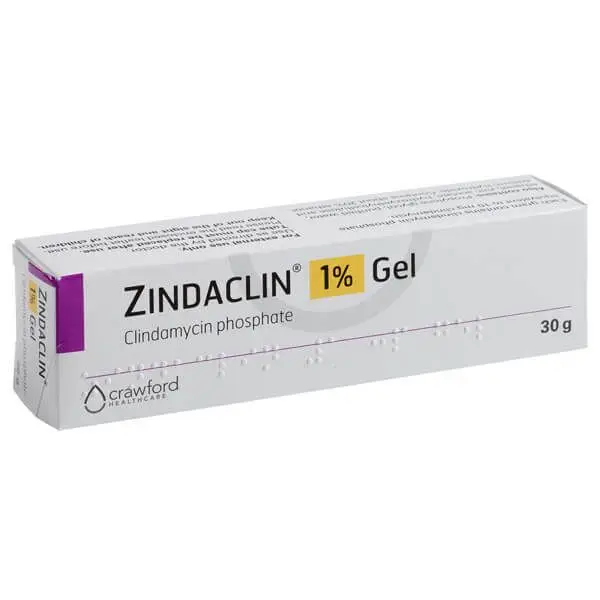
| Medication Name | Zindaclin 1% Gel |
| Active Ingredient | Clindamycin phosphate 1% (equivalent to 1% clindamycin) |
| Medication Form | Topical gel |
| Used to Treat | Mild to moderate acne vulgaris |
| Available Strengths | 1% |
| Other names this medication is known by | Clindamycin gel, topical clindamycin |
| Common Side Effects | Dry or irritated skin, mild burning sensation, itching |
| Do you need a prescription for it? | Yes |
| How should it be applied? | Once daily to the whole affected area |
| Patient Information Leaflet | Zindaclin 1% Gel Patient Information Leaflet |
Zindaclin Gel is a prescription treatment for acne vulgaris. It’s designed to treat mild to moderate acne by targeting the bacteria that contribute to spots and inflammation.
Zindaclin 1% Gel is particularly useful when over-the-counter acne treatments haven’t been effective enough. It helps reduce the number of breakouts, calms redness in inflamed areas, and prevents pores from becoming blocked.
Unlike creams or washes that you rinse off, Zindaclin Gel stays on your skin throughout the day, working continuously to keep acne-causing bacteria under control. You’ll need to use it consistently for several weeks before seeing noticeable improvements, with the best results typically appearing after a few months of regular use.
Zindaclin contains clindamycin phosphate. Clindamycin is an antibiotic that works directly on your skin to combat acne.
The gel targets Cutibacterium acnes (previously known as Propionibacterium acnes), the bacteria that cause acne. These bacteria thrive in blocked pores and trigger inflammation, leading to red, swollen spots.
Clindamycin works by entering bacterial cells and stopping them from producing the proteins they need to survive and multiply. With fewer bacteria on your skin, there’s less inflammation, and your pores are less likely to become blocked.
Because Zindaclin Gel works gradually, you’ll need to be patient. Most people start noticing improvements after about 6 to 8 weeks of daily use, though it can take up to 12 weeks to see the full benefits.
Zindaclin Gel is suitable for adults and adolescents aged 12 years and over who have mild to moderate acne.
However, Zindaclin may not be suitable for everyone. You should consult your doctor or pharmacist before using Zindaclin Gel if you:
If you develop severe or persistent diarrhoea while using Zindaclin Gel, stop treatment immediately and contact your doctor. Although rare with topical antibiotics, this could be a sign of a serious bowel condition.
Before starting treatment with Zindaclin, always inform your doctor or pharmacist about any medications you’re taking and any medical conditions you have.
Using Zindaclin Gel correctly is important for getting the best results and avoiding irritation:
Don’t apply thick layers or use Zindaclin more often than prescribed, as this won’t speed up results and may increase irritation. Continue using the gel as directed, even if your skin improves, to help prevent acne from returning.
If you miss a dose, simply apply it as soon as you remember, unless it’s nearly time for your next application. Don’t apply a double amount to make up for a missed dose.
Like all medications, Zindaclin Gel can cause side effects, although not everyone experiences them. Most side effects are mild and affect the area of the skin where the treatment was applied.
While serious side effects are rare with topical clindamycin, contact your doctor immediately if you experience:
If you experience any side effects, particularly if they’re severe or persistent, contact your doctor or pharmacist. Most mild side effects will settle down as your skin adjusts to the treatment. Using a light, oil-free moisturiser can help if your skin feels dry or tight.
You can report side effects to the MHRA (Medicines and Healthcare products Regulatory Agency) via the Yellow Card Scheme to help monitor the safety of the medication.
Active ingredient: Clindamycin phosphate 1% (equivalent to 1% clindamycin)
Other ingredients: Propylene glycol, purified water, ethanol, zinc acetate, hydroxyethylcellulose, sodium hydroxide
The gel contains ethanol (alcohol), which may cause a brief burning sensation on damaged or very sensitive skin. It also contains propylene glycol, which can cause skin irritation in some people.
If Zindaclin Gel isn’t suitable for you or you’d like to explore other acne treatment options, there are several alternatives available:
A retinoid that helps prevent clogged pores and normalises skin cell turnover. Differin is a good non-antibiotic option and is often recommended for longer-term acne maintenance.
Combines the same antibiotic as Zindaclin (clindamycin) with benzoyl peroxide for dual action against bacteria and blocked pores. This can be more effective than using an antibiotic alone.
Combines a retinoid with benzoyl peroxide to target both blocked pores and acne-causing bacteria. This is particularly useful for moderate acne.
A gentler alternative that reduces inflammation and helps fade red marks left by acne. It’s often chosen for sensitive skin or when antibiotics aren’t suitable.
Similar to Finacea but in a cream formulation, which some people with dry skin prefer.
EXCELLENT
Zindaclin Gel is a prescription-only medication in the UK. You can buy Zindaclin Gel online from Click2Pharmacy from our online acne treatment clinic. Complete a free online consultation, and our licensed pharmacists will review it before issuing your prescription.
Yes, Zindaclin Gel contains clindamycin phosphate as its active ingredient. Zindaclin is a brand name for clindamycin 1% gel. While they contain the same active ingredient and work in the same way, Zindaclin is the branded version. Both are equally effective at treating acne.
Most people start noticing improvements in their acne after 6 to 8 weeks of consistent daily use. However, it can take up to 12 weeks to see the full benefits. It’s important to continue using Zindaclin as prescribed, even if you don’t see immediate results. Patience and regular use are key to getting the best results from this treatment.
Zindaclin is not a steroid. It’s a topical antibiotic containing clindamycin phosphate. Unlike steroids, Zindaclin won’t thin your skin with long-term use and is safe to use on the face for extended periods as directed by your doctor.
You should not use Zindaclin Gel while breastfeeding. If you’re pregnant or planning to become pregnant, speak to your doctor before using this treatment. They can advise whether Zindaclin is appropriate for you or recommend alternative acne treatments that are safer during pregnancy.
Zindaclin Gel is specifically licensed for treating acne vulgaris. While clindamycin has antibacterial properties, you should only use Zindaclin for conditions other than acne if your doctor specifically prescribes it for that purpose.
Some doctors may occasionally prescribe it off-label for other skin conditions, but this should only be done under medical supervision. If you have concerns about other skin conditions like rosacea or perioral dermatitis, speak to your doctor about the most appropriate treatment options.

Dr Hussain Ahmad
Page content authored by Mr Muhammad, last reviewed by Amjad Khan on 18th December 2025.
Get 10% Off Your First Order
Sign up to receive special offers via email and get 10% off your first order*
By opting in to marketing, you agree to our terms & conditions and privacy policy.