
What is altitude sickness?
Altitude sickness, also known as acute mountain sickness (AMS), occurs when your body struggles to adjust to lower oxygen levels at higher altitudes. The higher you go, the less oxygen is available in the air, and if you ascend too quickly, your body struggles to adapt fast enough.
It most commonly affects people travelling to altitudes above 2,500 metres (around 8,000 feet), though some people can experience symptoms at lower elevations. Popular destinations like the Himalayas, the Andes, Kilimanjaro, and high-altitude cities like Cusco (Peru) and La Paz (Bolivia) are common places where you can get altitude sickness.
Altitude sickness isn’t a reflection of your physical fitness. Even experienced climbers and athletes can be affected. What matters most is how your body responds to changes in oxygen levels.
There are three forms of altitude sickness, ranging in severity:
Acute Mountain Sickness (AMS)
The mildest and most common form. Symptoms are similar to a hangover and usually appear within hours of reaching a higher altitude.
High-Altitude Pulmonary Oedema (HAPE)
A more serious condition where fluid builds up in the lungs, making breathing difficult. HAPE requires immediate medical attention and descent.
High-Altitude Cerebral Oedema (HACE)
This is the most severe form, when fluid builds up in the brain. HACE is a medical emergency and can be life-threatening without prompt treatment and descent.
Causes of Altitude Sickness
Altitude sickness is caused by ascending to high elevation faster than your body can adjust. As altitude increases, air pressure drops and each breath delivers less oxygen. Your body responds by trying to compensate, but this process takes time, and ascending too quickly doesn’t allow it to keep up.
Several factors can increase your risk:
- Ascending too quickly: The most significant factor. Your body needs time to acclimatise at intermediate altitudes before going higher.
- Previous history of altitude sickness: If you’ve had it before, you’re more likely to get it again.
- High sleeping altitude: Where you sleep matters more than where you hike. Ascending to sleep at a much higher elevation than the night before significantly increases your risk.
- Physical exertion: Pushing yourself too hard in the first 24 hours after arriving at altitude increases your oxygen demands and can trigger symptoms sooner.
- Individual physiology: Some people are simply more susceptible than others, regardless of age, fitness level, or gender.
- Underlying health conditions: Pre-existing heart or lung conditions can increase the likelihood or severity of altitude sickness.
Altitude Sickness Symptoms
Symptoms of altitude sickness typically appear within a few hours of reaching a higher elevation. They can range from mild and manageable to severe and potentially life-threatening, depending on how high you’ve ascended and how your body is responding.
Common symptoms of acute mountain sickness (AMS) include:
- Headache, often described as a dull, throbbing pressure
- Nausea or vomiting
- Dizziness or light-headedness
- Fatigue and weakness
- Loss of appetite
- Difficulty sleeping
- Shortness of breath on exertion
If your condition worsens, this may indicate HAPE or HACE. Warning signs include:
- Severe breathlessness at rest
- A persistent cough, which may produce pink or frothy mucus
- Extreme fatigue or inability to walk in a straight line
- Confusion, disorientation, or unusual behaviour
- Loss of coordination
- Chest tightness or a gurgling sound when breathing
HAPE and HACE are medical emergencies that can be life-threatening if left untreated. If you or someone you are travelling with develops these symptoms, descend immediately and seek emergency medical help.
Altitude Sickness Medication & Treatment
The most effective way to manage altitude sickness is to plan your ascent carefully and, where appropriate, take preventive medication before and during your trip.
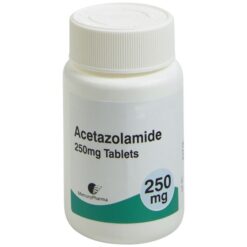
Acetazolamide (Diamox)
Acetazolamide is the most widely used prescription medication for both preventing and treating altitude sickness. It works by encouraging your body to breathe faster, increasing the amount of oxygen in your blood and speeding up acclimatisation.
It’s typically taken one to two days before your ascent and continued for two days after reaching your highest altitude. It’s particularly recommended if you have a history of altitude sickness or are planning a rapid ascent with little opportunity to acclimatise gradually.
Our pharmacists can assess if acetazolamide is suitable for you through our online consultation.
Ibuprofen
Ibuprofen can help relieve the headaches associated with mild altitude sickness. While it doesn’t treat the underlying cause, it can make symptoms more manageable during acclimatisation.
Dexamethasone
This prescription steroid is used to treat more severe altitude sickness symptoms, particularly those associated with HACE. It works by reducing inflammation and swelling in the brain. It isn’t a substitute for descent but can be used as a short-term measure in an emergency.
Nifedipine
Nifedipine is a prescription medication used in the treatment of HAPE. It works by reducing pressure in the blood vessels of the lungs, helping to ease breathing. Like dexamethasone, it supports treatment but doesn’t replace the need to descend.
Acclimatisation and Lifestyle Measures
Medication works best alongside sensible acclimatisation practices:
- Ascend gradually: Follow the general rule of not increasing your sleeping altitude by more than 300-500 metres per day above 3,000 metres.
- Rest on arrival: Give your body time to adjust before exerting yourself at a new altitude and build in rest days.
- Stay hydrated: Drink plenty of water throughout your trip.
- Avoid alcohol and sedatives: These can suppress your breathing and worsen symptoms.
- Eat light meals: Heavy meals can place additional strain on your body as it acclimatises.
- Descend if symptoms worsen: No medication or acclimatisation strategy replaces descent if you’re developing serious symptoms.
Speak to a Doctor or Pharmacist Before You Travel If:
- You have a history of altitude sickness on previous trips
- You have a pre-existing heart or lung condition
- You’re taking other medications that may interact with acetazolamide
- You have a known sulfa allergy, as acetazolamide belongs to this drug class
- You’re pregnant or breastfeeding
- You’re unsure if altitude sickness medication is suitable for you
Planning ahead is one of the most effective ways to prevent altitude sickness from affecting your trip. Our online consultation service allows you to discuss your medical history with one of our pharmacists, so you can travel with the right medication and the confidence to use it correctly.