Home > Online Clinic > Contraception > Lucette Contraceptive Pill

Lucette Contraceptive Pill

  • Combined oral contraceptive pill for pregnancy prevention
  • Contains two hormones, ethinylestradiol and drospirenone
  • Taken once daily for 21 days, followed by a 7 day break
Fast & Free Delivery Options

Variety of delivery options including next day & free delivery.

100% UK-based Pharmacy

Pharmacy, clinic and prescribers based in Greater Manchester.

Free Online Consultations

Start your treatment with a quick and free online consultation.

In stock

£24.99
24 hr tracked delivery once approved
Complete a free online assessment to select your preferred treatment.

What condition do you need this treatment for?

Please select your condition for the appropriate consultation form to buy your preferred treatment.

ContraceptionContraceptive Pills
This treatment is inclusive of consultation & private prescription.
Fast & Free Delivery Options

Variety of delivery options including next day & free delivery.

100% UK-based Pharmacy

Pharmacy, clinic and prescribers based in Greater Manchester.

Free Online Consultations

Start your treatment with a quick and free online consultation.

How to Buy Lucette Contraceptive Pill Online

Step 1: Online Consultation

Fill in a quick online consultation for our licensed pharmacists to review.

Step 2: Choose a Treatment

Our pharmacists will review your treatment to ensure it’s suitable.

Step 3: Quick & Discreet Delivery

Your treatment will be delivered to your door quickly & discreetly.

Lucette Contraceptive Pill

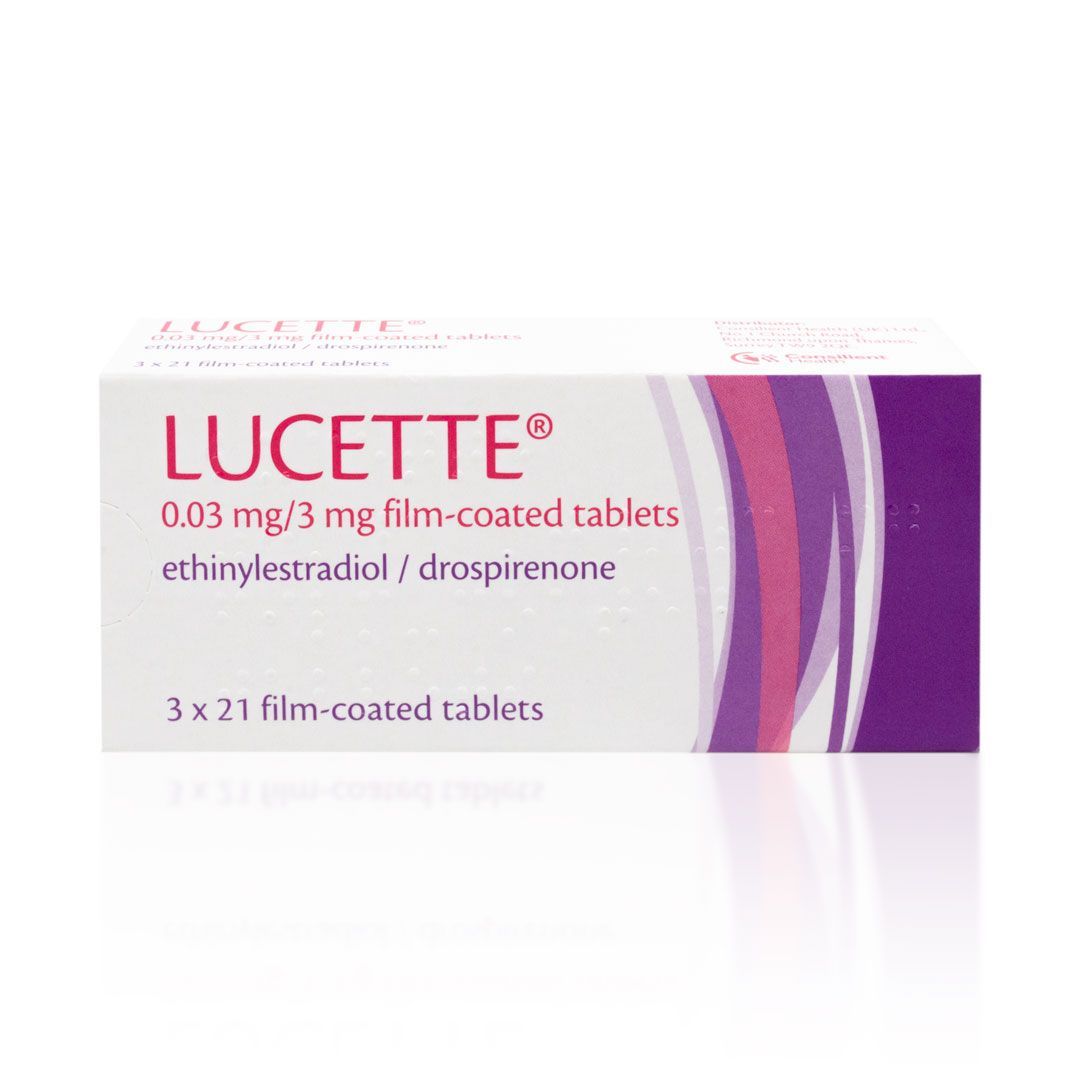
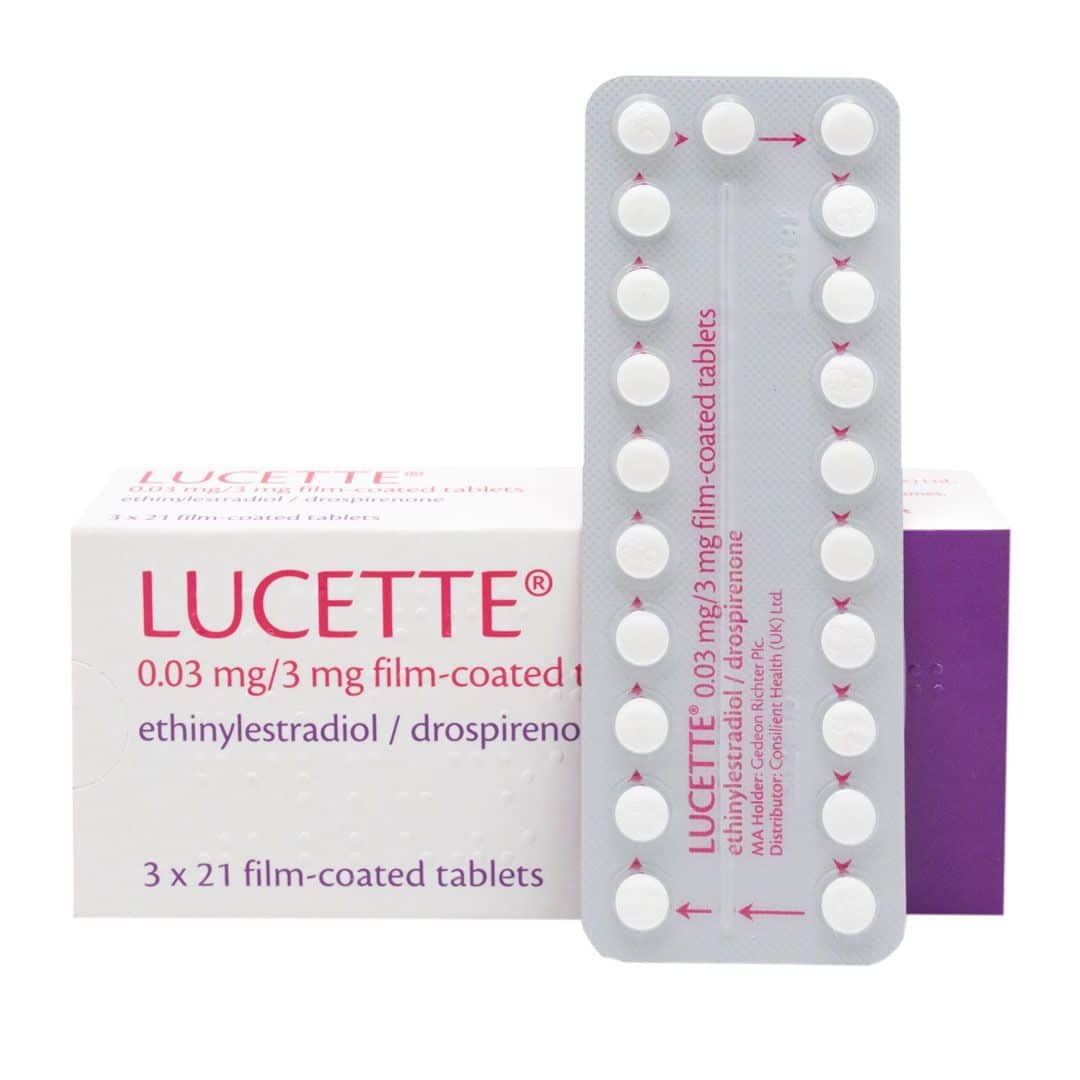
Medication Name Lucette 0.03mg/3mg Film-Coated Tablets
Medication Form Film-coated tablet
Used For Prevention of pregnancy
Who Can Use Adult women
Active Ingredient(s) Ethinylestradiol 0.03mg and drospirenone 3mg
Usual Dose One tablet daily for 21 days, followed by a 7-day break
Common Side Effects Menstrual disorders, breast pain, headache, nausea, depressed mood
Prescription Required Yes
Patient Information Leaflet Lucette PIL

What is Lucette used for?

Lucette is a combined oral contraceptive pill used to prevent pregnancy. It contains two hormones, ethinylestradiol and drospirenone, which work together to stop you from becoming pregnant.

Like all combined hormonal contraceptives, Lucette doesn’t protect against HIV or any other sexually transmitted infection.

How does Lucette work?

Lucette contains two synthetic hormones: ethinylestradiol (a synthetic oestrogen) and drospirenone (a synthetic progestogen). Together they prevent pregnancy in three ways:

  1. Stopping your ovaries from releasing an egg each month
  2. Thickening the mucus at the neck of the womb, making it harder for sperm to reach an egg
  3. Thinning the lining of the womb, making it less likely that a fertilised egg could implant

Who can use Lucette?

Lucette is suitable for adult women who want a reliable method of contraception. It isn’t suitable for everyone, and your doctor will review your medical history before prescribing it.

Don’t use Lucette if you:

  • Have or have ever had a blood clot in a vein or artery, including deep vein thrombosis (DVT), pulmonary embolism, heart attack or stroke
  • Have a blood clotting disorder, such as protein C deficiency, protein S deficiency, antithrombin-III deficiency, Factor V Leiden or antiphospholipid antibodies
  • Have severe diabetes with blood vessel damage, very high blood pressure, very high cholesterol or triglycerides, or a condition called hyperhomocysteinaemia
  • Have or have ever had migraine with aura
  • Have or have ever had liver disease and your liver function hasn’t returned to normal
  • Have kidney failure
  • Have or have ever had a liver tumour
  • Have or are suspected of having breast cancer or cancer of the genital organs
  • Have any unexplained vaginal bleeding
  • Are allergic to ethinylestradiol, drospirenone or any other ingredient in Lucette
  • Are allergic to peanuts or soya, as Lucette contains soya lecithin
  • Have hepatitis C and are taking certain antiviral medicines containing ombitasvir/paritaprevir/ritonavir, dasabuvir, glecaprevir/pibrentasvir or sofosbuvir/velpatasvir/voxilaprevir
  • Are pregnant or think you may be pregnant

Speak to your doctor before taking Lucette if you have or have ever had:

  • Breast cancer in a close relative
  • A liver or gallbladder disease
  • Diabetes
  • Depression or mood changes
  • Epilepsy
  • Crohn’s disease or ulcerative colitis
  • Systemic lupus erythematosus (SLE)
  • Haemolytic uraemic syndrome (HUS)
  • Sickle cell anaemia
  • Elevated fat levels in the blood (hypertriglyceridaemia)
  • Varicose veins or superficial thrombophlebitis
  • Chloasma (skin discolouration, particularly on the face)
  • A condition that first appeared during pregnancy or earlier use of hormones, such as jaundice, itching of the whole body, or gestational herpes

How To Take Lucette

Take one tablet once daily at roughly the same time each day. Lucette can be taken with or without food.

  1. Take your first tablet on the first day of your period for immediate protection
  2. Swallow it whole with a small amount of water
  3. Continue taking one tablet each day for 21 days, following the direction of the arrows on the strip
  4. Stop for 7 days – you’ll usually have a withdrawal bleed during this time
  5. Start your next strip after the 7-day break, whether or not the bleeding has stopped

Side Effects of Lucette

Like all medicines, Lucette can cause side effects, though not everyone gets them.

Common Side Effects

May affect up to 1 in 10 people:

  • Menstrual disorders or bleeding between periods
  • Breast pain or tenderness
  • Headache
  • Depressed mood
  • Migraine
  • Nausea
  • Thick, whitish vaginal discharge or vaginal yeast infection

Uncommon Side Effects

May affect up to 1 in 100 people:

  • Breast enlargement
  • Changes in interest in sex
  • High or low blood pressure
  • Vomiting or diarrhoea
  • Acne, skin rash, severe itching or hair loss
  • Vaginal infection
  • Fluid retention
  • Weight changes

Rare Side Effects

May affect up to 1 in 1,000 people:

  • Allergic reactions, including asthma
  • Breast secretion
  • Hearing impairment
  • Skin conditions including painful reddish skin nodules (erythema nodosum) or a rash with target-shaped reddening or sores (erythema multiforme)
  • Blood clots in a vein or artery, including DVT, pulmonary embolism, heart attack, stroke, transient ischaemic attack (TIA) or blood clots in the liver, stomach, intestine, kidneys or eye

Stop taking Lucette and seek medical attention immediately if you experience:

  • Signs of a blood clot, such as sudden swelling or pain in one leg, sudden breathlessness, sharp chest pain, sudden severe headache, vision or speech problems, or sudden weakness or numbness on one side of the body
  • Signs of angioedema, such as swollen face, tongue or throat, difficulty swallowing or hives with difficulty breathing

If you get any side effects not listed here, tell your doctor or pharmacist. You can also report side effects directly via the MHRA Yellow Card scheme.

Lucette Ingredients

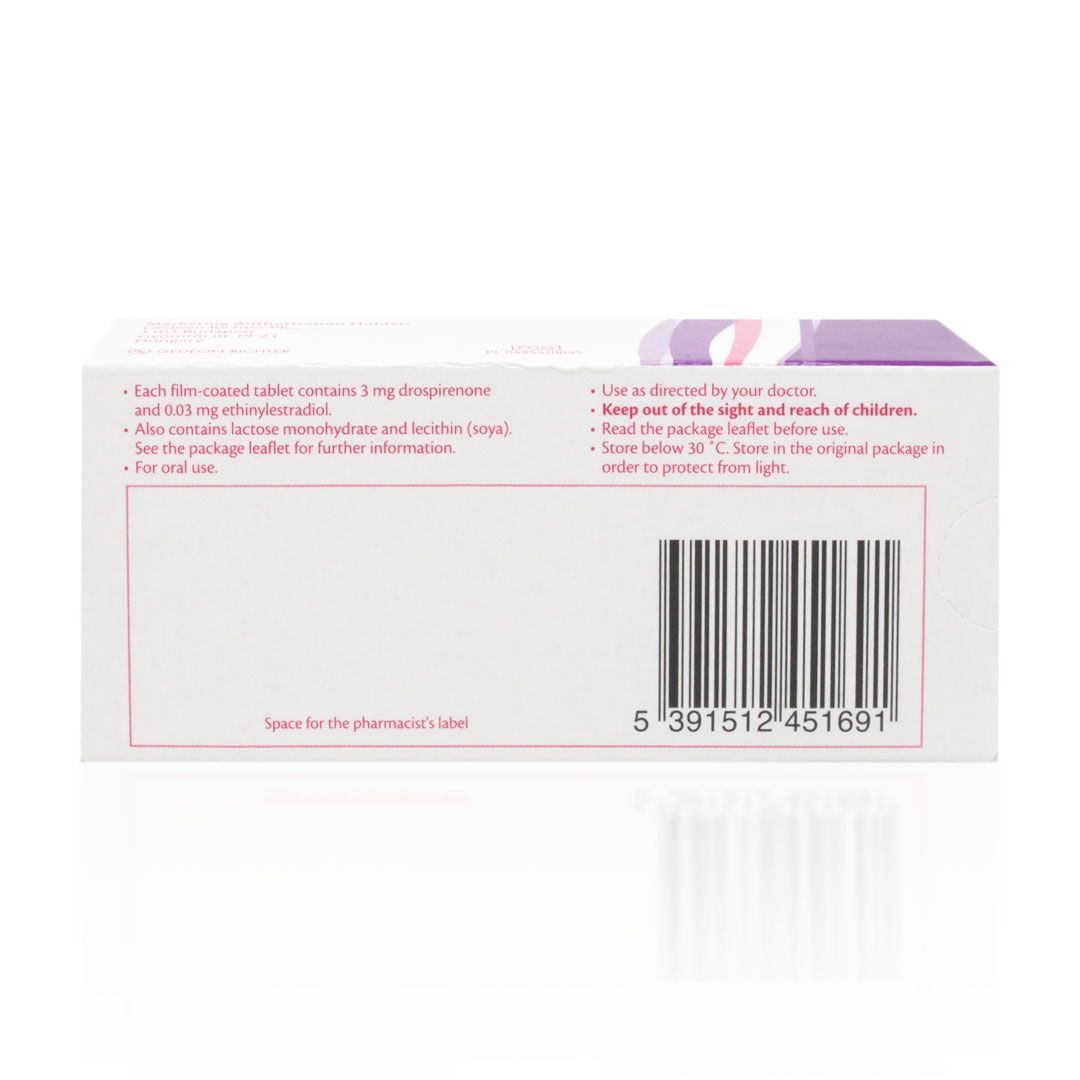
Active ingredients: ethinylestradiol 0.03mg and drospirenone 3mg per tablet

Other ingredients: lactose monohydrate, pregelatinised maize starch, maize starch, povidone K-25, magnesium stearate, polyvinyl alcohol, titanium dioxide (E171), talc (E553b), macrogol 3350, lecithin (soya)

Lucette contains lactose. If your doctor has told you that you have an intolerance to some sugars, speak to your doctor before taking this medicine. Lucette also contains soya lecithin. If you’re allergic to peanuts or soya, don’t use this medicine.

Warnings and Precautions

  • Lucette can slightly increase the risk of blood clots in the veins and arteries, particularly in the first year of use or when restarting after a break of 4 or more weeks. This risk is small but increases if you’re very overweight, smoke, are over 35, or have a family history of clots.
  • If you smoke and are over 35, your doctor may advise you to use a different contraceptive method.
  • Lucette doesn’t protect against HIV or any other sexually transmitted infection.
  • Lucette is not suitable for use during pregnancy. If you become pregnant while taking it, stop immediately and contact your doctor.
  • Don’t use Lucette if you’re breastfeeding without first speaking to your doctor.
  • Some medicines can make Lucette less effective, including treatments for epilepsy, tuberculosis, HIV, high blood pressure in the lungs, fungal infections and St John’s Wort. Tell your doctor or pharmacist about all medicines you’re taking.
  • Lucette can affect the results of certain blood tests. Tell your doctor or the laboratory that you’re taking the pill before any blood test.
  • If you need surgery or are going to be immobile for a long time, tell your doctor you’re taking Lucette. You may need to stop taking it several weeks before the operation to reduce the risk of blood clots.
  • If you’ve just given birth, speak to your doctor about when it’s safe to start taking Lucette, as the risk of blood clots is increased in the weeks after delivery.
  • Breast cancer has been observed slightly more often in women using combination pills, though it’s not known if the pill causes this. Check your breasts regularly and report any lumps to your doctor.
  • Some women using hormonal contraceptives have reported depression or depressed mood. If you experience mood changes, contact your doctor.
  • If you have chloasma (brown patches on the skin), avoid excessive sun exposure or sunbed use of a sunbed while taking Lucette.
  • Keep out of the sight and reach of children.
  • Store below 30°C in the original packaging, away from light.
  • Don’t use after the expiry date printed on the pack.

Lucette Contraceptive Pill Reviews

Lucette Contraceptive Pill FAQs


When taken correctly, combined oral contraceptive pills like Lucette are more than 99% effective at preventing pregnancy. With typical use, effectiveness is around 91% due to missed pills or timing errors. Taking your tablet at the same time each day will give you the most reliable protection.

Lucette and Yasmin contain the same active ingredients in identical amounts – ethinylestradiol 0.03mg and drospirenone 3mg – so they have the same benefits and risks. The main difference is that they’re made by different manufacturers, and Lucette contains soya lecithin, which means it’s unsuitable for anyone with a peanut or soya allergy. If you have a preference or have reacted differently to one brand, speak to your doctor.

Lucette and Rigevidon are both combined oral contraceptive pills, but they’re not the same. Rigevidon contains levonorgestrel and ethinylestradiol, while Lucette contains drospirenone and ethinylestradiol. Different progestogens can suit different people, so if you’re considering switching, speak to your doctor or pharmacist first.

You can buy Lucette online from Click2Pharmacy. Complete a short free consultation, and if Lucette is suitable for you, our pharmacists will issue a prescription and arrange fast, discreet delivery to your door.

Lucette can be taken with or without food. Alcohol doesn’t directly interact with Lucette, but drinking heavily can make you more likely to vomit, which could affect how well the pill is absorbed. If you vomit within 3 to 4 hours of taking your tablet, treat it as a missed pill and follow the missed dose guidance.

Lucette isn’t generally recommended while breastfeeding. If you want to use the pill after having a baby and you’re breastfeeding, speak to your doctor, who can advise on the most suitable option for you.

Most common painkillers, such as paracetamol and ibuprofen, can be taken alongside Lucette. However, if you need to take any medicines regularly, check with your pharmacist first, as some medications can interact with the pill.

Lucette doesn’t stop periods entirely, but it does change the pattern of bleeding. Instead of a natural period, you’ll have a withdrawal bleed during the 7-day break between strips. This is usually lighter and more predictable than a natural period. If you have no bleeding during the break, speak to your doctor to rule out pregnancy.

If you’re switching from another combined pill, you can start Lucette the day after you finish your last active tablet, without a break.

If you’re switching from a progestogen-only pill, implant or injection, the timing is different. Speak to your doctor or pharmacist before switching to make sure you stay protected throughout the changeover.a

There’s no medical reason why Lucette has to be taken in the morning. What matters most is taking it at the same time each day. Choosing a time that fits into your daily routine, whether that’s morning, lunchtime or evening, makes it easier to stay consistent.

While Lucette isn’t licensed specifically for period regulation, taking a combined pill tends to make bleeding more predictable. Your withdrawal bleed will usually occur at the same point in each cycle. If you’re concerned about irregular periods, speak to your doctor about the most appropriate treatment for you.

Our Experienced UK-based Pharmacy Team

Clinical Consultant
MUDr, MRCEM, EBCEM, FRCEM
GMC no. 7176414

Pharmacist
MPharm
GPhC no. 2065469

Pharmacist
MPharm
GPhC no. 2046514

Page content authored by Amjad Khan, last reviewed by Mr Muhammad on 11th June 2026.