Variety of delivery options including next day & free delivery.
Pharmacy, clinic and prescribers based in Greater Manchester.
Start your treatment with a quick and free online consultation.
Variety of delivery options including next day & free delivery.
Pharmacy, clinic and prescribers based in Greater Manchester.
Start your treatment with a quick and free online consultation.
Fill in a quick online consultation for our licensed pharmacists to review.
Our pharmacists will review your treatment to ensure it’s suitable.
Your treatment will be delivered to your door quickly & discreetly.
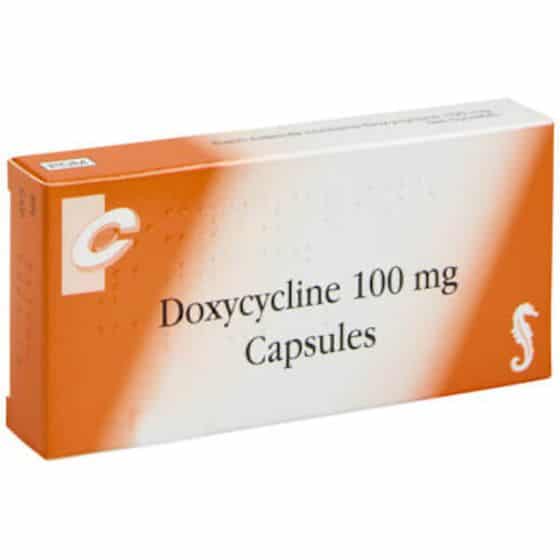
| Medication Name | Doxycycline Capsules |
| Active Ingredient | Doxycycline hyclate 100mg |
| Medication Form | Capsule |
| Used to Treat | Chlamydia infection |
| Available Strengths | 100mg |
| Common Side Effects | Nausea, upset stomach, skin sensitivity to sunlight |
| Do you need a prescription for it? | Yes |
| How should it be taken? | Twice daily with plenty of water for 7 days |
| Patient Information Leaflet | Doxycycline Patient Information Leaflet |
Doxycycline is an antibiotic and the first-line treatment for chlamydia that stops the bacteria from multiplying in your body.
Chlamydia is caused by bacteria called Chlamydia trachomatis. Doxycycline works by preventing these bacteria from making the proteins they need to survive and reproduce. Without these essential proteins, the bacteria die off, and your immune system can clear the infection.
When taken correctly, doxycycline is over 95% effective at clearing chlamydia infections.
Doxycycline 100mg is used to treat urogenital chlamydia, one of the most common sexually transmitted infections (STIs) in the UK. Chlamydia often has no symptoms, which is why many people don’t know they have it.
When symptoms do appear, they can include:
Untreated chlamydia can cause serious health problems. In women, it can cause pelvic inflammatory disease (PID), which may lead to infertility or ectopic pregnancy. In men, it can cause testicular inflammation and may affect fertility. Chlamydia cannot resolve on its own and requires antibiotic treatment.
Doxycycline clears the infection and prevents these complications from developing. It’s important to get a chlamydia test and start treatment as soon as possible if you think you might have the infection.
Doxycycline is suitable for most adults who have had a positive chlamydia test and need antibiotic treatment.
However, some people cannot take doxycycline. You should not use doxycycline if you:
If you cannot take doxycycline, your doctor can prescribe an alternative treatment such as azithromycin.
Before taking doxycycline, speak to your doctor or pharmacist if you:
For treating chlamydia with doxycycline, the usual dose is 100mg twice daily for 7 days.
Complete the full course of doxycycline, even if your symptoms disappear before you finish. Stopping early can mean the infection isn’t fully cleared.
Avoid taking antacids, iron supplements, or zinc at the same time as doxycycline, as these can interfere with the antibiotic’s effectiveness. Leave at least 2 hours between taking these products and your doxycycline capsule.
You should avoid having sex (including oral sex) until you and your partner have both finished treatment and been given the all-clear. This usually means waiting 7 days after completing your course of antibiotics.
Like all medicines, doxycycline can cause side effects, although not everyone experiences them. Most side effects are mild and often settle down as your body adjusts to the medicine.
These may affect up to 1 in 10 people:
These may affect up to 1 in 100 people:
These may affect up to 1 in 1,000 people:
Stop taking doxycycline and contact your doctor immediately or go to A&E if you experience:
If you experience skin that is more sensitive to sunlight than normal, with rash, itching, redness, or severe sunburn, stop using doxycycline and tell your doctor.
You can report side effects to the MHRA (Medicines and Healthcare Products Regulatory Agency) through the Yellow Card Scheme to help monitor the safety of the medication.
GOOD
Doxycycline starts working immediately to kill the bacteria that cause chlamydia. You need to take it for the full 7 days to clear the infection completely. Wait for 2 weeks after finishing treatment before getting retested to confirm the infection has gone. You may notice symptoms improving within a few days, but finish all your capsules even if you feel better.
Doxycycline is prescription-only in the UK. You can buy it online from Click2Pharmacy after completing a free online consultation. Our pharmacists will review your details before issuing your prescription and arranging discreet delivery.
Yes, but doxycycline may reduce the effectiveness of hormonal contraceptives like the contraceptive pill. Use additional contraception (such as condoms) while taking doxycycline and for 7 days after finishing the course. Condoms are recommended anyway when treating chlamydia to prevent reinfection.
Doxycycline doesn’t usually affect your period directly. However, because it can reduce the effectiveness of hormonal contraception, you might notice some changes to your cycle. If you have concerns, speak to your doctor or pharmacist.
Contact your doctor or sexual health clinic if symptoms persist after completing treatment. You may need retesting to check if the infection has cleared. Symptoms can persist if you’ve been reinfected or if the infection hasn’t fully cleared.
If you forget to take a dose, take it as soon as you remember. If it’s nearly time for your next dose, skip the missed dose and take your next capsule at the usual time. Don’t take a double dose to make up for a forgotten one. You must complete the full course of doxycycline even if you’ve missed a dose.
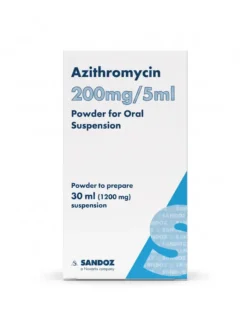
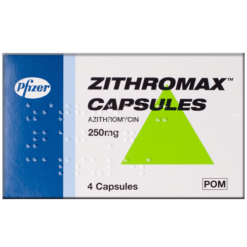
Doxycycline is the first-line treatment and requires a 7-day course taken twice daily, whereas Azithromycin (Zithromax) is usually given as a single dose/over 3 days. Your doctor will recommend the most suitable option based on your circumstances. Some people prefer azithromycin for convenience, while doxycycline may be better if you struggle to remember single-dose medications or have certain medical conditions.
It’s best to avoid alcohol while taking doxycycline. Alcohol can reduce the effectiveness of the antibiotic and may increase side effects like upset stomach and nausea. Wait until you’ve finished your course before drinking.
Page content authored by Amjad Khan, last reviewed by Mr Muhammad on 10th September 2026.