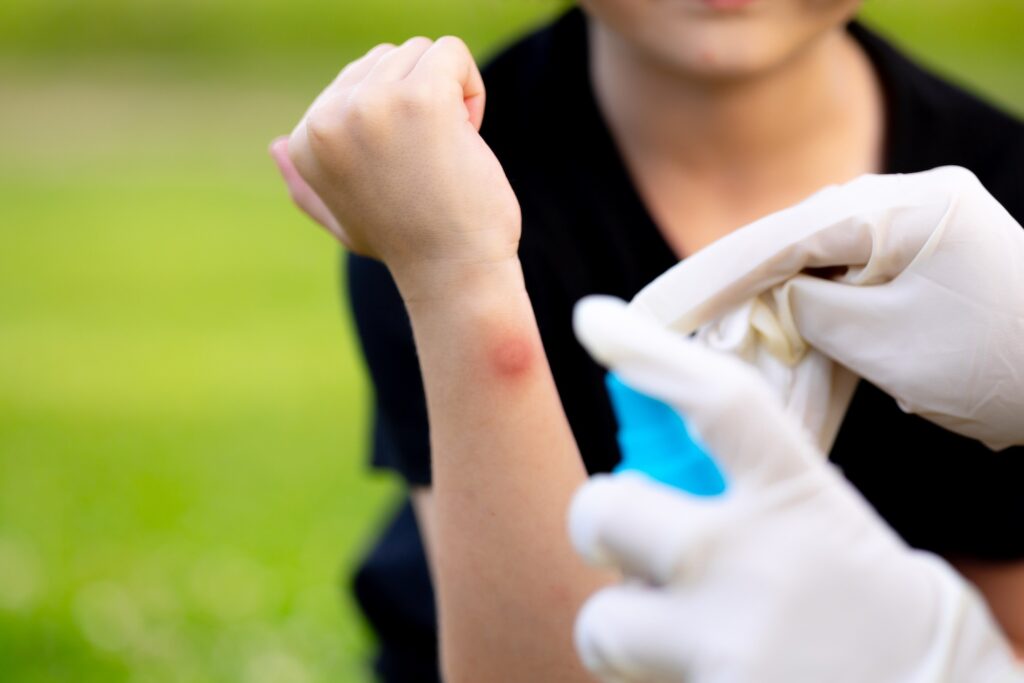
Most insect bites and stings calm down within a few days, but if bacteria get into the skin, that harmless bump can quickly become red, swollen, and painful. And, left untreated, it can make you feel quite unwell.
Bites can happen anywhere, from your back garden to a countryside walk or a beach holiday abroad. Mosquitoes, wasps, spiders, and ticks can all cause problems, and knowing how to tell if an insect bite is infected means you can get the right treatment sooner and avoid complications.
When an insect bites or stings, it breaks the surface of your skin. This tiny opening is all bacteria need to get in. Most of the time, your body’s defences deal with it quickly, but sometimes an infection can develop.
The most common cause is scratching. Even though it’s tempting, scratching can damage the skin further, allowing bacteria from your hands or under your nails to enter the bite. The more inflamed the area becomes, the itchier it feels, which makes the cycle even harder to break.
Some bites carry a higher risk of infection. Insects like mosquitoes, ticks, and certain flies inject saliva or venom that irritates the skin more, making you more likely to scratch.
Skin conditions like eczema can also weaken the skin barrier, allowing bacteria to get in more easily.
An infected bug bite or sting often looks more inflamed and feels more uncomfortable than it did at first. Instead of gradually improving, it becomes redder, more swollen, and more painful over time.
A normal mosquito bite is usually a small, raised bump that’s itchy for a day or two.
If it becomes infected, the redness can spread beyond the original bump, the swelling can become firm, and the itch may become painful. You might also notice a small amount of fluid or pus.
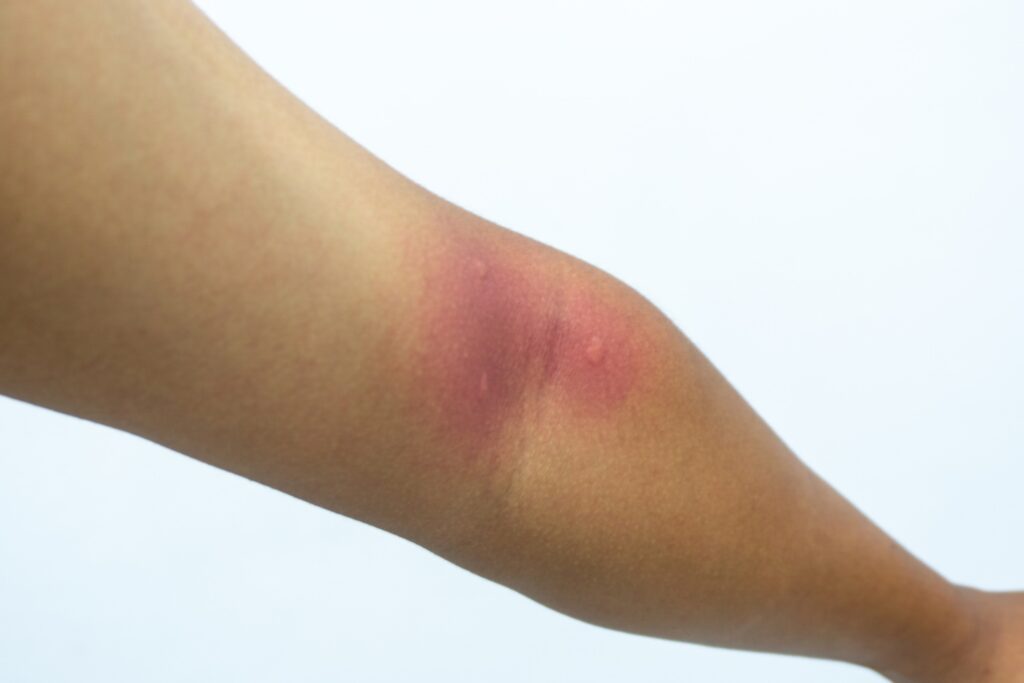
Tick bites are often painless and may leave a small red mark.
Infection can cause the area to become warm, swollen, and tender. While swelling and pus indicate a skin infection, it’s also important to look out for a circular red rash that can appear days later, as this may be a sign of Lyme disease and needs medical attention quickly.
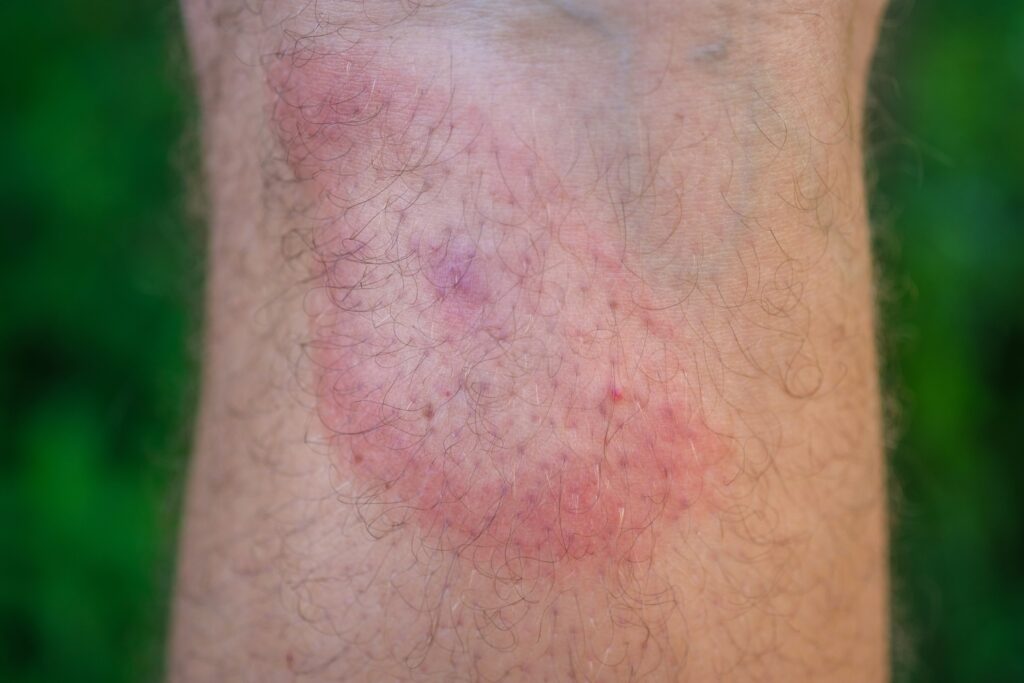
Spider bites in the UK are uncommon, but they can leave two small puncture marks when they happen. A mild bite might just be sore and slightly red.
If it’s infected, you may see swelling, warmth, pus, or spreading redness.
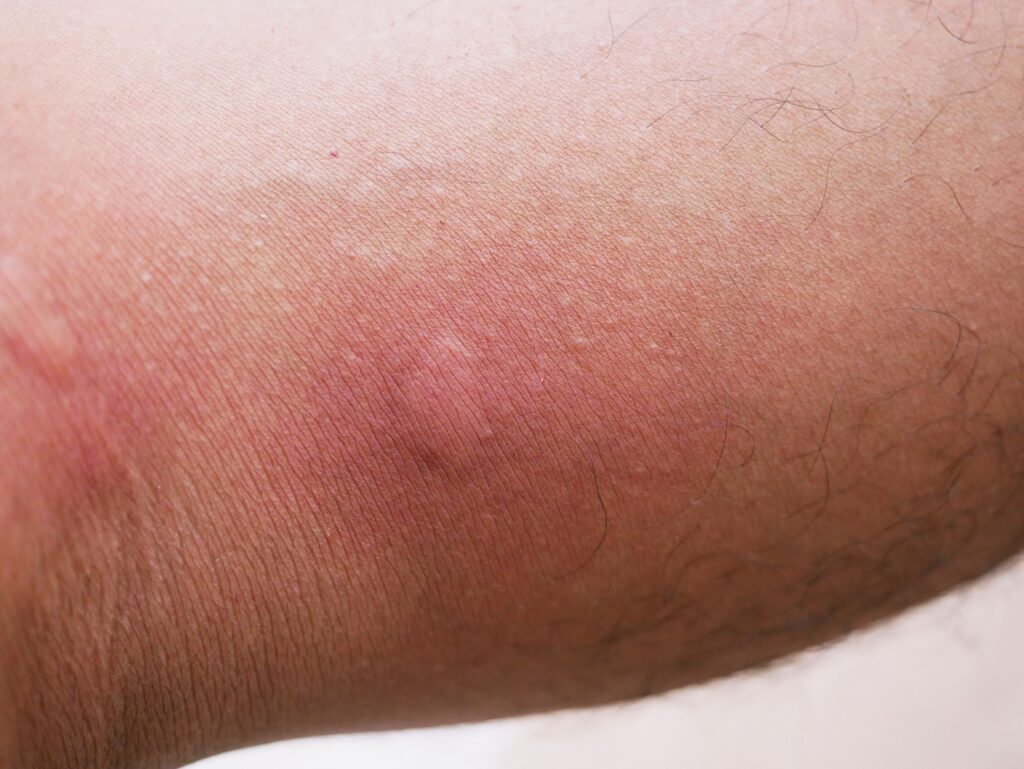
Normal bee and wasp stings are painful at first and can cause redness and swelling that settles within a day or so.
If the area becomes more swollen after the first 24 hours, turns hot to the touch, or starts producing pus, this could be a sign of infection.
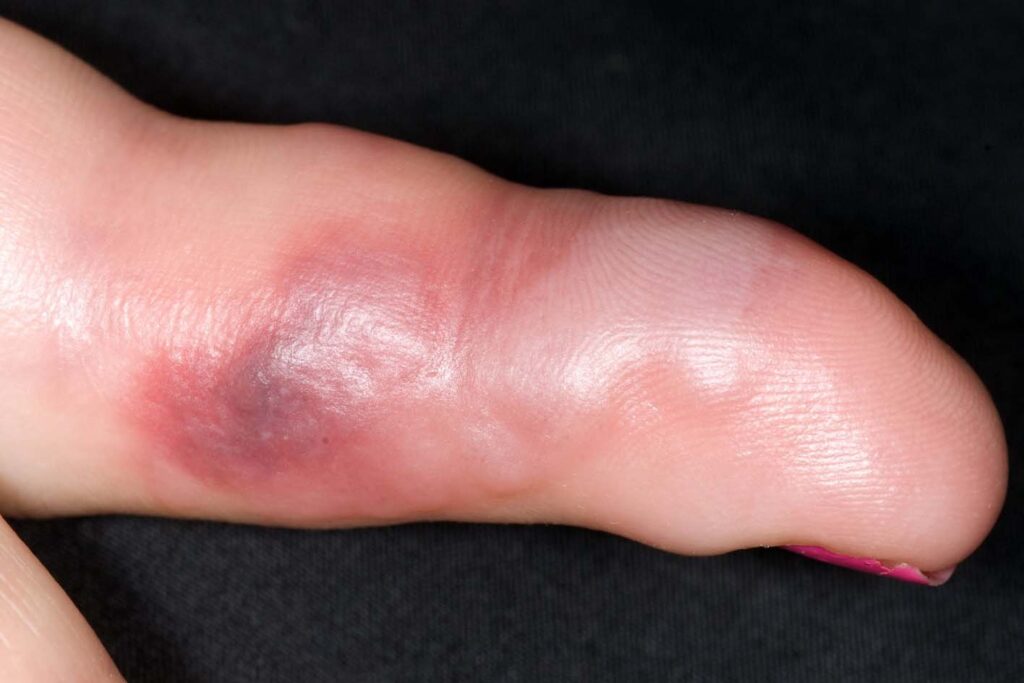
Most insect bites will heal without any problems, but some infections need prompt treatment to stop them from spreading or from becoming cellulitis. You should speak to your GP or pharmacist if:
An allergic reaction is different from an infection, but it can happen alongside a bug bite or sting and can be serious. Call 999 immediately if you notice symptoms of anaphylaxis:
If the bite isn’t severe, you can ease discomfort and help it heal with simple over-the-counter products and self-care:
If your bite is already infected, self-care alone may not be enough. A pharmacist can assess your symptoms and, if appropriate, provide prescription-strength treatment like:
While avoiding insect bites altogether is impossible, a few simple steps can lower your chances of being bitten and help stop bites from becoming infected.
Products like Jungle Formula Spray and Jungle Formula Lotion are effective against mosquitoes, midges, and other biting insects. Apply to exposed skin before going outdoors, especially in the evenings or when near water.
Packing a small “bite kit” with repellent, antihistamines, and an antiseptic cream can also be handy for holidays, camping trips, or countryside walks.
Wear long sleeves, trousers, and closed shoes when you’re in areas where insects are common – whether that’s sitting outside on a summer evening, walking through woodland, or visiting grassy or wooded areas where ticks are found. Tuck trousers into socks in tick-prone areas, and choose neutral or darker colours rather than bright shades like yellow and white, which can attract flies.
If you’re drying clothes or bedding outdoors, especially under trees or in warm spots like conservatories where spiders and flies are more likely, check items carefully before bringing them inside.
Be mindful of peak activity times: mosquitoes are most active at dawn and dusk, wasps become more aggressive in late summer and early autumn, and ticks are most common from spring to autumn.
If you’re worried about a bite, getting treatment early can help it heal faster and prevent complications.
With our Infected Insect Bite Clinic, you can complete a short online consultation from home. A UK-licensed pharmacist will assess your case and, if appropriate, prescribe treatment with discreet delivery.
Start your consultation today and get fast, professional care without the wait.