
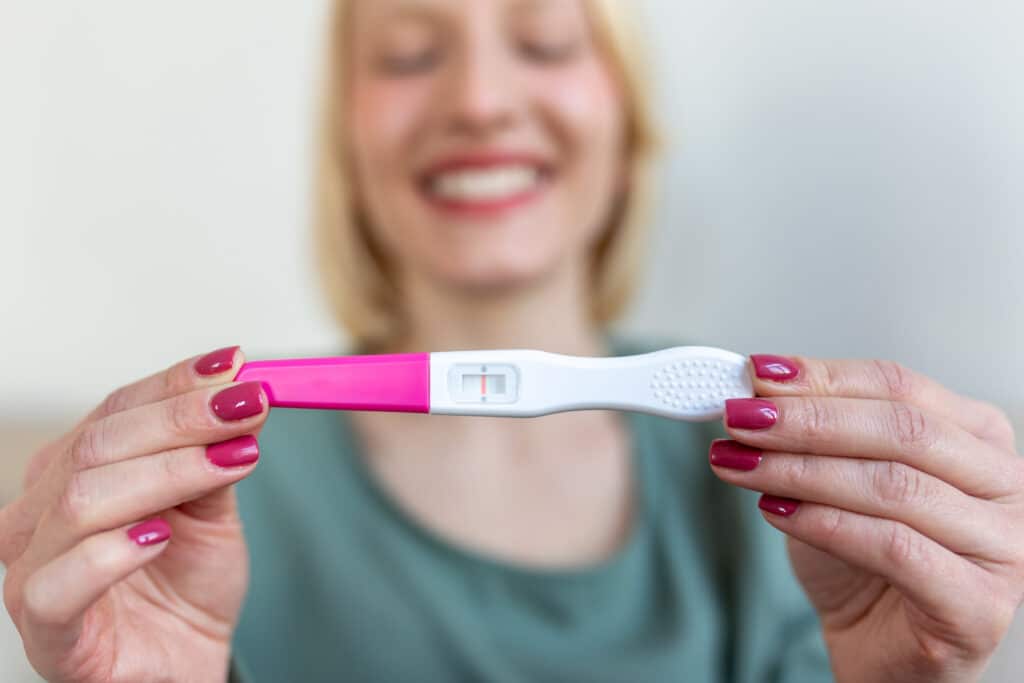
Mounjaro (tirzepatide) has become a talking point for an unexpected reason: women who were told they’d struggle to conceive are getting pregnant while taking it for weight loss.
Mounjaro isn’t a fertility treatment, and it’s not recommended during pregnancy. If you’re planning to conceive, you’ll need to understand how weight loss affects your reproductive health, what the safety evidence shows, and when to stop treatment.
Weight and fertility are connected in ways that aren’t always obvious, and they affect both men and women differently.
For women, extra body weight can interfere with your hormone signals needed for regular ovulation. Many women also develop insulin resistance alongside weight gain, where the body needs more insulin to manage blood sugar. This is particularly common for women who have polycystic ovary syndrome (PCOS), where insulin resistance and elevated androgens create a cycle that’s hard to break.
Men experience different issues. Excess weight can lower testosterone and affect sperm quality and count, partly because fat tissue converts testosterone into oestrogen.
Weight loss can help restore fertility for both men and women. Research shows that, for women, losing even ~5-10% of their body weight can bring back regular periods and improve ovulation. As insulin sensitivity improves and hormone levels balance out, the reproductive system often starts working as it should.
Doctor’s note: Rapid weight loss can sometimes disrupt your cycle temporarily while your body adjusts. This usually settles down once your weight stabilises.
There’s no evidence that Mounjaro directly affects fertility or infertility. What we’re seeing instead is the effect of weight loss on reproductive health.
The research on tirzepatide and fertility specifically is limited. Animal studies haven’t shown it to be directly harmful to fertility, but they haven’t been designed to study fertility outcomes in detail either. Human studies have focused on weight loss and metabolic health rather than reproductive function.
What regulators and manufacturers emphasise is the lack of safety data for pregnancy rather than any specific fertility concerns. Mounjaro doesn’t carry warnings about harming fertility, but it does carry clear guidance to stop before trying to conceive.
The MHRA has received 26 pregnancy reports specifically related to tirzepatide as of June 2025, but Mounjaro isn’t doing anything directly to your reproductive system. The fertility changes people experience can indirectly come from the weight loss and metabolic improvements that happen during treatment.
Insulin resistance is one of the biggest barriers to fertility in women carrying extra weight. When your body doesn’t respond well to insulin, it compensates by producing more of it. Those elevated insulin levels trigger your ovaries to produce more androgens, which can stop ovulation.
Mounjaro tackles this directly. As a GIP/GLP-1 receptor agonist, it improves how your body processes glucose and responds to insulin. When insulin levels drop back to a healthier range, androgen production decreases. For many women, particularly those with PCOS, this is enough to restart ovulation.
Better glucose control also reduces inflammation and oxidative stress throughout the body, both of which can affect egg quality and the environment needed for conception. The benefits apply to men too – improved insulin sensitivity can help restore testosterone levels that excess weight had suppressed.
Weight loss itself matters just as much as the metabolic improvements. Losing 2-10% of your body weight can have measurable effects on fertility.
For women, this often means the return of regular ovulation. Periods that were irregular or absent may become predictable again. This can happen quickly within weeks of starting treatment.
In men, losing weight can have a positive effect on sperm health, including improvements in sperm count and quality. Carrying excess body fat can disrupt hormone levels because fat tissue converts testosterone into oestrogen. As weight is lost and body fat decreases, this process slows down, allowing testosterone levels to rise. Healthier hormone levels, along with better overall metabolic health, can support sperm production and male fertility.
The reduction in body fat also lowers inflammation across the body. Chronic low-grade inflammation, common in obesity, can interfere with reproductive hormones and the quality of eggs and sperm. As weight comes off, these inflammatory markers drop, creating a healthier environment for conception.
Mounjaro can reduce the effectiveness of oral contraceptives like contraceptive pills, particularly during the first few weeks of treatment or when you increase your dose.
The medication slows down how quickly food moves through your stomach, which affects how well your body absorbs oral medications. Studies show tirzepatide can reduce peak absorption of the contraceptive pill by up to 66%. Add in nausea or vomiting – common when starting Mounjaro, and you may miss pills or not absorb them properly.
Use a backup barrier contraception like condoms for at least four weeks after starting Mounjaro or increasing your dose – especially if you’re not planning to get pregnant. The combination of improved fertility and reduced contraceptive protection can lead to unplanned pregnancies.
If you’re on oral contraceptives and starting Mounjaro, discuss switching to a non-oral birth control like an IUD or implant with your prescriber.
Many fertility clinics have BMI requirements for IVF treatment, typically asking that patients achieve a BMI below 30 or 35 before starting a cycle. The reasons are clinical:
For women who need to lose weight before becoming eligible for IVF, Mounjaro can be part of an effective weight loss plan.
You’ll need to stop Mounjaro at least two months before starting your IVF cycle. This gives the medication time to clear your system and allows your weight to stabilise before the hormonal stimulation begins.
Some women worry about regaining weight during IVF after stopping Mounjaro. This is a real concern, and it’s worth discussing with your fertility team how to maintain your weight loss through diet and lifestyle changes during treatment. The goal is to get the metabolic benefits of weight loss while making sure the medication is completely out of your system before any chance of pregnancy.
Mounjaro and any other weight loss drugs must be stopped before you begin IVF.
There are several reasons for this:
If you accidentally become pregnant during IVF preparation while still taking Mounjaro, stop the medication immediately and inform your clinic.
Read our guide on Mounjaro and the menstrual cycle to understand what changes to expect.
If you’re thinking about getting pregnant, stop Mounjaro at least two months before you start trying. This guidance is based on how long the medication takes to clear your system and for your body to stabilise afterwards.
Tirzepatide has a half-life of around five days, so the drug itself leaves your body within 25-35 days. This two-month window allows extra time for your hormones and metabolism to settle.
Discuss your conception plans with your prescriber early, and they can help you plan the transition and prevent weight regain, which is common when appetite and cravings return after stopping. If you have type 2 diabetes, some women transition to metformin, which is safe during pregnancy and helps with blood sugar levels and insulin resistance.
If you’re planning to try for a baby in six months, consider stopping Mounjaro two to three months beforehand. This gives you time to see if your cycles remain regular and to stabilise your weight through diet and lifestyle changes.
Learn more about Mounjaro and pregnancy, and what to do if you become pregnant while taking this medication.
If you’re actively trying to conceive or about to start fertility treatment, Mounjaro isn’t an option. But there are alternatives for managing weight and metabolic health while trying to get pregnant.
Metformin is the established first-line treatment for women with PCOS who want to conceive. It’s been used safely for decades and improves insulin sensitivity and helps restore ovulation, though it doesn’t produce the weight loss that Mounjaro does.
For women who need significant weight loss before fertility treatment, the strategy often involves using Mounjaro first, then transitioning to metformin once it’s time to start trying. This gives you the metabolic benefits of weight loss while ensuring you’re on pregnancy-safe medications.
Lifestyle changes remain important regardless of medication. Nutrition support, regular exercise, and managing stress all contribute to both weight management and fertility. If you’re losing weight first before trying to conceive, or managing your health with pregnancy-safe options while trying, having a plan helps.
Discuss your fertility goals with your GP or healthcare provider before starting Mounjaro. If you’re planning to try for a baby within the next year, you’ll need a clear timeline: how long you’ll take Mounjaro, when you’ll stop, and what comes next. Working with both a fertility specialist and your prescriber can help coordinate care and maximise your chances of success.
Click2Pharmacy offers a straightforward online service for weight loss injections, including prescriber consultations.
Complete an online consultation, receive a prescription if suitable, and have your medication discreetly delivered to your door.