Variety of delivery options including next day & free delivery.
Pharmacy, clinic and prescribers based in Greater Manchester.
Start your treatment with a quick and free online consultation.
Variety of delivery options including next day & free delivery.
Pharmacy, clinic and prescribers based in Greater Manchester.
Start your treatment with a quick and free online consultation.
Fill in a quick online consultation for our licensed pharmacists to review.
Our pharmacists will review your treatment to ensure it’s suitable.
Your treatment will be delivered to your door quickly & discreetly.
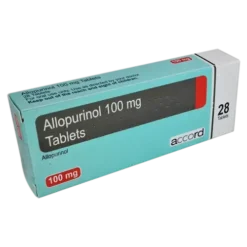
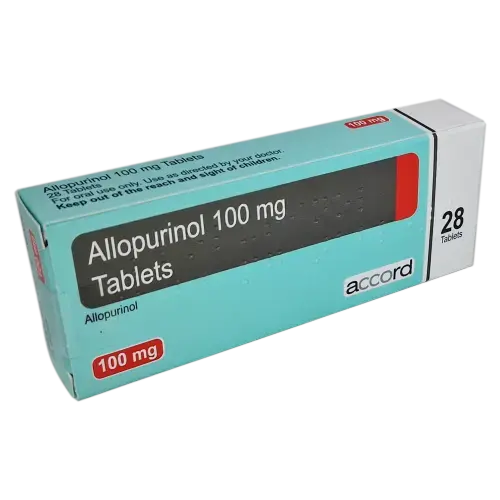
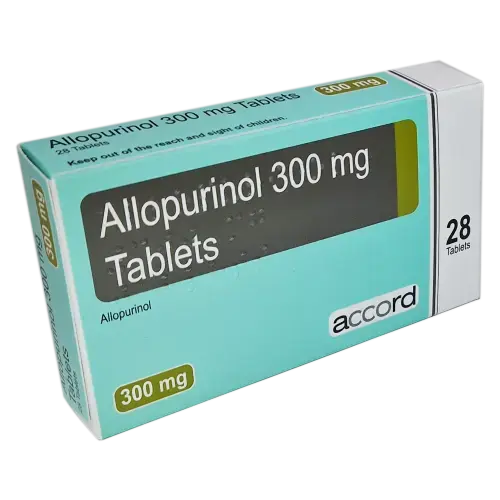
| Medication Name | Allopurinol 100mg and 300mg Tablets |
| Medication Form | Tablet |
| Used For | Lowering uric acid levels to help prevent gout and treat conditions caused by uric acid build-up |
| Who Can Use | Adults aged 18 and over |
| Active Ingredient(s) | Allopurinol (100mg or 300mg per tablet) |
| Usual Dose | One dose daily after food, at the strength your doctor prescribes |
| Common Side Effects | Skin rash, raised thyroid stimulating hormone levels |
| Prescription Required | Yes |
| Patient Information Leaflet | Allopurinol Tablets Patient Information Leaflet |
Allopurinol tablets are used to lower the level of uric acid in your blood and urine. They’re used to prevent or lower the excess uric acid that causes problems when it builds up in the body.
Allopurinol is used to:
For gout, allopurinol is a long-term treatment that helps prevent attacks. It isn’t used to relieve an attack that’s already started. Medicines like colchicine tablets or etoricoxib are used for that.
Allopurinol belongs to a group of medicines called enzyme inhibitors, specifically a xanthine oxidase inhibitor. It works by slowing down the chemical reactions in your body that produce uric acid.
Uric acid is a waste product. If you produce too much of it, or your kidneys don’t filter enough of it out, it can build up and form tiny, sharp crystals. These crystals collect around the joints and cause the swollen, painful symptoms of gout, and they can also gather in the kidneys.
By reducing how much uric acid your body makes, allopurinol lowers uric acid levels in the blood over time. This helps clear existing crystals and prevents new ones from forming.
Allopurinol is for adults who’ve been prescribed it to manage gout or high uric acid levels.
Don’t take allopurinol if you’re allergic to it or to any of its other ingredients.
Talk to your doctor before starting allopurinol if you:
Allopurinol isn’t recommended during pregnancy or while breastfeeding. If you’re pregnant, think you might be, or are planning a baby, speak to your doctor before taking it.
Always take this medicine exactly as your doctor has told you. Check with your doctor or pharmacist if you’re not sure.
Your recommended dosage depends on the severity of your condition. As a guide, adults usually take 100mg to 200mg per day for mild conditions, 300mg to 600mg a day for moderately severe conditions, and 700mg to 900mg a day for severe conditions. If you have liver or kidney problems, your doctor may prescribe a lower dose or ask you to take it less often.
Don’t stop taking allopurinol without talking to your doctor first.
Like all medicines, allopurinol can cause side effects, though not everyone gets them. Here are the possible side effects to look out for.
Common side effects may affect up to 1 in 10 people. They include:
Uncommon side effects may affect up to 1 in 100 people. They include:
Rare side effects may affect up to 1 in 1,000 people. They include:
Very rare side effects may affect up to 1 in 10,000 people. They include:
Allopurinol can occasionally cause serious side effects. Stop taking it and get medical help straight away if you notice:
Active ingredient: Allopurinol (100mg or 300mg per tablet)
Other ingredients: lactose, maize starch, povidone, crospovidone and magnesium stearate
GOOD
Allopurinol is taken once a day, after a meal. Taking it with food helps reduce the risk of an upset stomach. There’s no set time of day you have to take it, so pick a time that fits your routine and stick with it, as taking it consistently gives the best results.
If you forget a dose of allopurinol, take it as soon as you remember, unless it’s nearly time for your next dose. In that case, skip the missed dose and carry on as normal. Never take a double dose to make up for a forgotten one.
If you take too many tablets, contact your doctor or your nearest hospital straight away. Take the leaflet or any remaining tablets with you. Signs of taking too much can include feeling or being sick, diarrhoea and dizziness.
Allopurinol doesn’t work straight away. It gradually lowers the level of uric acid in your blood, and it can take several weeks to months to feel the full benefit. During the first few months, you might have more gout attacks rather than fewer, which is normal as the medicine starts to work. Keep taking it as prescribed and speak to your doctor if you’re concerned.
Allopurinol is rarely used in children, and only for certain conditions such as some types of cancer and rare enzyme disorders. It isn’t recommended during pregnancy unless you and your doctor have weighed up the risks and benefits, and it isn’t recommended while breastfeeding, as it passes into breast milk. Always speak to your doctor first if any of these apply to you.
There aren’t any specific foods you have to avoid with allopurinol, beyond taking each dose after a meal. That said, cutting back on alcohol and on purine-rich foods, such as red meat, offal and some seafood, can help keep uric acid levels down and reduce gout flare-ups. Your doctor or pharmacist can talk you through any changes worth making.
Hair loss and changes in hair colour have been reported with allopurinol, but they’re very rare and affect fewer than 1 in 10,000 people. If you notice hair loss while taking it, mention it to your doctor or pharmacist so they can advise you.
Allopurinol is a prescription-only medicine, so you can’t buy it over the counter. You can order it from Click2Pharmacy by completing a short online consultation. Our licensed pharmacists will review your answers and, if allopurinol is suitable for you, arrange your prescription and delivery.
Allopurinol can sometimes cause drowsiness, dizziness or problems with coordination. If you’re affected, don’t drive or use tools or machines until you feel back to normal. This is more likely when you first start the medicine, but it can happen at any point.
Alcohol doesn’t stop allopurinol from working, but drinking can raise the level of uric acid in your blood and trigger a gout attack. Because of this, it’s sensible to keep alcohol to a minimum while you’re managing gout. Speak to your pharmacist if you’d like advice on this.
Allopurinol is used to prevent gout attacks over the long term, not to treat one that’s already happening. If you’re having an attack when you’re due to start, tell your doctor, as they’ll usually wait for it to settle first. If you already take allopurinol and an attack comes on, don’t stop taking it, as stopping suddenly can make things worse.
Page content authored by Amjad Khan, last reviewed by Mr Muhammad on 23rd July 2026.